

Have you ever wondered what a planetoid the size of Ukraine would look like? On Independence Day, we have prepared a story for you about 10 celestial bodies in the Solar System that are similar in size to this hypothetical planet, Ukraine.
Planet Ukraine
On Ukraine’s Independence Day, we would like to remind everyone that Crimea and the Donbas remain integral parts of our country. This means that its area is still equal to the 603,628 km² specified in its Constitution. But has anyone ever thought about what this area means in terms of the scale of the Solar System?
People often talk about how nice it would be if Ukraine were an island. Then we would have no land borders with any other country and could count on fewer threats to the existence of our state. However, we can go even further and imagine what it would be like if we were a separate planet.
What diameter do you think this planet should have? Of course, most bodies in the Solar System are far from being perfectly spherical. Even Earth is not a perfect sphere, as its equatorial diameter is 21 km greater than its polar diameter. But for simplicity’s sake, imagine that Ukraine is a sphere. What diameter would it have?

The answer is 438.36 km. Some would say that it is not enough to be considered a full-fledged planet, because even the Moon has a diameter of 3,475 km, but it could well be called a dwarf planet. It may not seem like much, but the vast majority of giant planet satellites are much smaller. Among the objects in the main asteroid belt, only Ceres, Vesta, and Pallas would be larger.
So, which 10 objects are most similar in size to the planet Ukraine?
1. 2010 ОO127
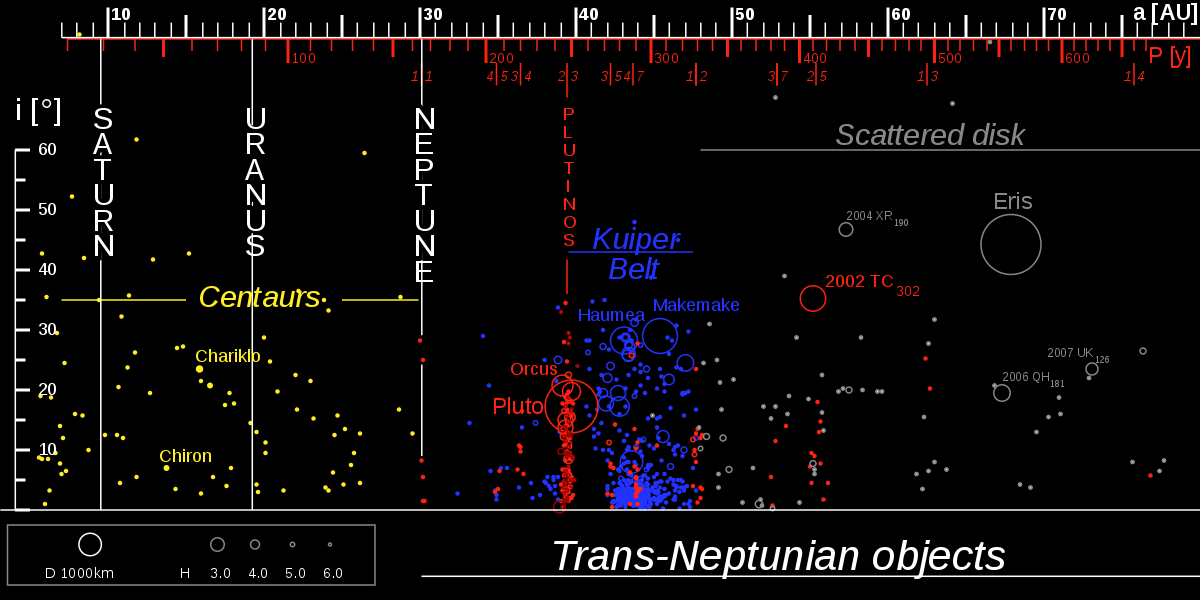
The closest in size to what Ukraine would be if it turned into a dwarf planet is 2010 OO127. It is located beyond Neptune’s orbit. Its size has been determined with a large margin of error, and scientists are not even sure what its shape actually is, but the average estimate of its diameter is 439 km. And that is only one kilometer more than the hypothetical “planet Ukraine”.
2010 OO127 was discovered in 2010 using the Pan-STARRS telescope installed at the Haleakala Observatory on the Hawaiian Islands. At the point in its orbit closest to the Sun (perihelion), this object is 37 AU from our star, and at the furthest point (aphelion), it is 48 AU from it.
2. 2014 ХR40
2014 HR40 is another trans-Neptunian object whose exact size is unknown, but its average diameter is believed to be close to 442 km. This gives it a surface area of 614,708 km², which is close to the size of Ukraine.
It was discovered in 2014, as was 2010 OO127, at the same observatory and using the same telescope. Its orbital parameters are also very similar to those of the previous object: perihelion 0151 36.6 AU, aphelion 48.9 AU.
3. 2015 AN281
Another object, whose area is approximately equal to that of Ukraine, is 2015 AN281. As with the previous two, virtually nothing specific is known about it, but its diameter is believed to be 434 km.
It was discovered at the same Haleakala Observatory, but in 2011. At perihelion, it approaches the Sun at 35.7 AU, and at aphelion (which occurs once every few centuries), it moves away at 47 AU.
4. 2003 QX111
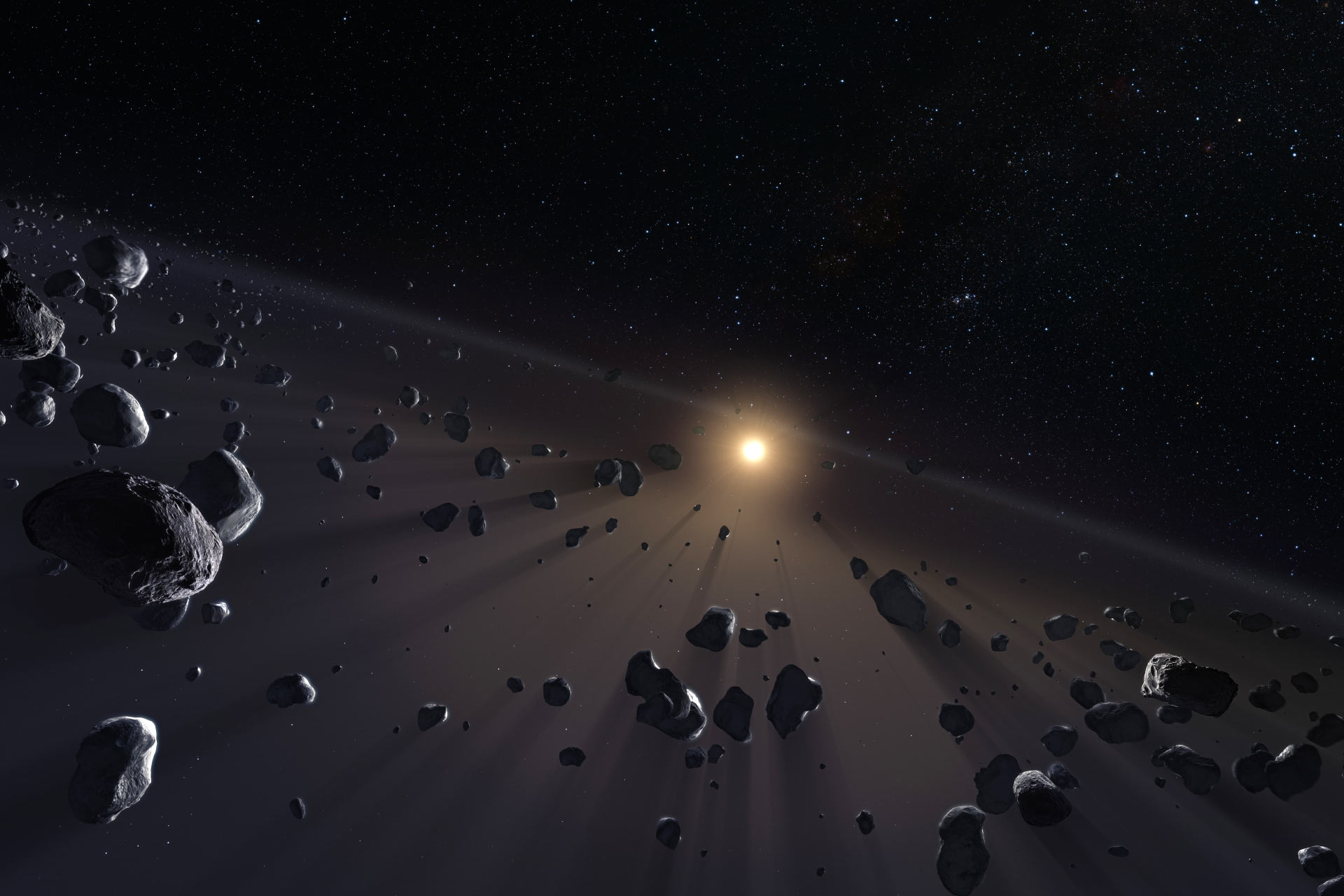
2003 QX111 is a trans-Neptunian object with a diameter of 434 km, similar to 2015 AN281. However, unlike AN281, this planetoid was discovered in 2003 at the Cerro Tololo Inter-American Observatory in Chile.
A distinctive feature of 2003 QX111 is that it belongs to the so-called plutinos. These objects orbit in a 2:3 resonance with Neptune. This means that while this object completes two orbits around the Sun, the eighth planet completes three.
Also, unlike other trans-Neptunian objects, the albedo of 2003 QX111 has been measured. Thanks to this, estimates of its size can be trusted to some extent. At perihelion, it approaches the Sun at 34.3 AU, and at aphelion (which occurs once every few centuries), it moves away at 44.8 AU.
5. Vanth
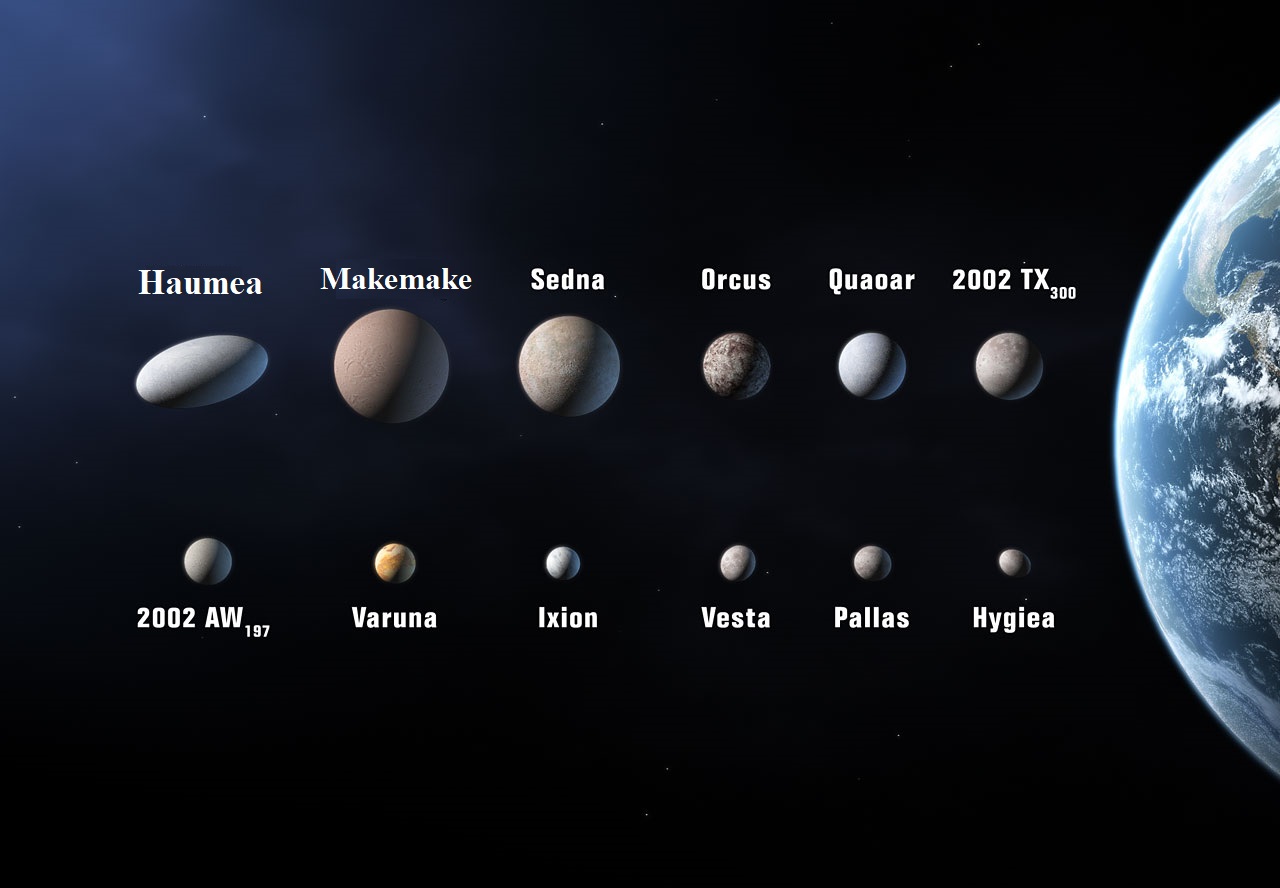
Vanth is a natural satellite of one of the largest trans-Neptunian objects, Orcus. The name of the latter has nothing to do with creatures from modern fantasy. Its name refers to a deity from Etruscan mythology, Orcus, who ruled over the underground kingdom of the dead.
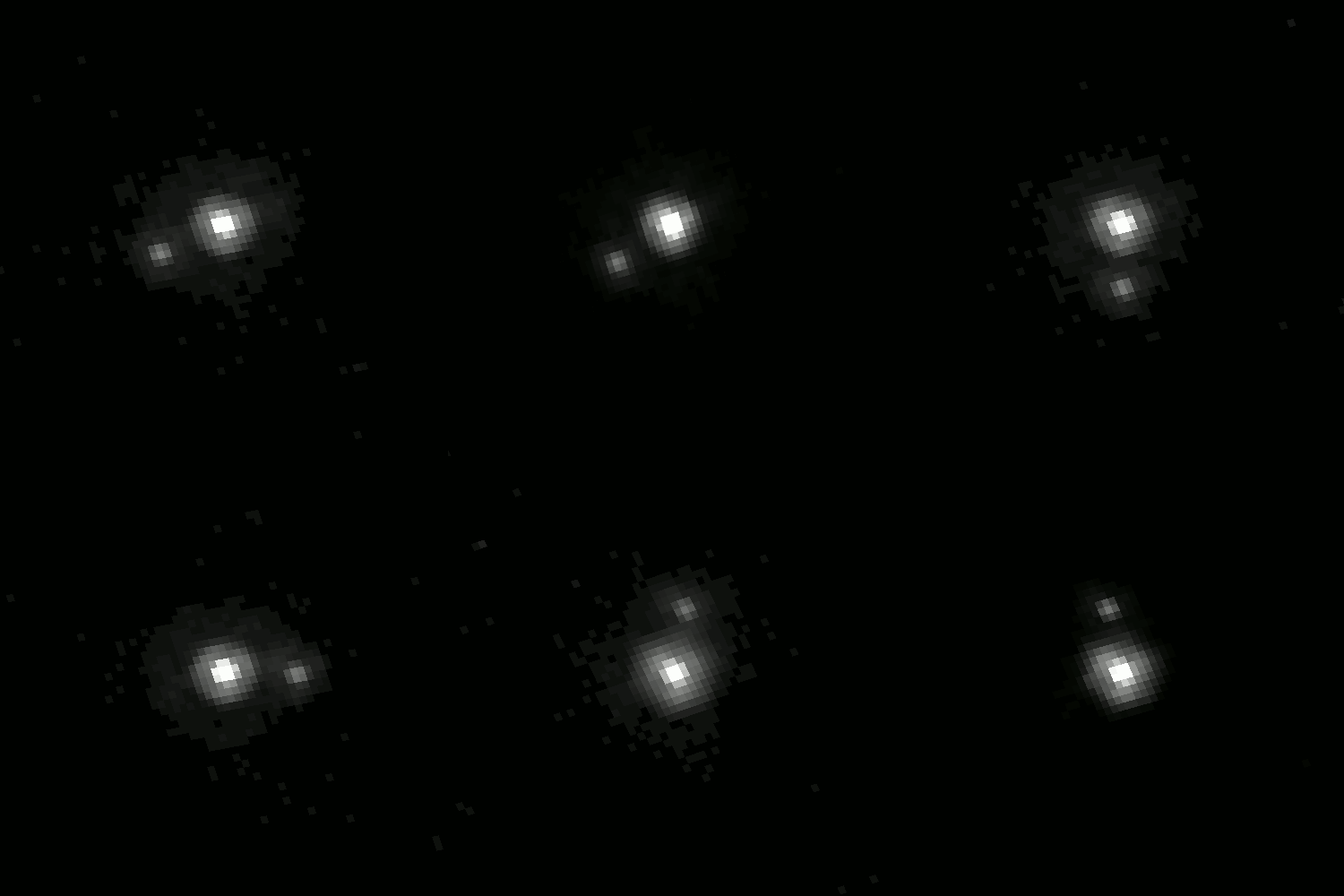
Orcus was discovered in 2004, and in 2005, a natural satellite was found orbiting it. It was named Vanth after the goddess who, in the same mythology, played the role of a mediator between the realm of the living and the realm of the dead, transporting the souls of the deceased to the latter.
The space ring has a diameter of 442.5 km and is reddish in color. The natural satellite orbits Orcus in 10 hours. The latter completes one orbit around the Sun in 245 Earth years. At its perihelion, it approaches the Sun at a distance of 30 AU, and at its aphelion, it moves away to a distance of 48 AU.
6. Hygiea
Hygeia is the only object on the list that is not located in the vicinity of the Solar System. It is the fourth-largest celestial body in the Main Asteroid Belt. Its diameter is 433 km, and we can more or less trust this data.
It was discovered back in 1846. It was named after the ancient Greek goddess of health. It completes one revolution around the Sun in 5.57 Earth years and one revolution around its own axis in 13.8 hours.
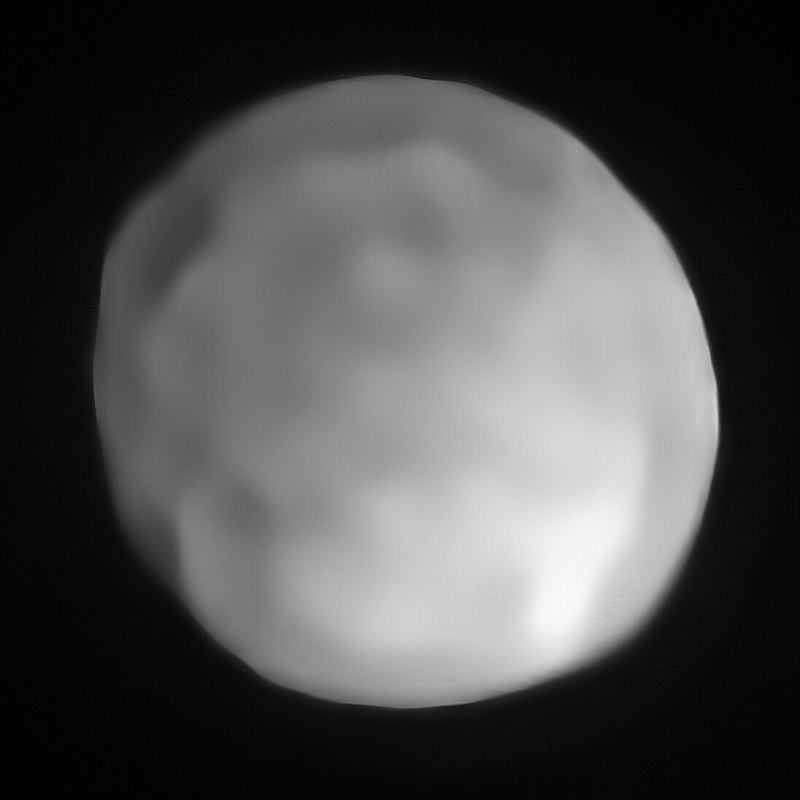
At perihelion, Hygiea’s distance from the Sun is 2.7 AU, and at aphelion, it is 3.5 AU. This means that, unlike the other objects on the list, it is visible even with an amateur telescope, and during opposition (i.e., when the Earth is between it and the Sun), it is even visible with binoculars.
It should be noted that despite its considerable size, it appears quite dim. This is because its surface is quite dark. Its albedo is 0.07. Given this, the question of its chemical composition is particularly interesting. Scientists have determined that the average density of the asteroid is 1.94 g/cm2.
Hygeia is a carbonaceous asteroid whose surface consists largely of hydrated and ammoniated silicate minerals (phyllosilicates) and carbonates. Traces of water ice and manganese have also been found there. The surface temperature during one revolution around the sun ranges from -43°C to -123°C.
7. 2010 TY53
2010 TY53 is another interesting object. It was discovered in 2010, again using the Pan-STARRS telescope at the Haleakala Observatory. Its diameter is estimated at 443 km.
What makes 2010 TY53 interesting is that it is a centaur. This is the name given to objects whose orbits intersect the orbits of large planets. In this case, we are talking about Neptune. At perihelion, this object is 21.2 AU from the Sun, which is closer than the eighth planet of the Solar System, and at aphelion, it is 57.2 AU, which is farther than the eighth planet. At the same time, it moves in a very elongated orbit.
8. 2010 RO64
The diameter of 2010 RO64 is 444 km. It was discovered in 2010. It is a trans-Neptunian object with a perihelion of 41 AU and an aphelion of 53 AU.
9. 2014 WH509
Another trans-Neptunian object that would be similar in size to the hypothetical planet Ukraine is 2014 WH509. Its diameter is 446 km. It was discovered using the Pan-STARRS telescope in 2011. At perihelion, it is 36 AU from the Sun, and at aphelion, it is 52 AU.
10. 2002 VR128
2002 VR128 is a trans-Neptunian object with a diameter of 448 km. It was discovered in 2002 at the Palomar Observatory. It is a plutino, meaning that its orbital period around the Sun is in a 2:3 ratio with Neptune’s orbital period. At perihelion, its distance from the Sun is 28 AU, and at aphelion, it is 48 AU.

