

Astronomers have published a new image taken by the James Webb Space Telescope (JWST). It shows one of the most iconic regions of the sky, made famous by the Hubble Telescope.
Famous Hubble Telescope image
In 1995, scientists conducted an experiment: they pointed the Hubble telescope at a small and, as previously thought, virtually deserted area of the sky. The results of ten days of imaging amazed the researchers. It turned out that there were actually thousands of distant galaxies there. The experiment clearly demonstrated that the Universe contains orders of magnitude more galaxies than previously thought.
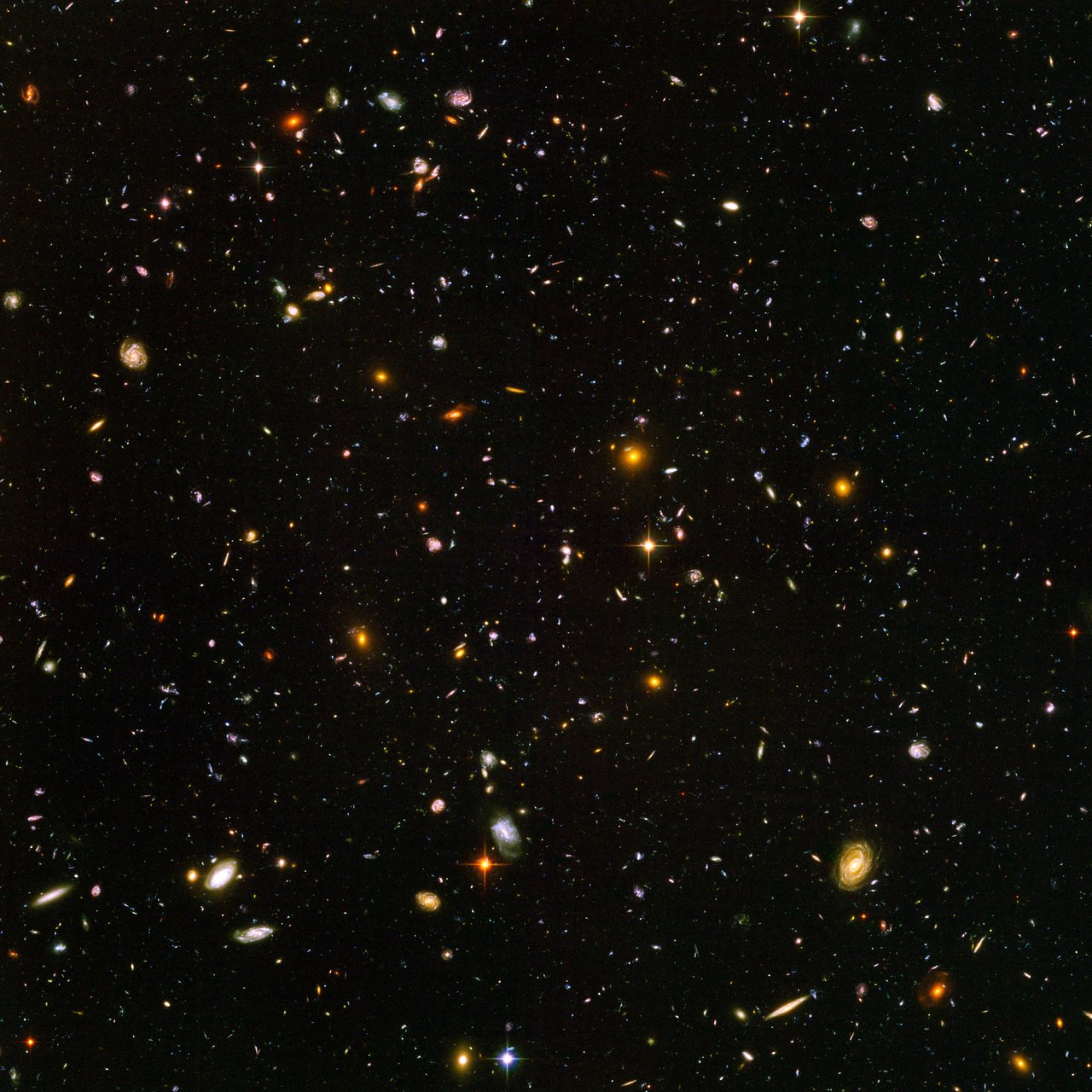
In 2003, astronomers repeated the experiment, pointing Hubble at another part of the sky in the constellation Fornax. By that time, the maintenance expedition had installed new instruments on the telescope, significantly increasing its capabilities.
Once again, the telescope did not disappoint astronomers. The famous image, dubbed the Hubble Ultra Deep Field, captured approximately 10,000 galaxies. The closest ones are about a billion light-years from Earth, and the farthest ones are at the edge of the observable Universe. They existed just 800 million years after the Big Bang.
A new look at the Hubble Ultra Deep Field
Twenty years later, astronomers decided to remake the Hubble Ultra Deep Field using JWST. It conducted observations using the Mid-Infrared Instrument (MIRI) and the Near-Infrared Camera (NIRCam). In total, the filming took 100 hours.
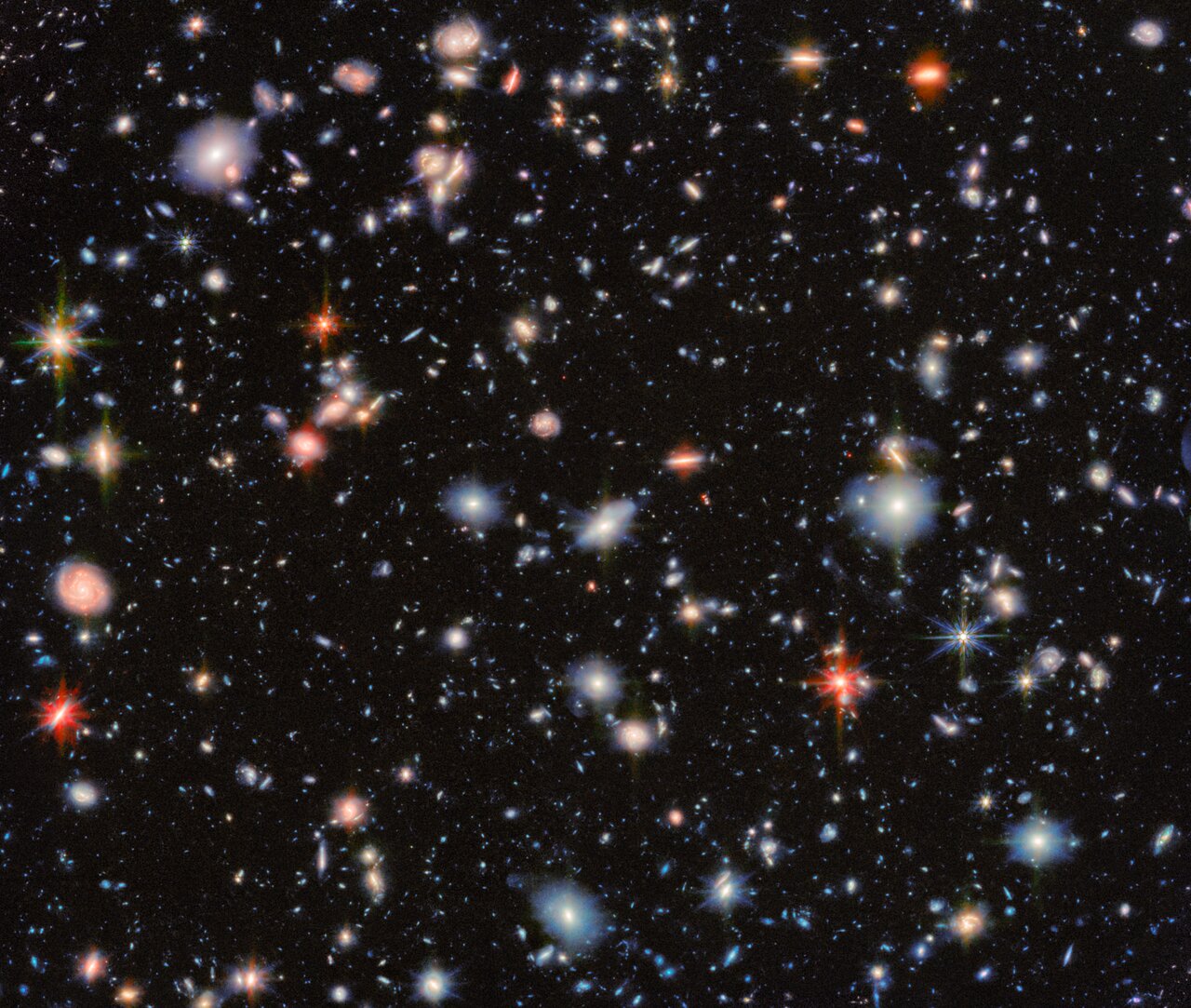
The published image shows the area known as the MIRI Deep Imaging Survey. It represents one of the deepest views of the Universe ever obtained. In total, JWST has detected over 2,500 sources in this tiny patch of sky. Among them are hundreds of extremely red galaxies, some of which are likely massive systems filled with dust clouds, or galaxies with old stars that formed at the dawn of the Universe. Thanks to JWST’s high resolution, even in the mid-infrared range, researchers can distinguish the structures of many of these galaxies, shedding light on their growth and evolution.
The colors in the image correspond to different wavelengths of infrared light. Orange and red correspond to the longest wavelengths. Galaxies of these colors have characteristics such as high dust concentration, abundant star formation, or active galactic nuclei.
Small greenish-white galaxies are particularly distant and have a high redshift. This shifts their light spectrum to the peak wavelengths of the data, which are shown in white and green. Most of the galaxies in the photo do not have characteristics that amplify the mid-infrared range, so they are brightest in the shorter near-infrared wavelengths, which are shown in blue and cyan.
According to Esawebb

