

As a rule, after launch, interplanetary missions immediately head for their destination — even if this sometimes requires them to undertake a journey lasting several years along a highly complex trajectory involving numerous maneuvers. However, cases where a spacecraft has to “wait” for a ballistic window to open for a year after entering space are extremely rare. But this is exactly what awaits ESCAPADE: one of the most unusual missions in recent years.
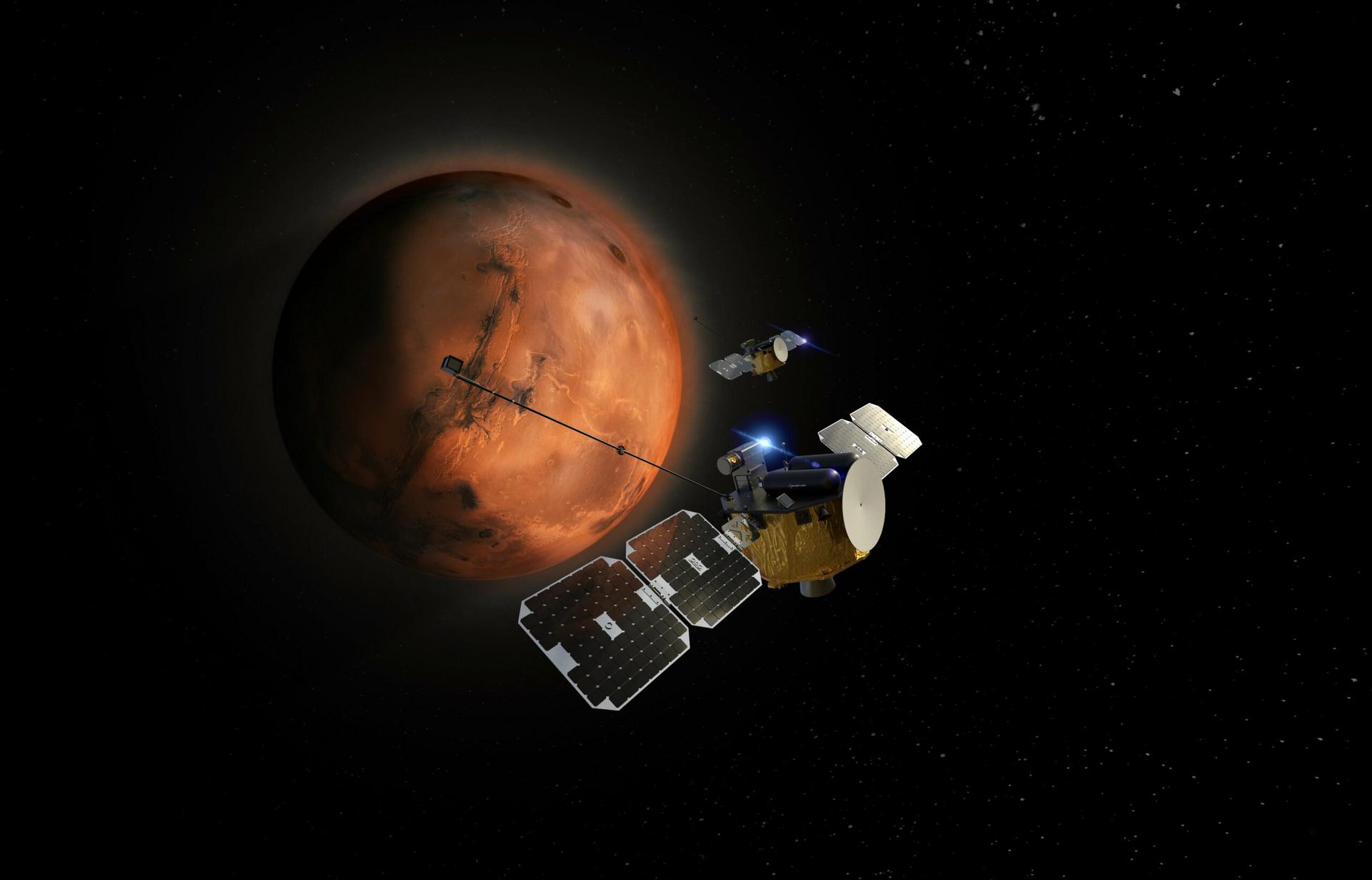
In this article, you will find out about the history and objectives of this project, as well as why its journey to Mars has been delayed so significantly.
“Budget” research of the Solar System
Although space has become much more accessible in recent years than it used to be, this does not apply to interplanetary missions. They remain a rather expensive attraction, which makes them virtually a one-off product. However, NASA has not lost hope of changing this situation. Over the past decade, the aerospace administration has initiated the SIMPLEx program. Its goal is to fund projects designed to demonstrate the possibility of exploring the Solar System using inexpensive interplanetary missions.
NASA funded a total of five missions under the SIMPLEx program. Unfortunately, three of them were lost shortly after launch without completing their tasks. Another mission (Janus) lost its carrier and, with it, the opportunity to study its original target. It is currently in storage, and its future remains uncertain.
The final mission in this group of five is ESCAPADE, consisting of two identical probes. It is the last chance for the program. Its success will prove that NASA’s concept can still work. Failure will mean the complete collapse of SIMPLEx.
In search of answers about Mars’ past
Before discussing the technical design of ESCAPADE, let’s consider its main objectives. The mission’s target is Mars — more specifically, its magnetosphere and atmosphere. Today, the Red Planet has a very thin gas envelope. The average pressure at its surface is 160 times lower than that at the Earth’s surface.
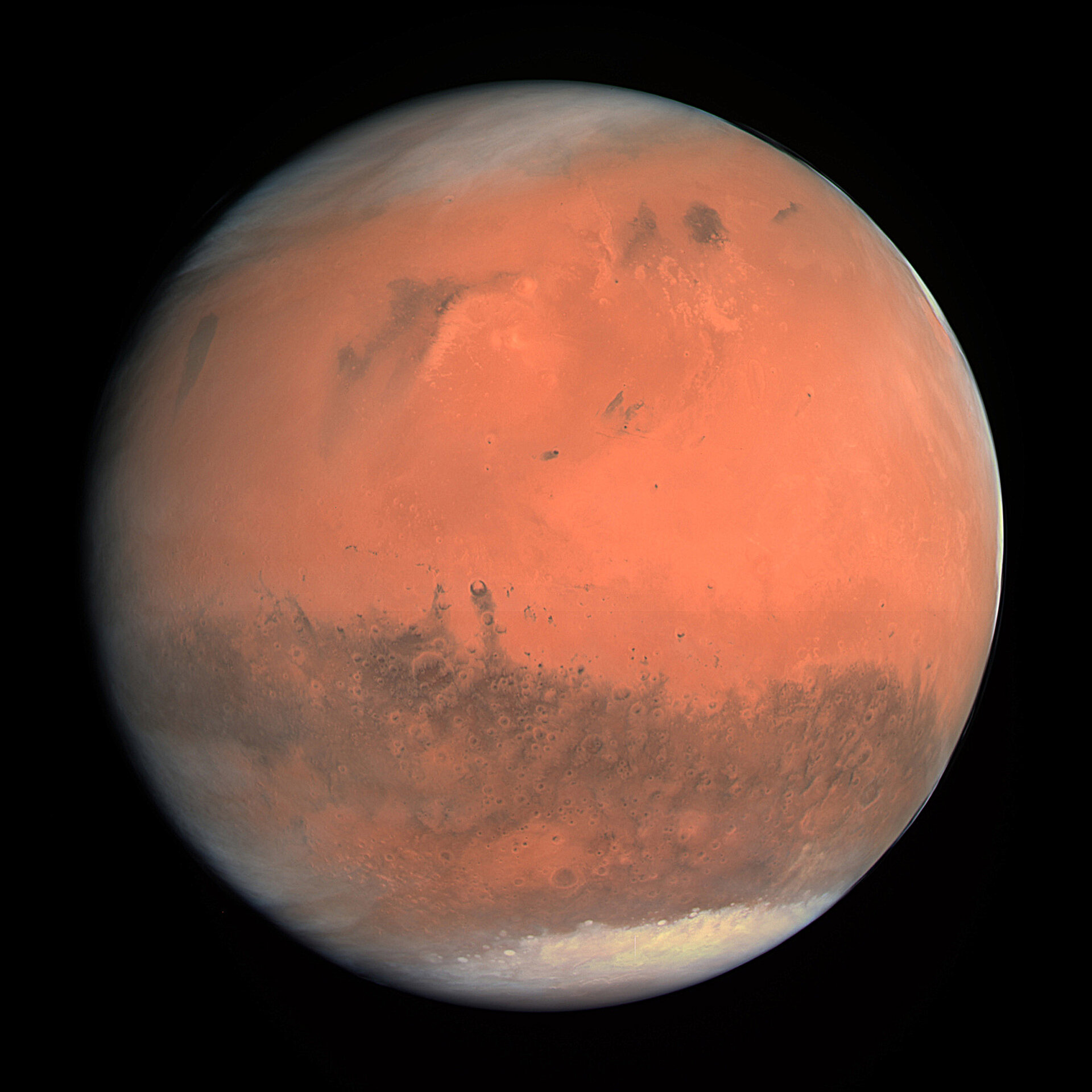
Mars also lacks a global magnetic field. However, there are magnetized areas in its crust, indicating that this was not always the case and that the planet once had a full-fledged magnetosphere.
The question of what exactly happened to Mars’ magnetic field has long puzzled scientists. It is believed that its weakening led to the planet losing most of its atmosphere and acquiring its current appearance.
ESCAPADE will study Mars’ magnetosphere and the processes occurring within it. The data gathered by the mission will allow scientists to better understand how it is structured, how it interacts with the solar wind, and how all of this affects the atmosphere and the rate of gas leakage from it.
Technical design of ESCAPADE
ESCAPADE is being implemented by the Space Sciences Laboratory at the University of Berkeley. The total budget for the mission, including launch and subsequent communications costs, is $78.5 million. This is relatively modest for a project of this kind.
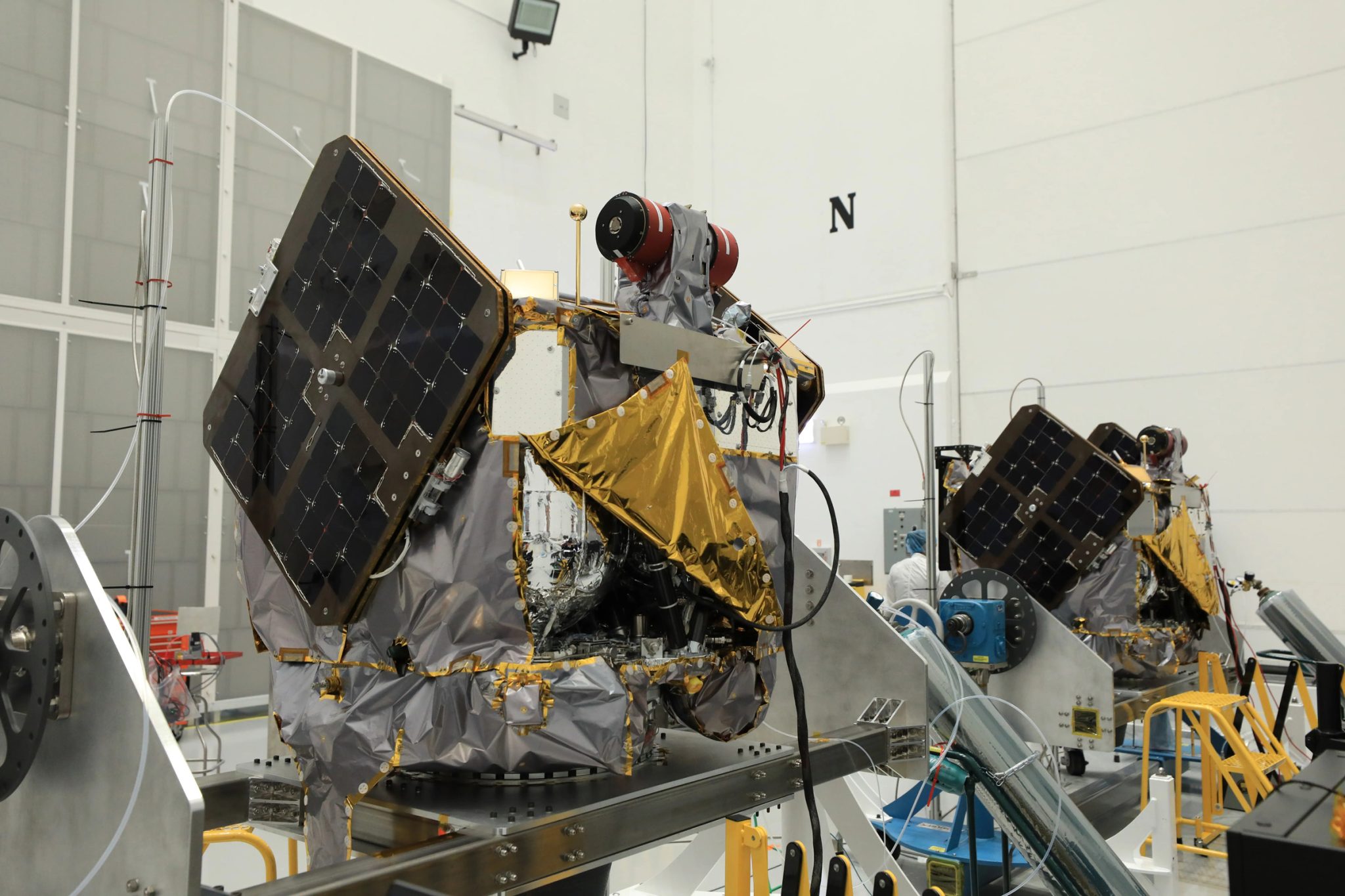
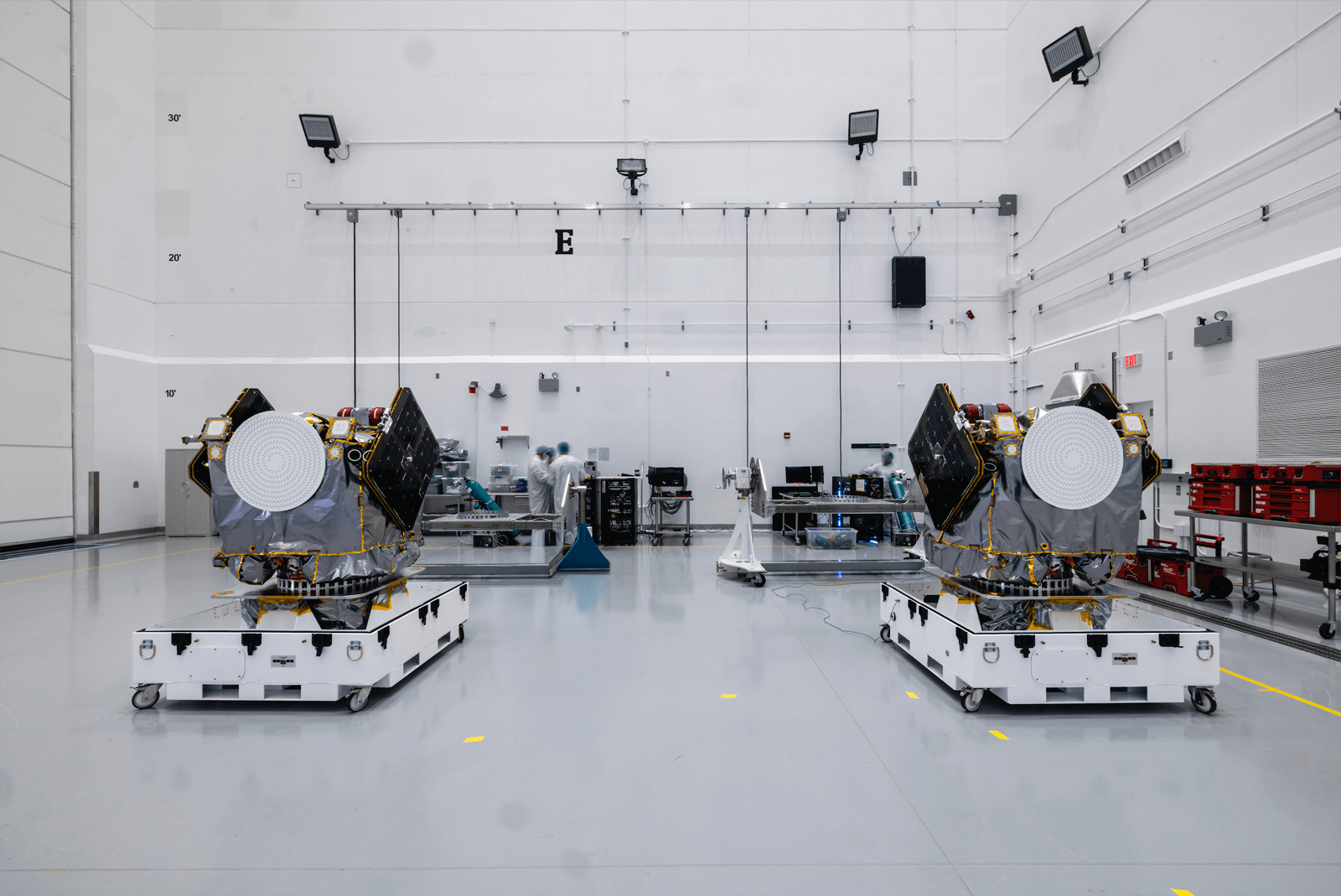
A pair of ESCAPADE probes was built by Rocket Lab on behalf of NASA. They are based on the Photon satellite platform. Their dimensions (excluding solar panels) are 60 x 70 x 90 cm, and their mass when fueled is 550 kg. Chemical propulsion is provided by engines from Arianespace. Communication is carried out in the X-band via a 60 cm diameter antenna.
The scientific components of the devices are represented by the following three instruments:
- EMAG magnetometer. It will measure constant magnetic fields with a strength of up to 1000 nT.
- EESA electrostatic analyzer. It is designed to measure ion characteristics.
- ELP device. It is a Langmuir probe designed to study plasma characteristics.
To reduce magnetic interference from the spacecraft, the EMAG and ELP sensors are located at the end of a two-meter boom.
Long way to Mars
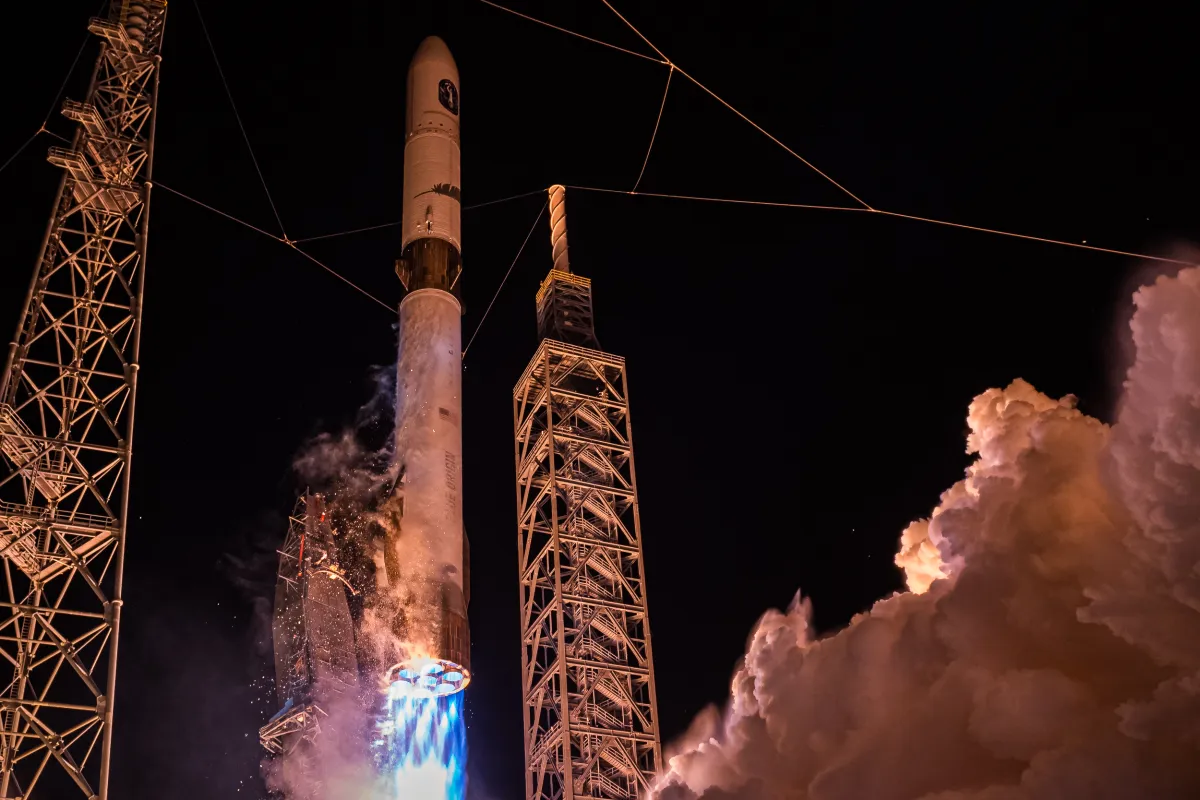
The initial plan was to launch ESCAPADE in October 2024. But NASA had to abandon it. The fact is that the new New Glenn rocket, developed by Blue Origin, was chosen to launch ESCAPADE. This allowed for a large discount on the launch. Unfortunately, the launch vehicle was not ready by the required date. NASA made the decision to cancel the launch the day before engineers were scheduled to begin fueling the probes. After that, the spacecraft were returned to Rocket Lab headquarters in California.
The next ballistic window for a flight to Mars will not open until December 2026. However, NASA experts have developed an alternative plan to launch the spacecraft using a more complex trajectory. It looks like this. Initially, ESCAPADE will be launched into orbit around the L2 Lagrange point of the Sun-Earth system. The probes will spend about a year there observing space weather.
From a scientific point of view, this trajectory offers certain advantages, allowing for unique observations of space weather at a distance of up to 3.5 million km from Earth. This region has not been studied since the Wind mission in the 1990s. The disadvantage is that the probes will spend much more time than planned in interplanetary space before reaching Mars. However, according to engineers, prolonged exposure to radiation should not be a major problem for ESCAPADE.
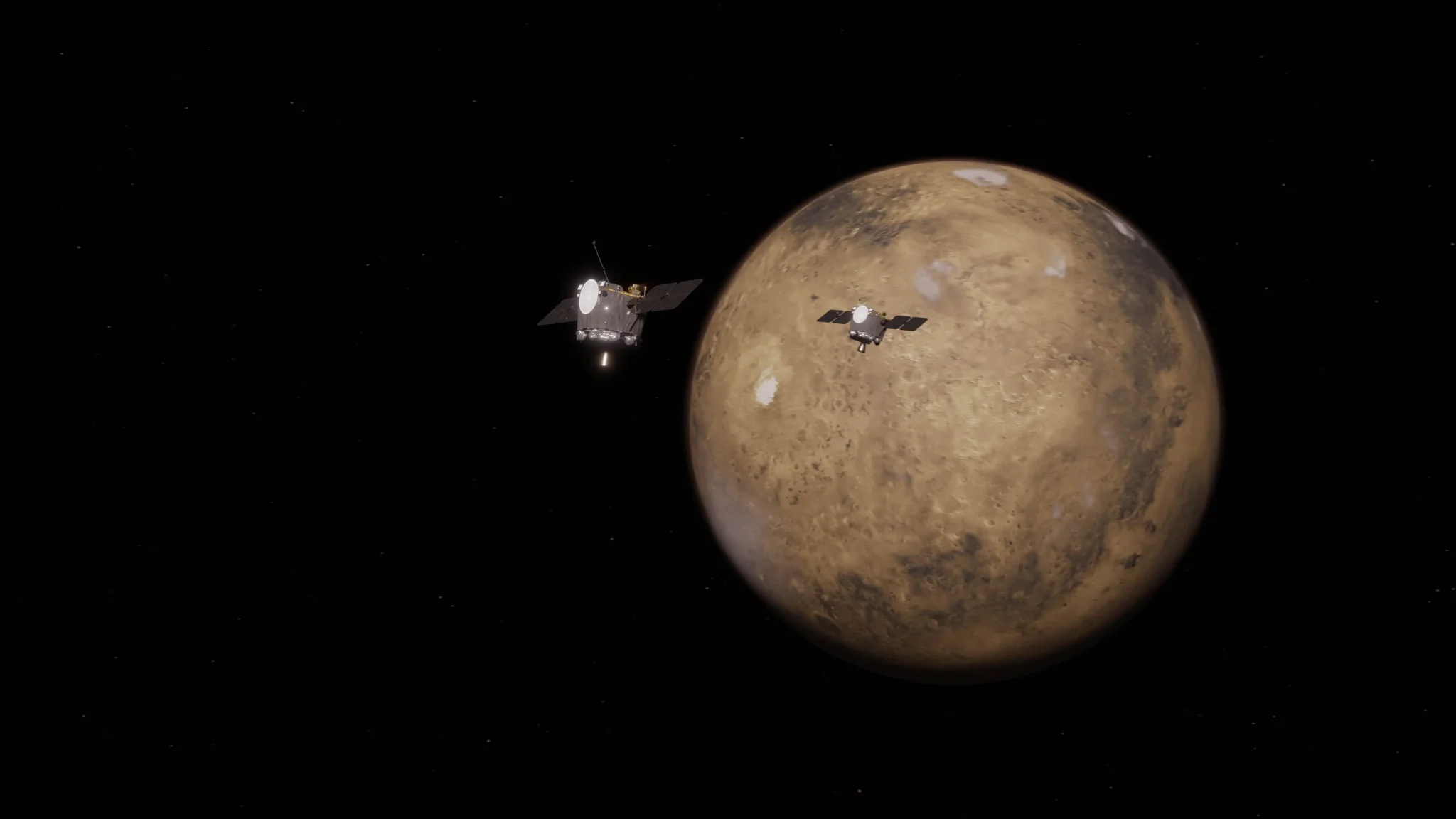
After a new window for flight to Mars opens in December 2026, the pair of probes will use Earth’s gravity to perform a maneuver that will send them on an interplanetary journey. They will arrive at the Red Planet in September 2027.
If everything goes according to plan, the spacecraft will enter an elongated orbit around Mars with a perigee of 170 km and an apogee of 8,400 km. They will spend six months in this orbit, after which one of the probes will lower its apogee to 7,000 km, while the other will raise its apogee to 10,000 km. This means they can measure the outer parts of Mars’ magnetosphere at the same time. Overall, the spacecraft will study the planet for at least a year.
At this point, the exact launch date for New Glenn remains unknown. It is expected to take place in November or December 2025. The success of the mission is extremely important for both NASA and Blue Origin. NASA will be able to prove that its bet on small spacecraft is right, while Blue Origin, which is actively competing for lunar contracts, will finally add an interplanetary launch to its portfolio.

