

A team of researchers from the Massachusetts Institute of Technology (MIT) has announced the discovery of unique rock formations. They contain traces of the original proto-Earth that existed 4.5 billion years ago.
Giant collision
Immediately after its formation, our planet was a rocky world, probably covered in lava. Less than 100 million years later, it experienced a massive collision with a protoplanet the size of Mars. It radically changed our planet and led to the formation of the Moon.
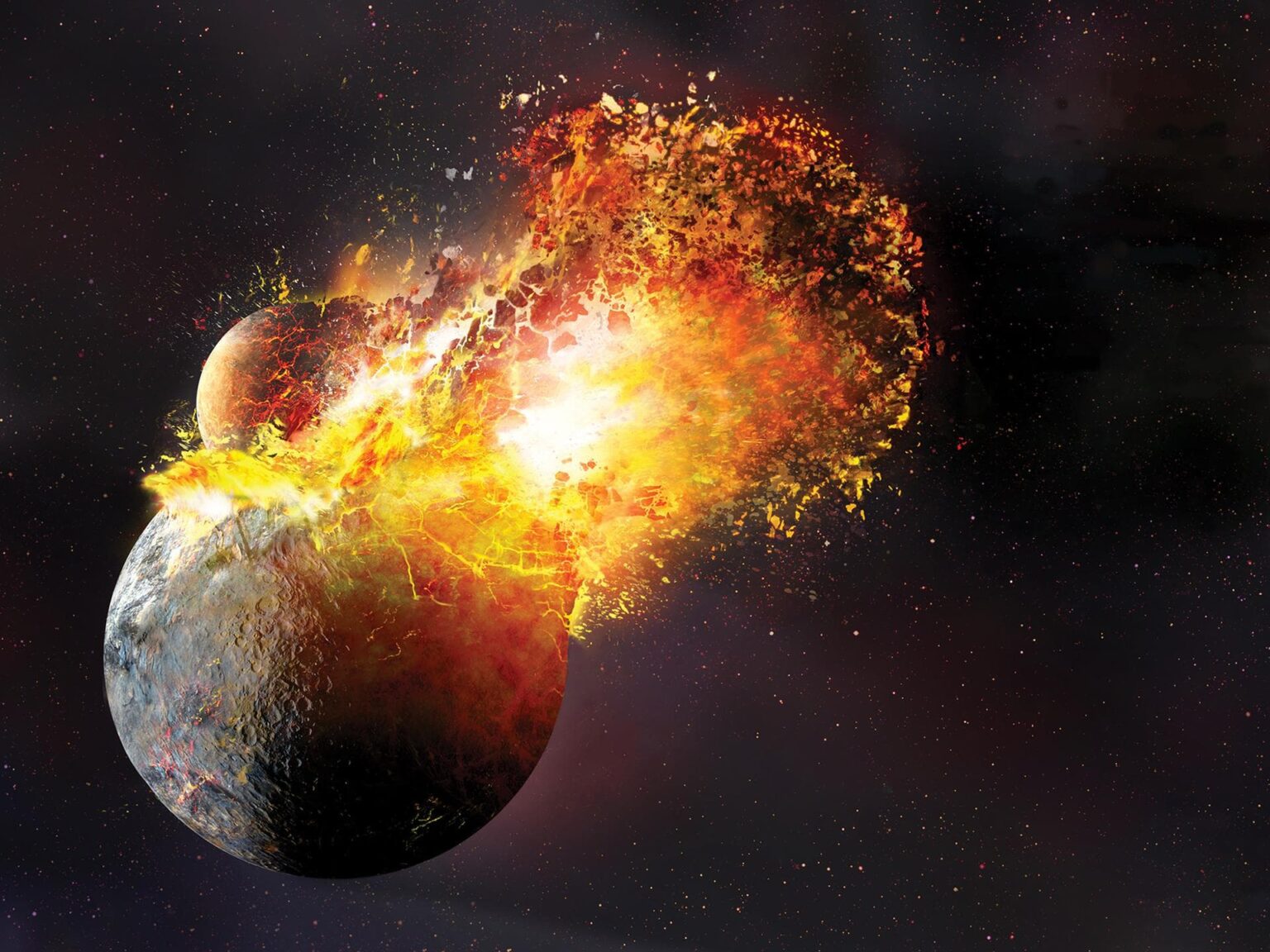
For a long time, it was believed that, given its global scale, this impact completely destroyed all traces of the original proto-Earth. But as the results of a recent study by scientists from MIT show, this is not the case. They managed to discover a chemical trace in very ancient and very deep rocks that was different from most other materials found on Earth today.
This trace represents a slight imbalance of potassium isotopes in geological samples. The most likely explanation is that they are supposed to be remnants of proto-Earth material that somehow remained unchanged and survived to the present day.
Searching for traces of proto-Earth
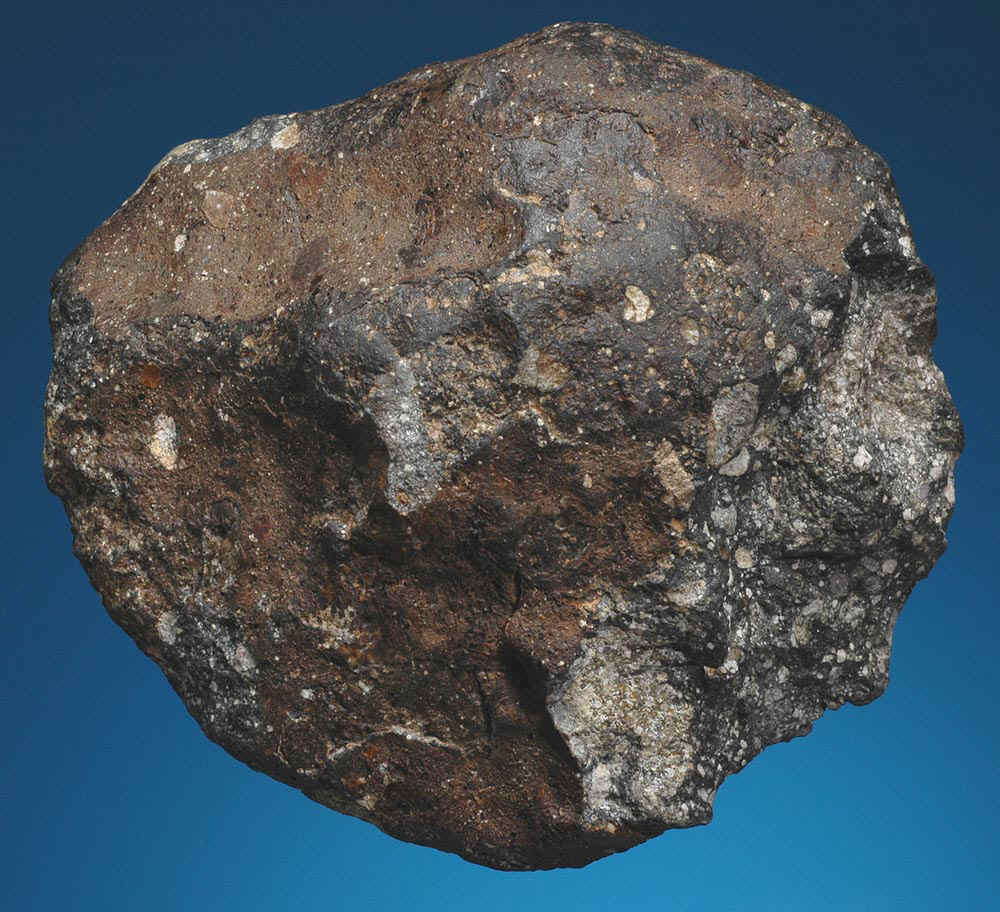
In 2023, scientists analyzed many of the large meteorites that had been collected from various locations around the world and carefully studied. They formed at different times and in different places in the Solar System, and therefore reflect changes in conditions within it over time. When researchers compared the chemical composition of these meteorite samples with that of Earth, they discovered an isotopic anomaly of potassium among them.
Isotopes are slightly different versions of the same element that have the same number of protons but different numbers of neutrons. Potassium can exist as one of three natural isotopes with mass numbers 39, 40, and 41, respectively. Wherever potassium has been found on Earth, it exists in a characteristic combination of isotopes, with potassium-39 and potassium-41 predominating. Potassium-40 is present, but in a relatively small percentage.
Scientists have discovered that meteorites exhibit a potassium isotope balance that differs from most materials on Earth. This suggests that any material exhibiting such an anomaly probably predates the current composition of the Earth. In other words, any potassium imbalance would be a clear sign of material from proto-Earth, before the giant collision changed the planet’s chemical composition.
In their research, the team from MIT examined samples from Greenland and Canada, where some of the oldest preserved rocks are found, as well as lava deposits in Hawaii. Scientists have indeed managed to detect a deficiency of the potassium-40 isotope. The anomaly indicates that these materials were differently constructed compared to most materials on Earth today.
To confirm that these samples are remnants of proto-Earth, the team used data on the composition of all known meteorites and simulated how the potassium-40 deficit in the samples would have changed after the meteorite impacts and the giant collision. They also simulated geological processes that have occurred on Earth over time, such as the heating and mixing of the mantle. This analysis confirmed that rocks deficient in potassium-40 were probably real remnants of the original proto-Earth material.
“This is maybe the first direct evidence that we’ve preserved the proto-Earth materials,” commented Nicole Nie, associate professor of earth and planetary sciences at MIT, on the research results. “We see a piece of the very ancient Earth, even before the giant impact. This is amazing because we would expect this very early signature to be slowly erased through Earth’s evolution.”
According to Phys.org

