

If you look at the sky on a starry night, you can see about five thousand stars with the naked eye. In fact, according to the latest estimates, there are approximately 1022 stars in the Universe, and each of them hides its own secrets. We will tell you about five of them located in our Galaxy.
Polaris shifts
We associate the North Star with α Ursae Minoris, which everyone uses to determine the direction of north. However, four thousand years ago, the closest star to the north pole of the celestial sphere – the “polaris” – was α Draconis (Thuban). Later, it was replaced by β Ursae Minoris (Kochab).
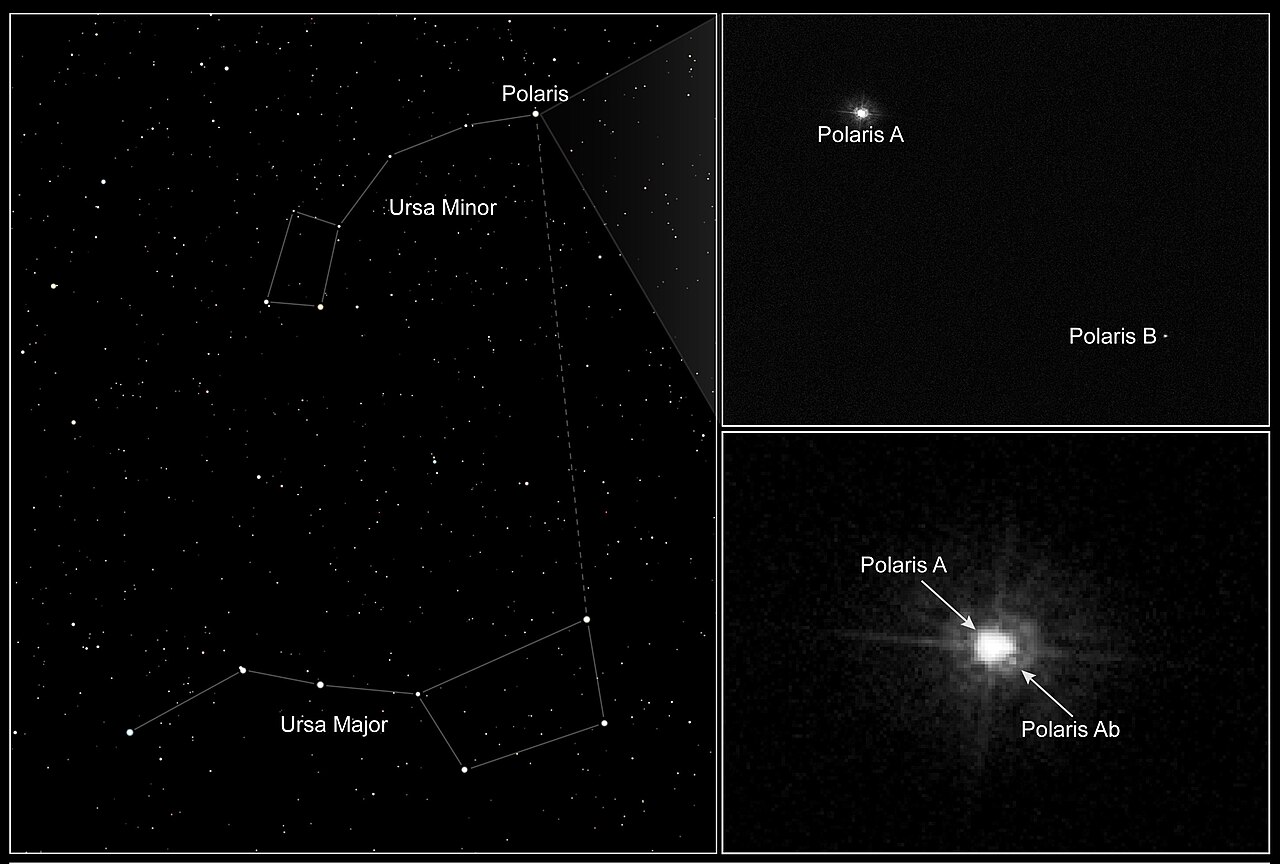
And only since 1100 has α Ursae Minoris become the closest to the North Pole. This will remain so until 3200. Then γ Cephei (Errai) will become the polar star. And from 5000 onwards, β Cephei (Alfirk) will point to the pole.
Toliman system
The closest star system to us is called Toliman. This is the well-known Alpha Centauri, consisting of sun-like components A and B and the red dwarf Proxima, which is actually the closest star-like object to us.
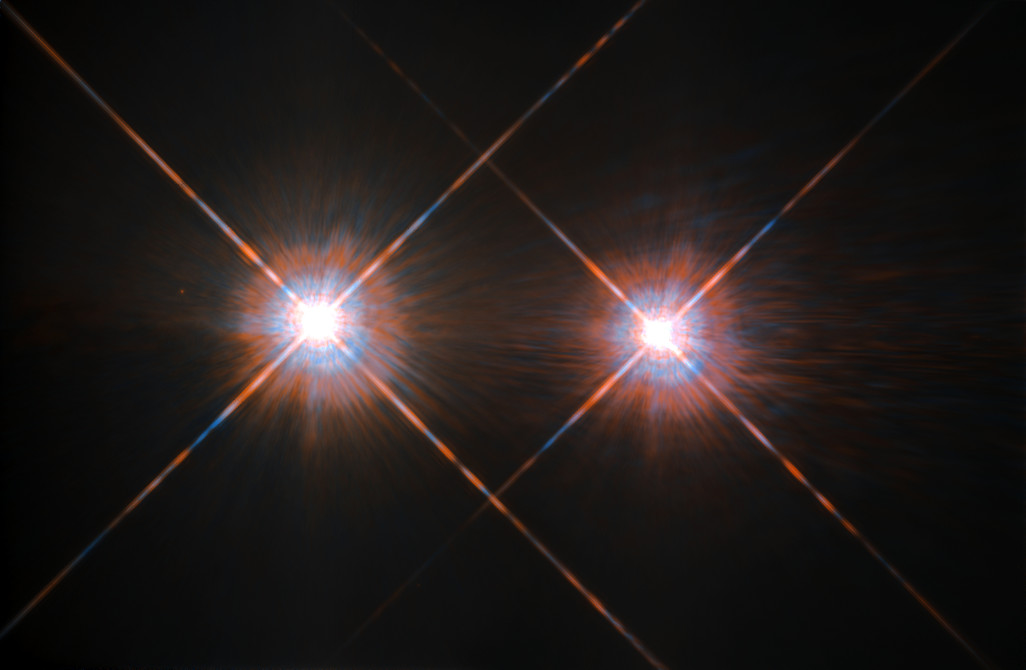
The proper name Toliman came to us from Arabic catalogs and means “ostriches”. This star is also called Rigel Centaurus, meaning “leg of Centaurus”, and Bungula, which may come from the Latin ungula, meaning “hoof”.
Achernar – a flattened star
The star Achernar, or α Eridani, has one of the highest known rotational speeds: at its equator, it is 260-310 km/s. Therefore, this extremely hot blue star is strongly flattened. Its equatorial radius is approximately 50% greater than its polar radius. It also has a white companion star.

Source: wikipedia.org
Achernar is relatively close to us – the distance to it is 139 light-years. Because of this, it is the ninth brightest star in the Earth’s sky. Unfortunately, it is currently impossible to see it in Ukraine, but in about 3,000 years, it will begin to appear low above the horizon for observers in southern Crimea.
The Hyades – the closest star cluster
The Hyades are a group of small stars concentrated in the constellation Taurus. This is the closest star cluster to us. The distance to its “near edge” is less than 80 light-years. The star Aldebaran, which is visible against the background of the cluster, does not actually belong to it.
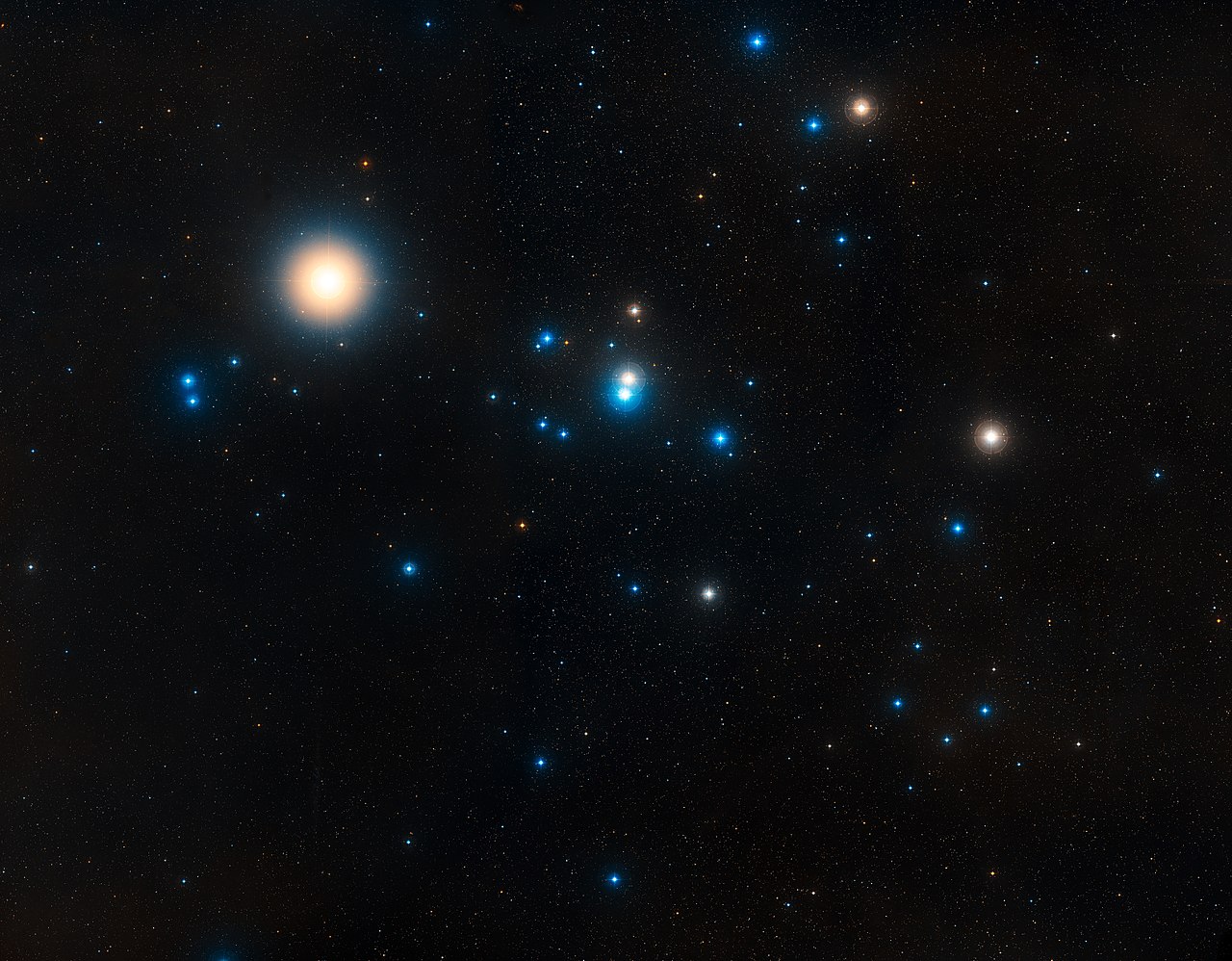
The Hyades are 625 million years old, meaning they formed around the same time as multicellular life on Earth. During this time, the largest stars in the cluster have evolved into red giants and white dwarfs.
S62 – the fastest known star
The star S62 is a hot giant, approximately six times heavier than the Sun. It is located in proximity to the supermassive black hole Sagittarius A* and completes one revolution around it in just 9.9 years.
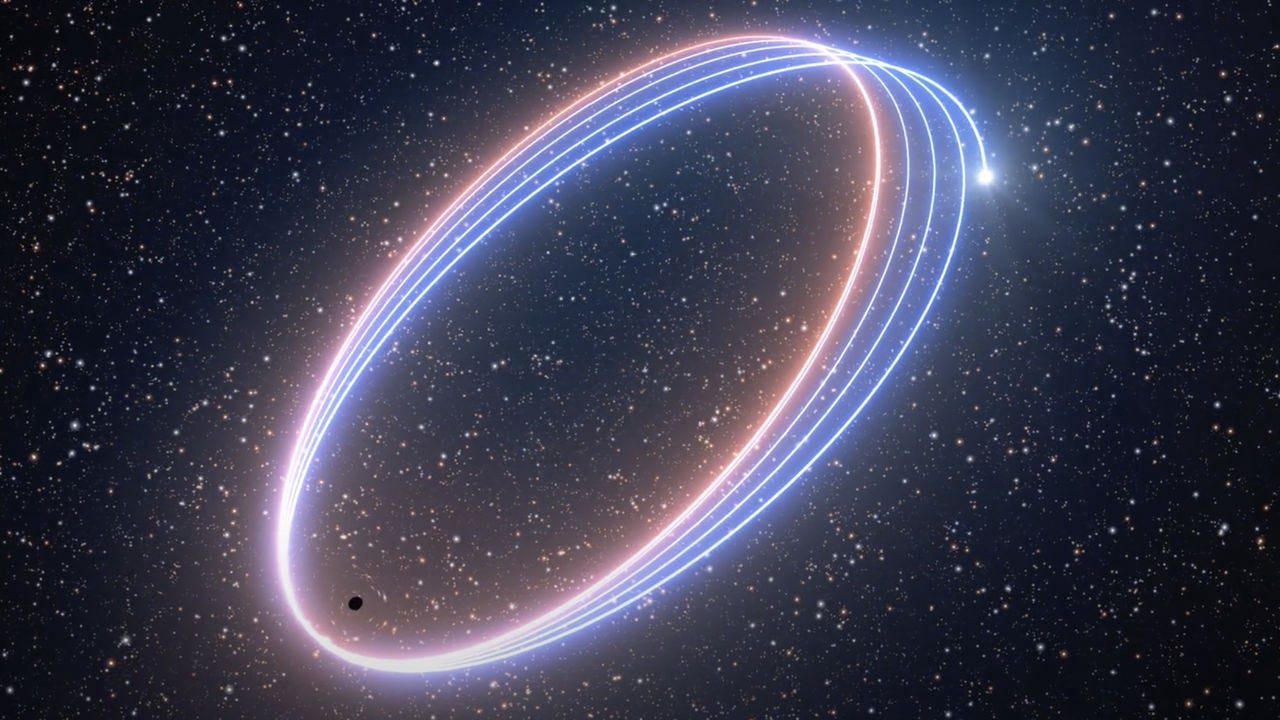
Because of this, the speed of S62 is the highest among all known stars. At the point in its orbit closest to the black hole (scientists call this point the “perimelaneon”), it reaches 10% of the speed of light. At this point, the star is only 16 AU away from Sagittarius A*, which is less than the distance from the Sun to Uranus.

