

A signing ceremony for the Artemis Accords, an international agreement, was held in Washington, D.C., organized by NASA. Latvia has become the 62nd member of a global coalition committed to ensuring the transparent and peaceful exploration of space for the benefit of all humanity.
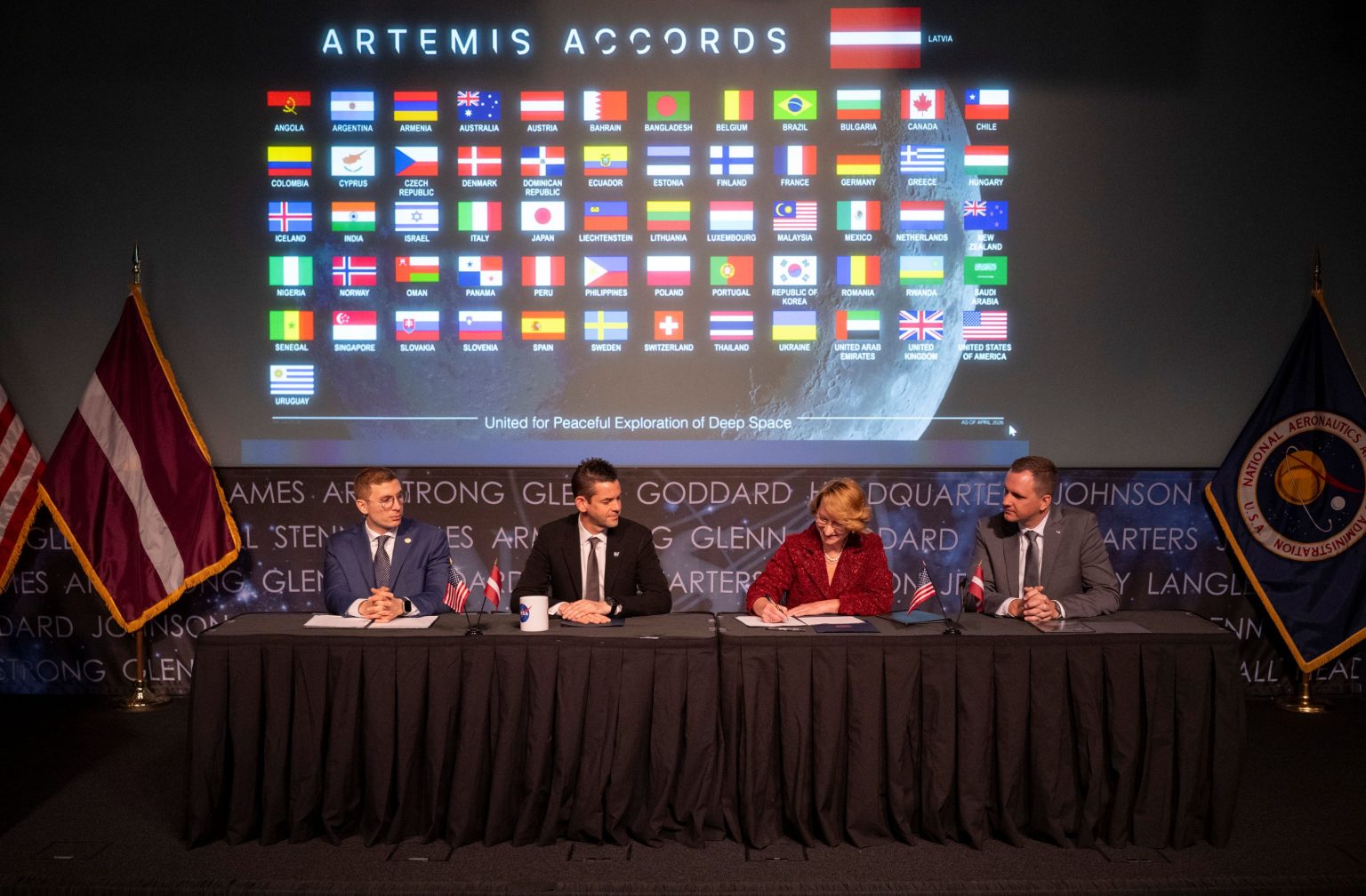
NASA Administrator Jared Isaacman emphasized that every new signatory strengthens the shared vision for the future of exploration: “The Artemis Accords are the foundation for real missions to the Moon. Latvia’s accession strengthens our collective goal.”
Who signed the agreement?
The document was signed on behalf of Latvia by Dace Melbārde, Minister of Education and Science. The ceremony was attended by Latvian diplomatic representatives in the United States and U.S. government officials.
Melbarde emphasized: “Latvia is already contributing to the global space ecosystem through industry and scientific research. Joining the Artemis Accords is an investment in the development of our students, researchers, and innovators.”
History of the Artemis Accords
The Artemis Accords were initiated in 2020 by the United States in collaboration with seven other countries. The document was a response to the growing interest of governments and private companies in lunar programs. It established practical principles for safety and coordination among countries exploring the Moon, Mars, and other celestial bodies.
Last month, NASA announced plans for regular and affordable flights to the Moon with the goal of establishing a long-term base there. Representatives from more than 50 countries participating in the Artemis Accords gathered in Washington to discuss new opportunities for science and technology.
Basic Principles
Signing the Agreements entails the following commitments:
- to act peacefully and transparently;
- to provide assistance when necessary;
- to make scientific data available to all of humanity;
- to refrain from interfering in the activities of other participants;
- to preserve historically significant sites and artifacts.
These rules form the foundation for responsible space exploration.
NASA expects the number of Artemis Accords signatories to grow. The goal is to create a safe, peaceful, and prosperous future in space, where international cooperation will be the key to new discoveries.
We previously discussed the planning process for space missions.
According to NASA

