

The James Webb Space Telescope (JWST) has discovered the most distant supernova ever observed. It exploded when the Universe was only 730 million years old.
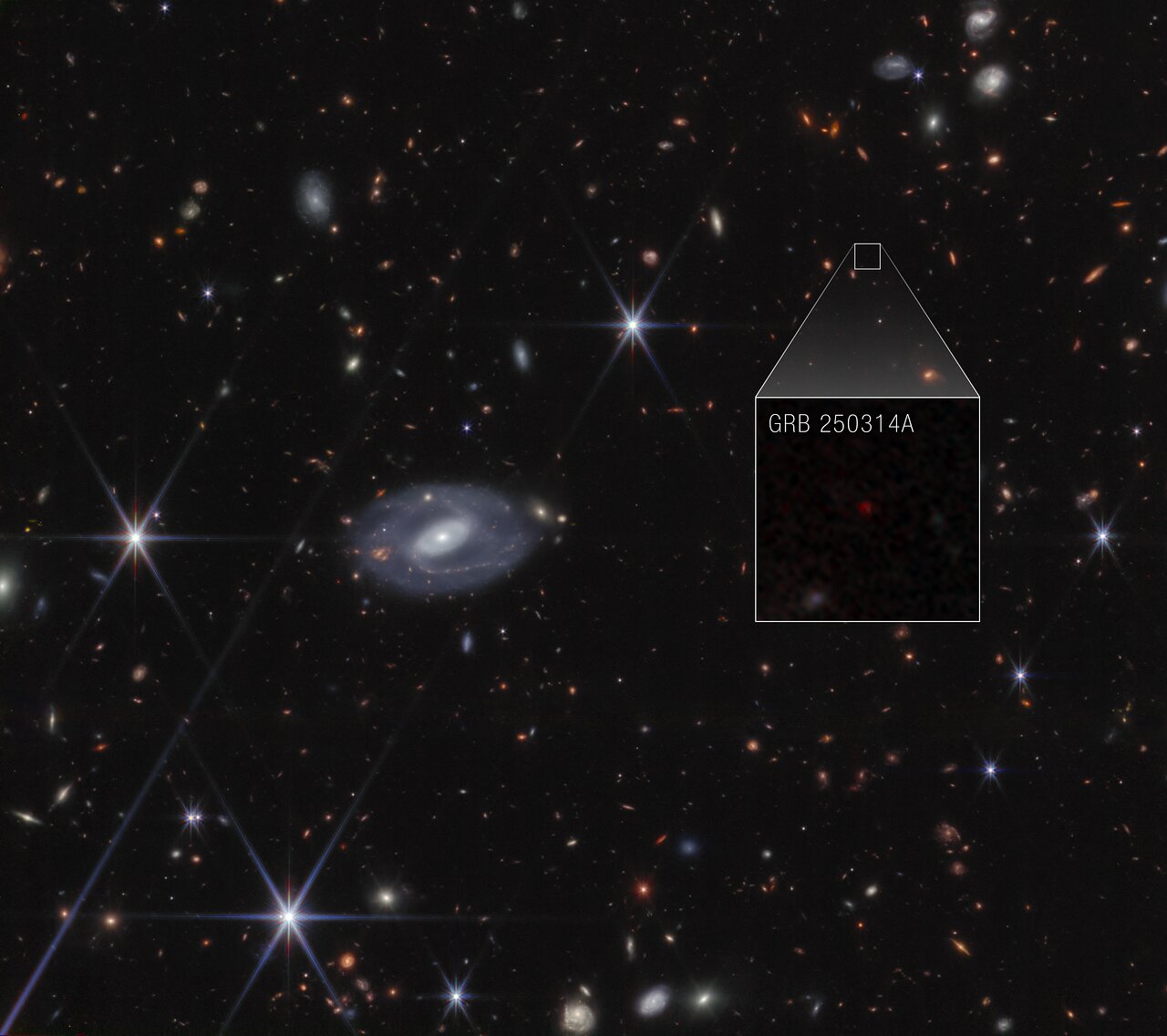
On March 14, 2025, the Franco-Chinese X-ray telescope SVOM detected a gamma-ray burst designated GRB 250314A. During subsequent observations, the Northern Optical Telescope in the Canary Islands recorded its infrared afterglow, indicating that it was located at a very great distance from Earth.
Further observations made with ESO’s Very Large Telescope confirmed this and allowed the distance to the source of the burst to be estimated. It was a giant star that collapsed and turned into a supernova. This happened only 730 million years after the Big Bang.
The JWST was used for confirmation. It managed to capture the light from the supernova explosion. Thus, the JWST broke its own record: the previous most distant supernova it had photographed existed when the Universe was 1.8 billion years old.
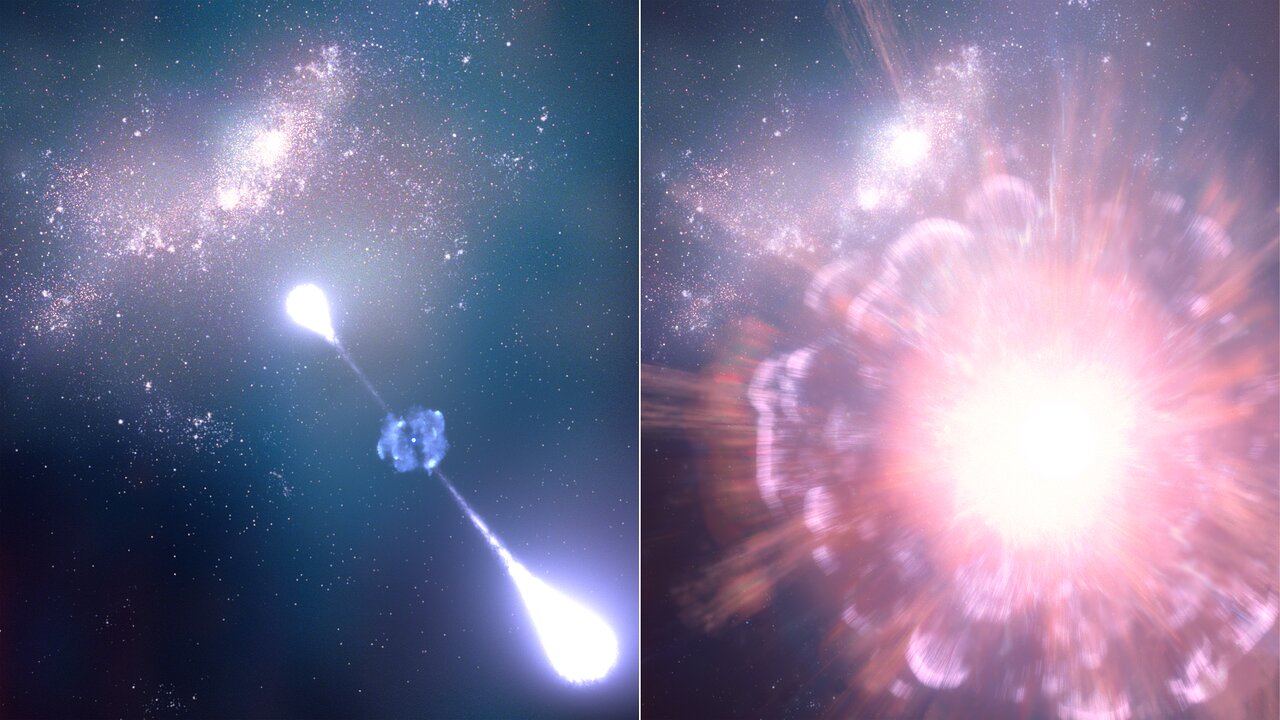
Since this is the earliest and most distant supernova discovered to date, researchers compared it with what they know well—modern nearby supernovae. Both turned out to be very similar, which surprised them. The fact is that little is known about the first billion years of the Universe’s existence. Early stars probably contained fewer heavy elements, were more massive, and had shorter lifespans. They also existed during the reionization era, when the gas between galaxies was mostly opaque to high-energy light. Nevertheless, they appear to have been similar to modern supernovae.
As for the galaxy that is home to the record-breaking supernova, it is similar to other galaxies that existed at the same time. Due to the very large distance, it is still difficult for researchers to distinguish any details of its structure.
Scientists have already developed plans to reuse JWST to learn more about gamma-ray bursts in the early Universe. They hope to capture their afterglow, which will allow them to obtain a “fingerprint” of the galaxy.
According to Esawebb

