

While studying satellite data, American scientists discovered the largest lightning in history. Its length was 829 km.
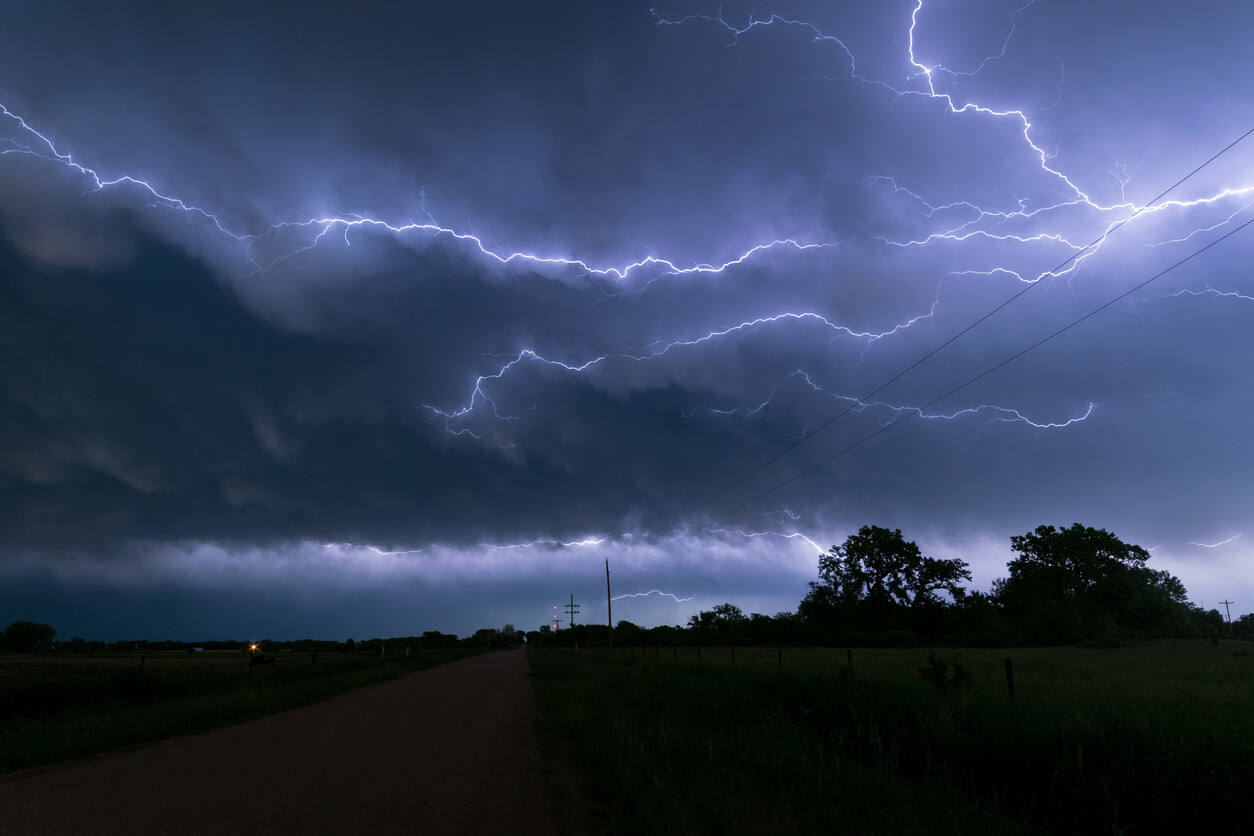
Most lightnings are no longer than 15 km, which is determined by the height of the thundercloud and the distance to the ground. However, there are also horizontal lightnings, which can be much longer. Lightnings longer than 100 km are called megaflash lightning.
According to scientists, less than 1% of thunderstorms are accompanied by megaflashes. They are caused by prolonged thunderstorms, which typically last 14 hours or more, and are enormous in size, covering an area comparable to the size of Sicily. The average megaflash “fires” five to seven branches, striking the ground from its horizontal trajectory across the sky.
For many years, meteorologists have used ground-based antennas to detect and measure lightning. They detected radio signals emitted by lightning and then estimated the location and speed of movement based on the time it took for the signals to reach other antenna stations in the network.
Everything changed after satellites began to be used to track lightning strikes. In 2016, the National Oceanic and Atmospheric Administration launched the GOES-16 geostationary satellite. Every day, it tracks around a million lightnings. Its detectors allow it to determine their exact location and length.
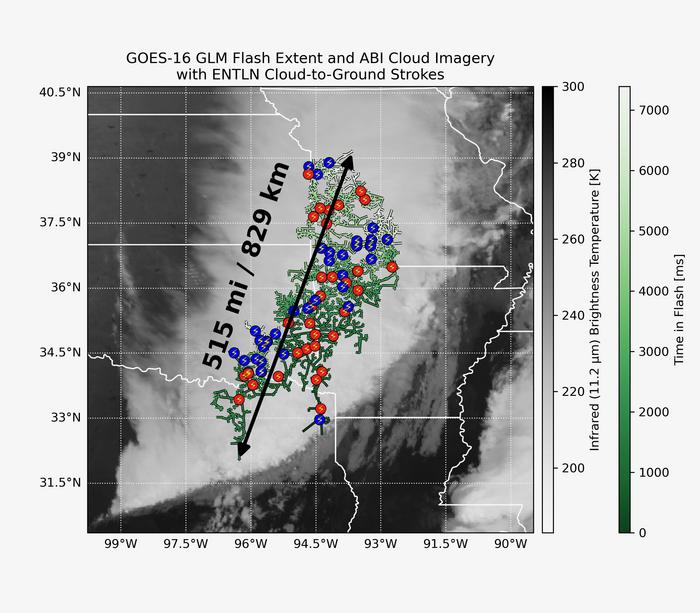
During a re-examination of GOES-16 archive data, scientists from the University of Arizona discovered a record-breaking megaflash. It formed in October 2017 over the Great Plains and was 829 km long. This is 61 km longer than the previous record holder, recorded during a thunderstorm in April 2020 in the southern United States.
According to researchers, there are even more extreme weather phenomena on Earth. They will be discovered as observational data accumulates.
Earlier, we reported on a giant jet discharge in the upper layers of the Earth’s atmosphere, accidentally photographed by the ISS crew.
According to Eurekalert

