

Specialists at the Goddard Space Flight Center have completed installation of a solar shield on the Roman telescope. This was one of the last important steps towards completing its assembly.
NASA’s new flagship observatory
Roman is NASA’s new flagship telescope. It is equipped with a 2.4-meter mirror, similar to the one installed on the Hubble telescope, which will allow it to obtain images with similar detail. At the same time, Roman will have a field of view that is 100 times greater.
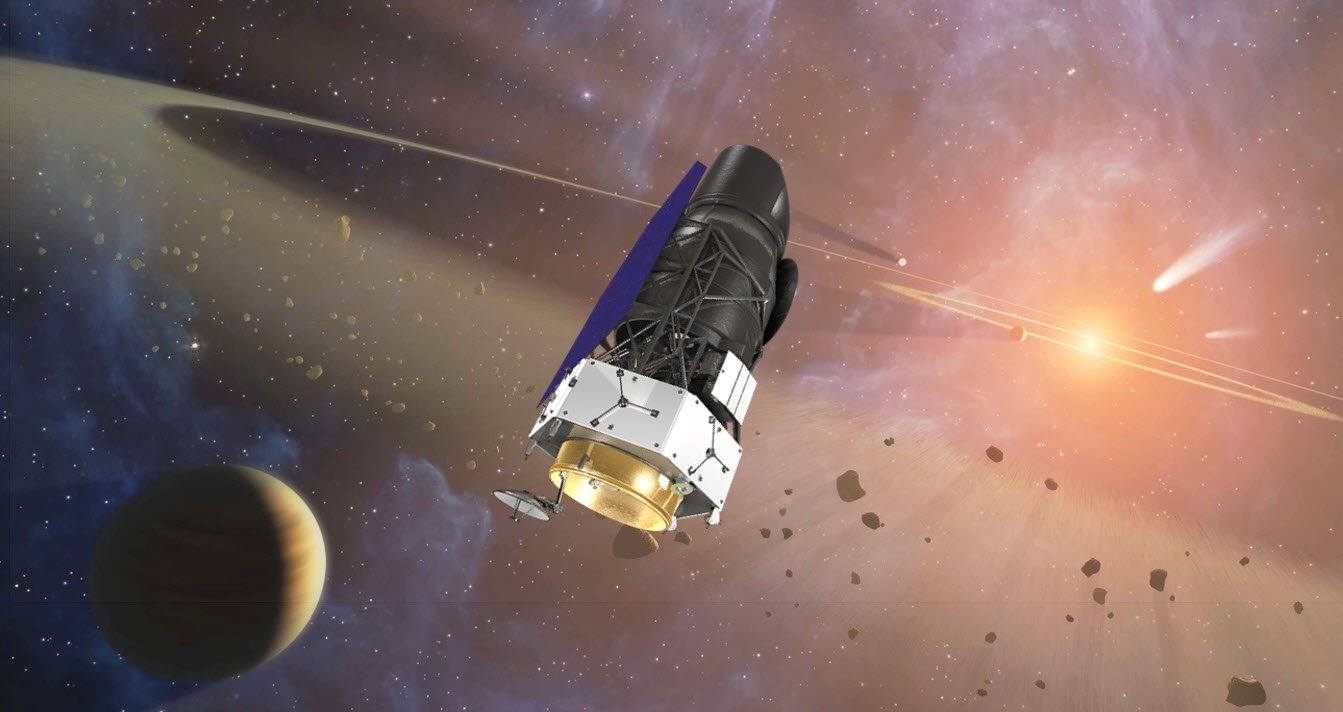
Roman’s main task is to study large-scale structures in the Universe, investigate the influence of dark matter on galaxies, and search for supernovae and gravitational lenses. The telescope will conduct observations in the near-infrared range. This will enable it to detect bodies hidden in the thick interstellar dust clouds and observe extremely distant objects whose radiation has shifted into the infrared region of the spectrum.
The new telescope is also planned to be used for searching for and photographing exoplanets. With the aim of doing this, it was provided with a coronagraph with a diameter of 1.7 meters. It is equipped with a complex set of masks and active mirrors that will eclipse the stars.
Assembling the Roman telescope
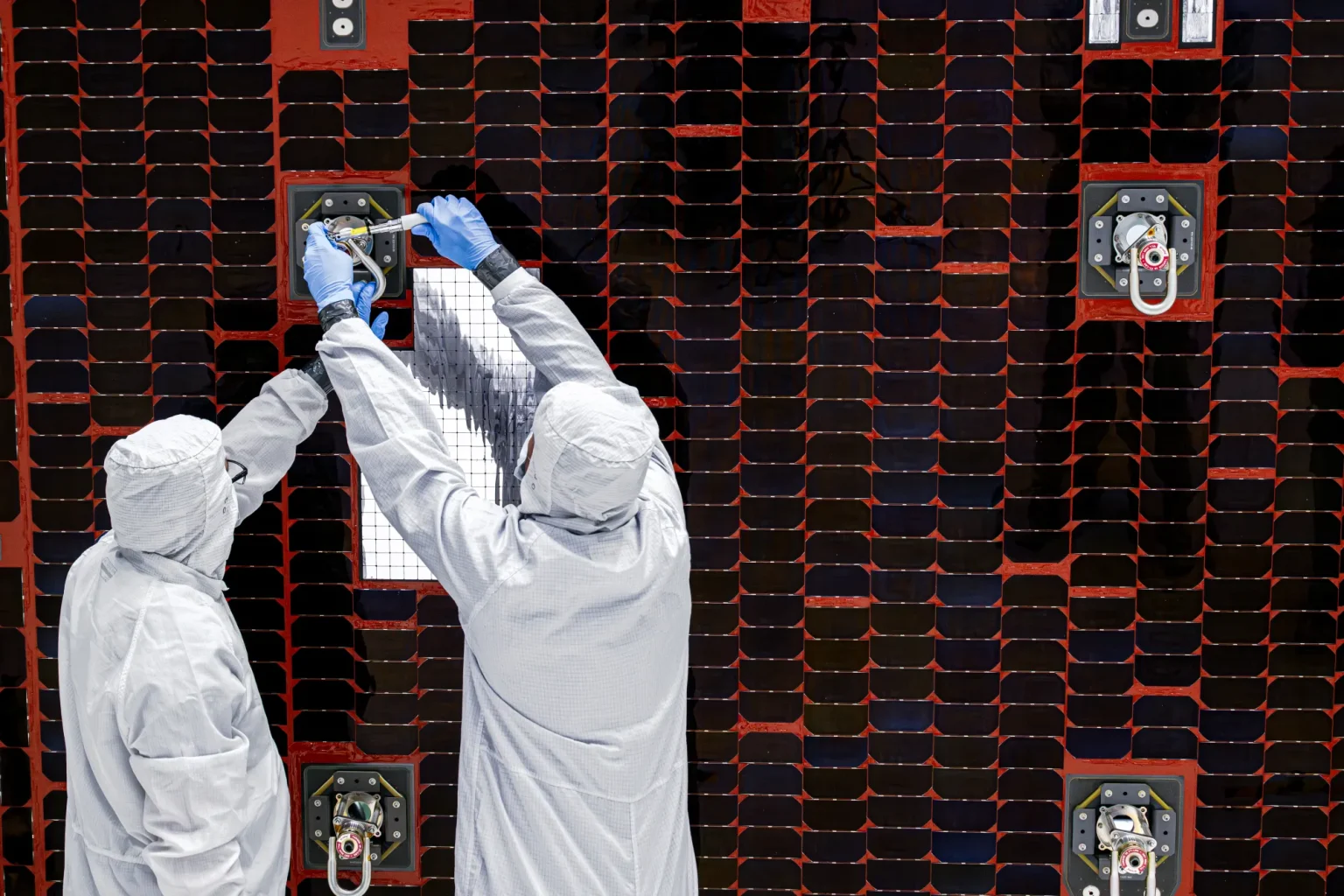
Roman is currently in the final stages of assembly. In June, NASA specialists installed a solar shield on it. It will provide the observatory with energy and protect it from the Sun.
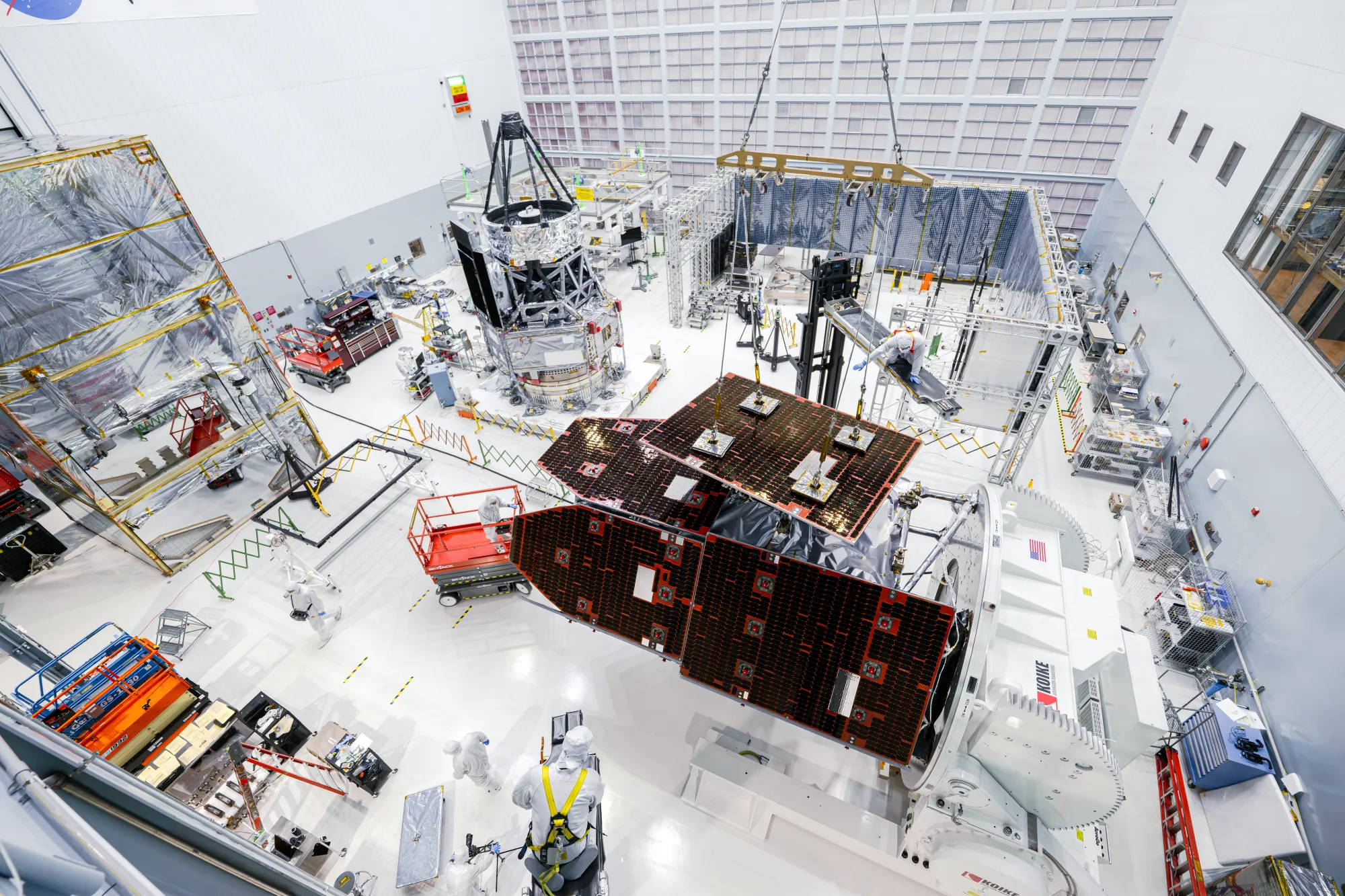
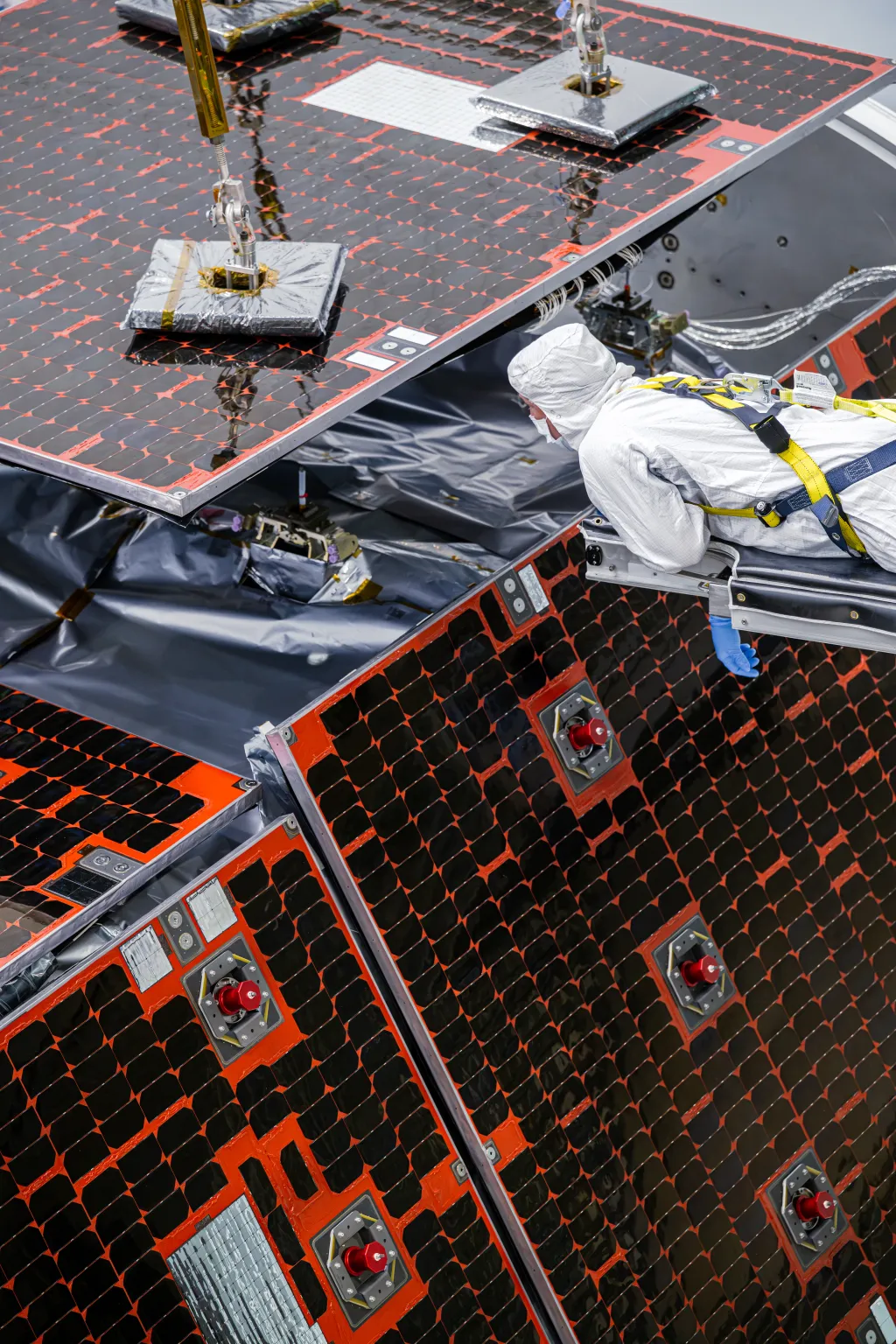
The Roman sun shield consists of six panels, each covered with solar panels. The two central panels will remain fixed to the outer cylindrical unit (the observatory’s outer shell), while the other four will unfold once Roman is in space and rise to align with the central panels.
Throughout the mission, the panels will be oriented toward the Sun to provide stable power to Roman’s electronics. This orientation will also shade most of the observatory and help keep the instruments cool, which is super important for them to work well. Since infrared radiation is perceived as heat, excess heat from the spacecraft’s own components can overload the detectors and effectively blind them.
According to the project management, after installing the sun shield, Roman is approximately 90% complete. Next, specialists will conduct tests on the deployment of the panels and the observatory’s “canopy” (deployable aperture cover), as well as test its main section, where the scientific instruments are located. After that, the outer and inner segments of Roman will be joined together and subjected to comprehensive testing.
According to the official schedule, Roman is set to launch no later than May 2027. However, the mission team hopes that the telescope will be launched into space several months earlier, in the autumn of 2026. Given the uncertainty related to NASA’s new budget, this jump start could help the project survive the planned cuts in scientific research spending.
According to NASA

