

L 98-59 is a small red dwarf located 35 light-years away from us. Four planets had already been discovered around it. Now scientists have used ground-based and space telescopes to find a fifth.
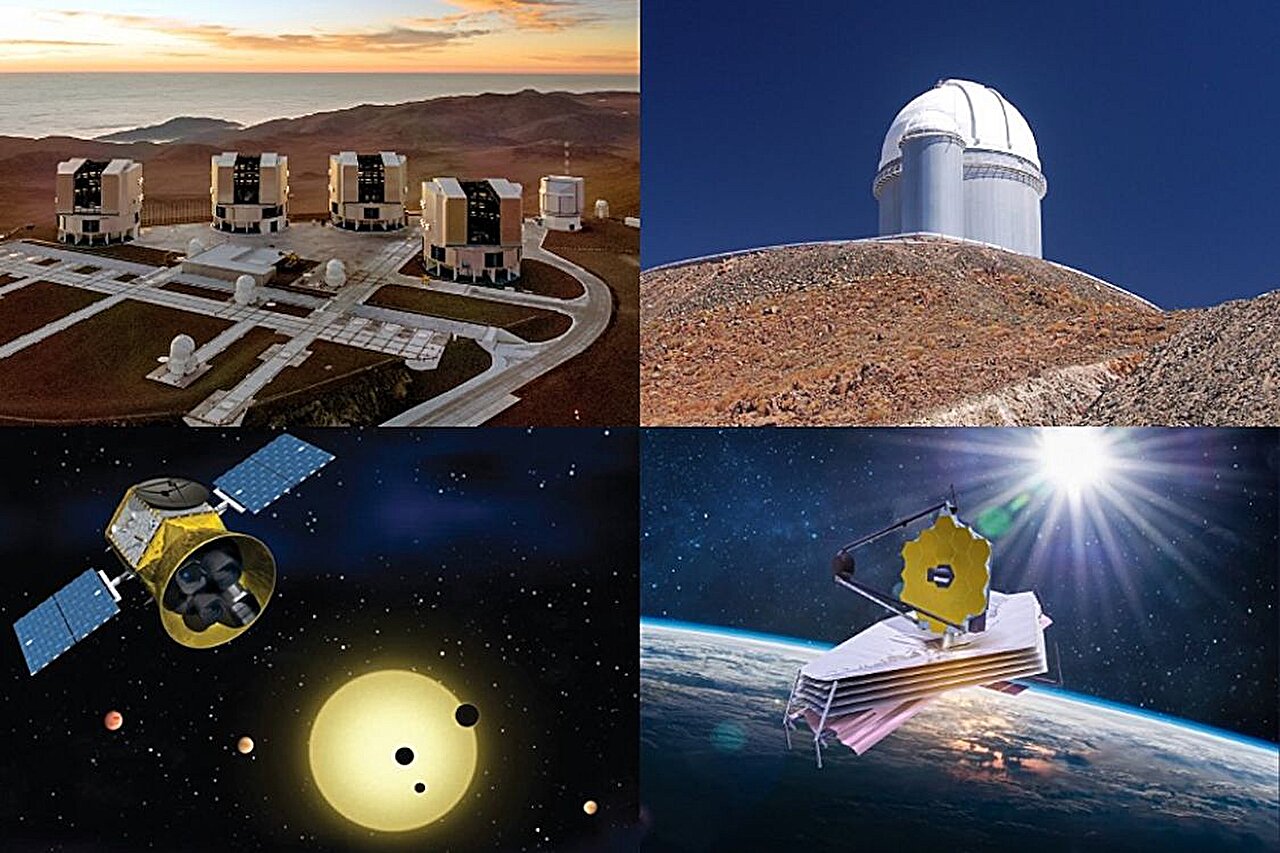
L 98-59 system
There are not many systems in the known Universe that have five or more planets. And recently, another one was discovered. This refers to a new world in the L 98-59 system, as reported in The Astronomical Journal by researchers at the University of Montreal.
Back in 2019, the TESS space telescope discovered three planets orbiting L 98-59 using the transit method. The fourth was discovered a little later using the ESPRESSO spectrograph located at the European Southern Observatory.
All planets known to date in the L 98-59 system have sizes and masses more or less similar to those of Earth. The two inner ones are hotter than Earth, while the two outer ones are colder.
The fifth planet
And now scientists have discovered the fifth planet in the L 98-59 system, although in reality it is the third planet from the local sun. Interestingly, in order to identify it, astronomers used data from the same TESS and ESPRESSO that discovered the previous four. Only this time, the information from them was combined.
The new planet has been named L 98-59 f. However, it is not a transit planet, meaning that it does not pass between us and its star, and TESS cannot see it. Obviously, its orbit has a slightly different inclination than that of other worlds in the system.
However, based on the star’s own movement, its presence is clearly determined. And most interestingly, it is located in an area where liquid water may exist. And once again, this world is quite similar in size to Earth.
All this makes it one of the best candidates for the search for life beyond Earth. The next step should be to study the planet using the James Webb Telescope. Its spectrograph is fully capable of finding biomarkers in the planet’s atmosphere.
According to phys.org

