

On September 2, a frightening cloud resembling a mushroom cloud was spotted in the sky above Dnipro, as reported by many Ukrainian Telegram channels. Fortunately, this phenomenon is entirely natural in origin and is related to weather conditions.

From a scientific point of view, this type of cloud is called Cumulonimbus incus, which translates as anvil cloud. It forms when a large mass of warm air rises to a considerable height and reaches the tropopause — the boundary between the troposphere and the stratosphere. In temperate latitudes, it is located at an altitude of 10–12 km.
Upon reaching the tropopause, the cloud stops growing and, due to strong winds at this altitude, begins to spread out, forming a shape resembling an anvil or a giant mushroom cloud reminiscent of the aftermath of a nuclear test.
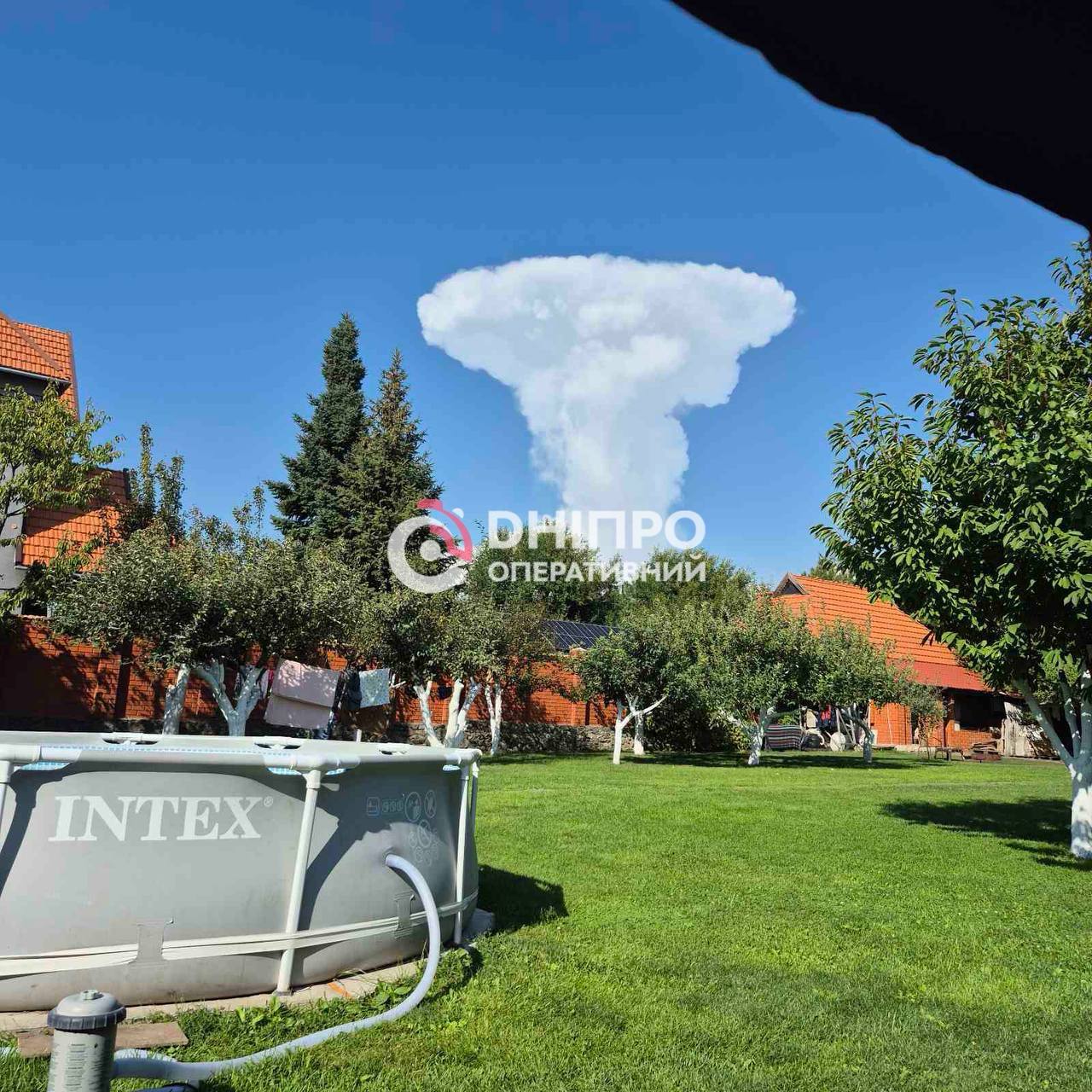
Although an anvil cloud has nothing to do with a nuclear explosion, it can be a source of potentially dangerous weather phenomena. Since warm air is less dense than cold air, descending currents of colder air form in the anvil. When they reach the ground, they can cause meteorological phenomena such as thunderstorms, hail, and squalls.
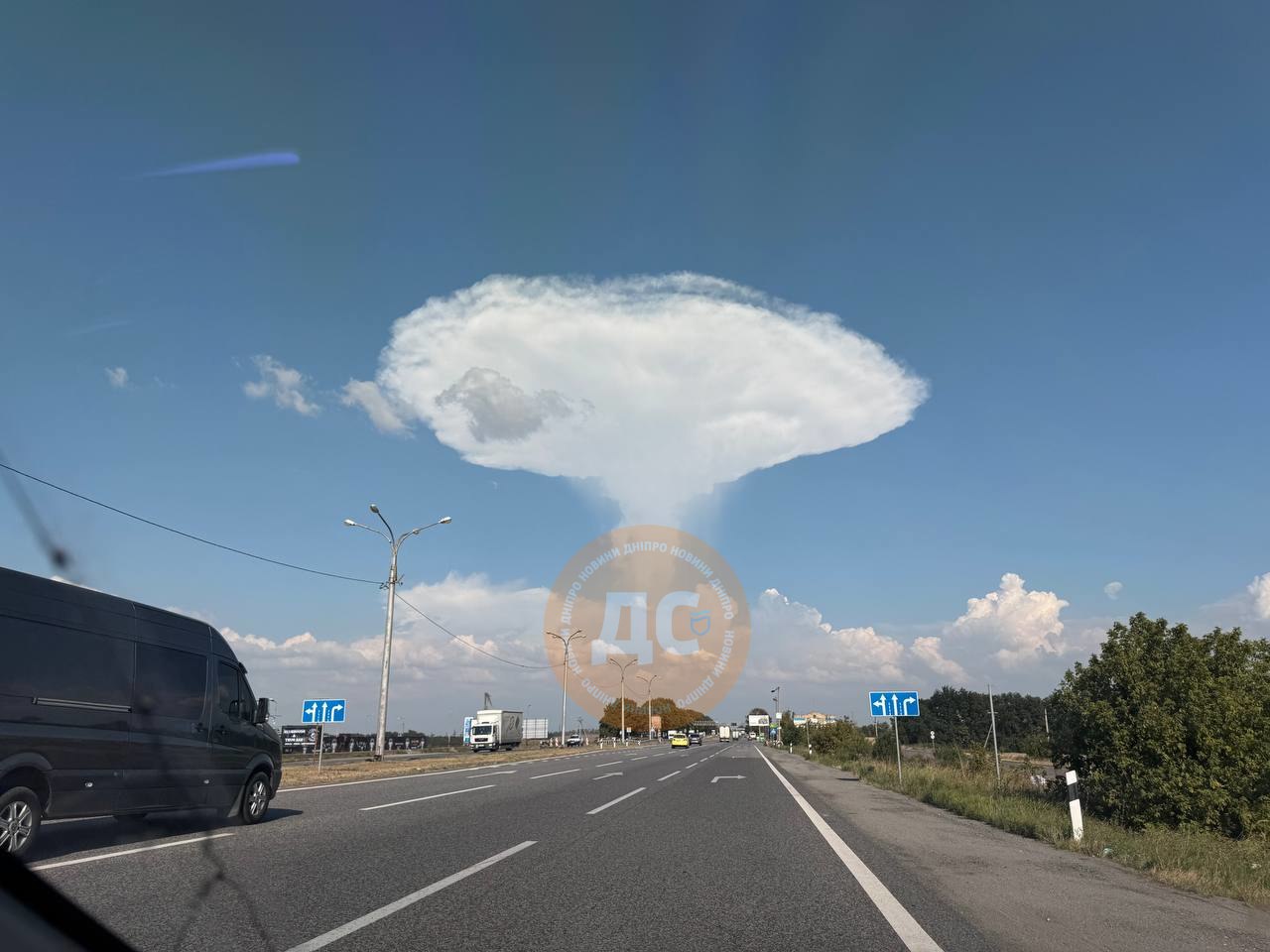
Recall that last year a similar mushroom cloud was seen over Zaporizhzhia.

