

On December 8, the Sun produced a powerful solar flare. It caused temporary communication disruptions in Australia and Southeast Asia.
Classification of solar flares
The Sun is currently experiencing another peak in its activity. It regularly produces flares, which are often accompanied by coronal mass ejections. When such an ejection reaches Earth, it causes geomagnetic storms, which may be accompanied by auroras.
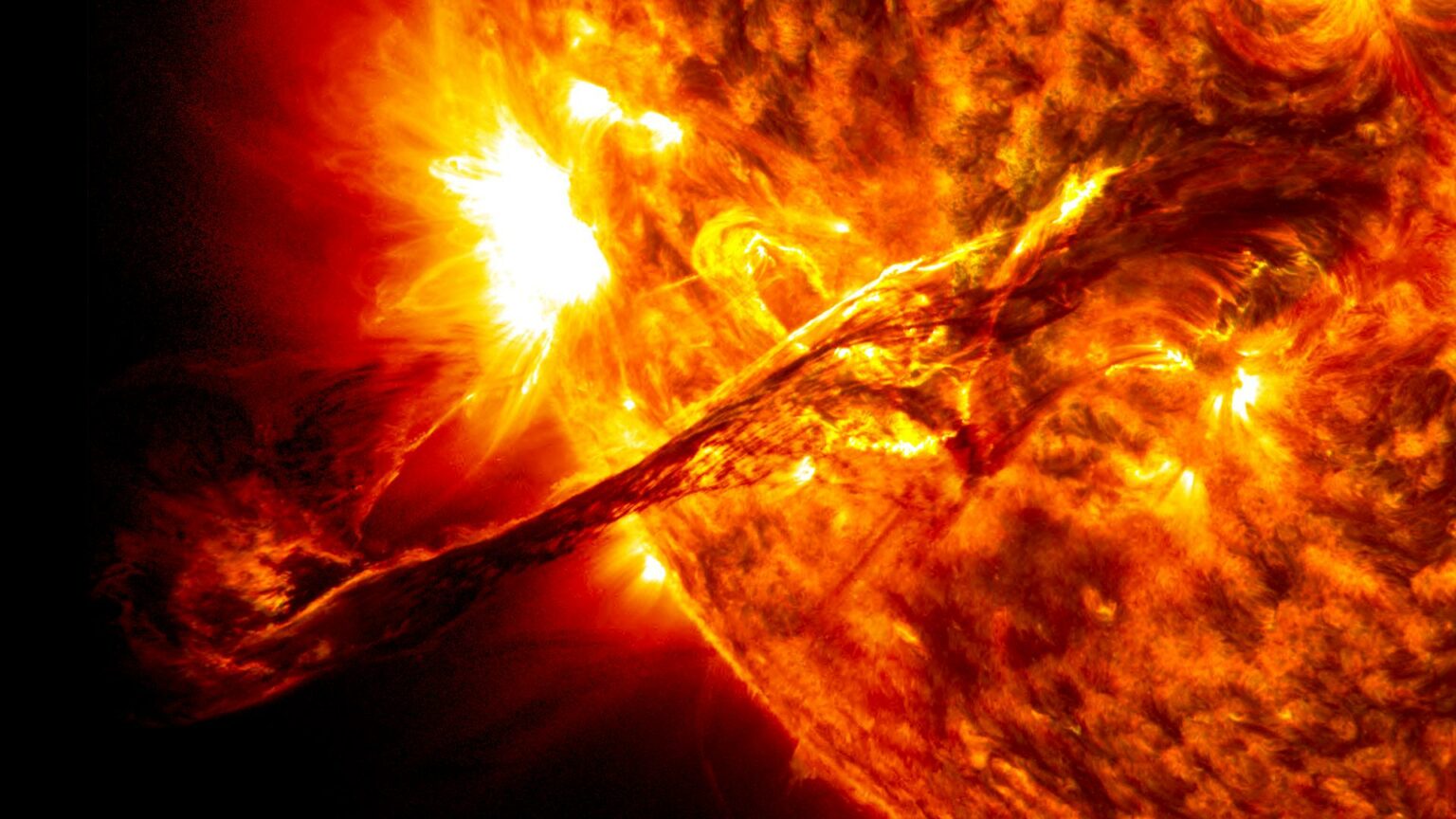
Depending on their strength, solar flares can be assigned a score — a Latin letter followed by a number. The letters can be A, B, C, M, or X. X corresponds to the strongest flares. They are ten times more powerful than the previous M class. The number indicates the peak intensity of the flare.
Communication interruptions
Another powerful solar flare occurred on December 8. Its source was the active region AR4298. The flare was classified as X1.1. It was accompanied by a coronal mass ejection, the direction of which astronomers estimated was not toward Earth. Nevertheless, the flare caused temporary communication disruptions in Australia and Southeast Asia.
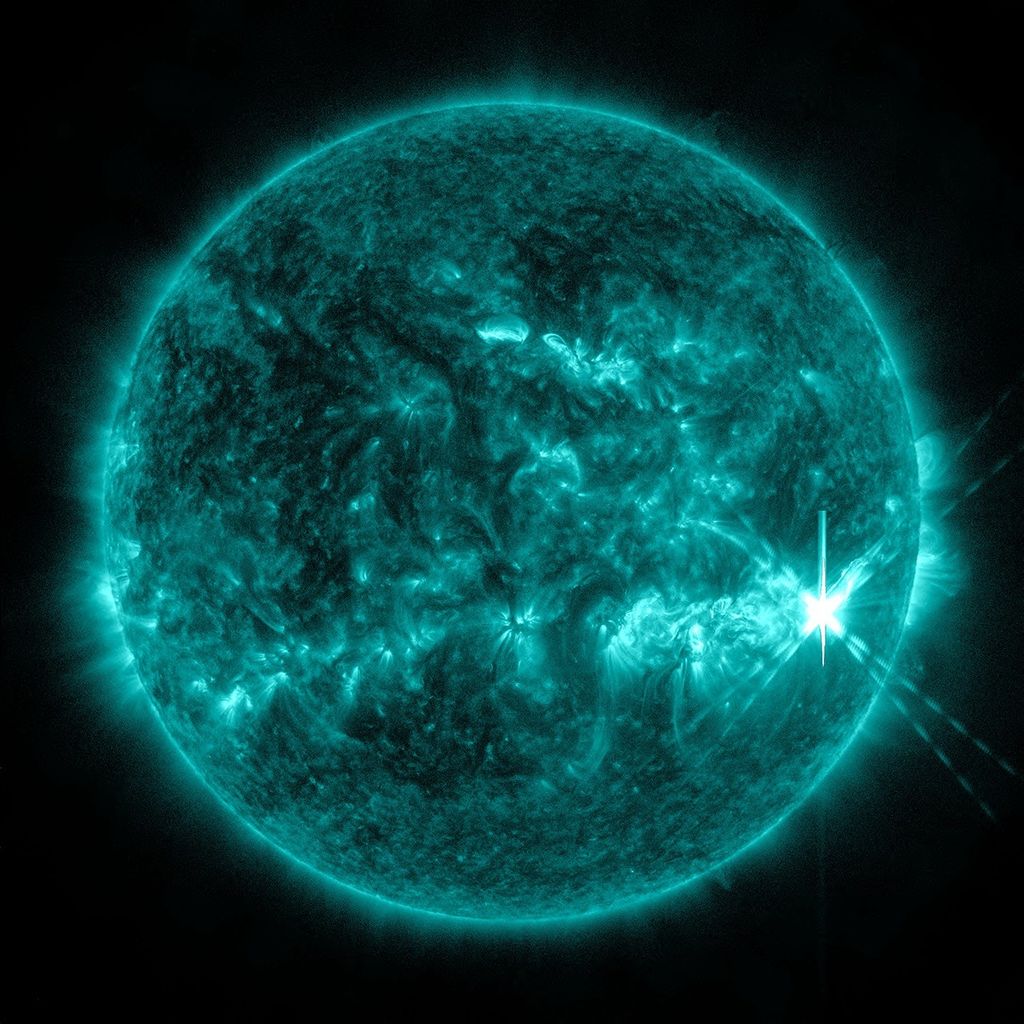
Such interruptions occur because radiation from the flare ionizes the upper layers of the atmosphere. Normally, high-frequency radio waves travel long distances by reflecting off the upper, more sparse layers of the ionosphere. But during a strong flare, the lower, denser layers of the ionosphere are ionized instead. Radio waves passing through these layers collide with particles more often, losing energy. As a result, high-frequency radio signals can be attenuated, distorted, or disappear completely.
It is worth noting that although the coronal mass ejection from the X1.1 flare is not directed towards Earth, scientists predict that medium-intensity geomagnetic storms are still possible in the coming days. These could be caused by coronal mass ejections from previous flares, which will reach Earth on December 9.

