

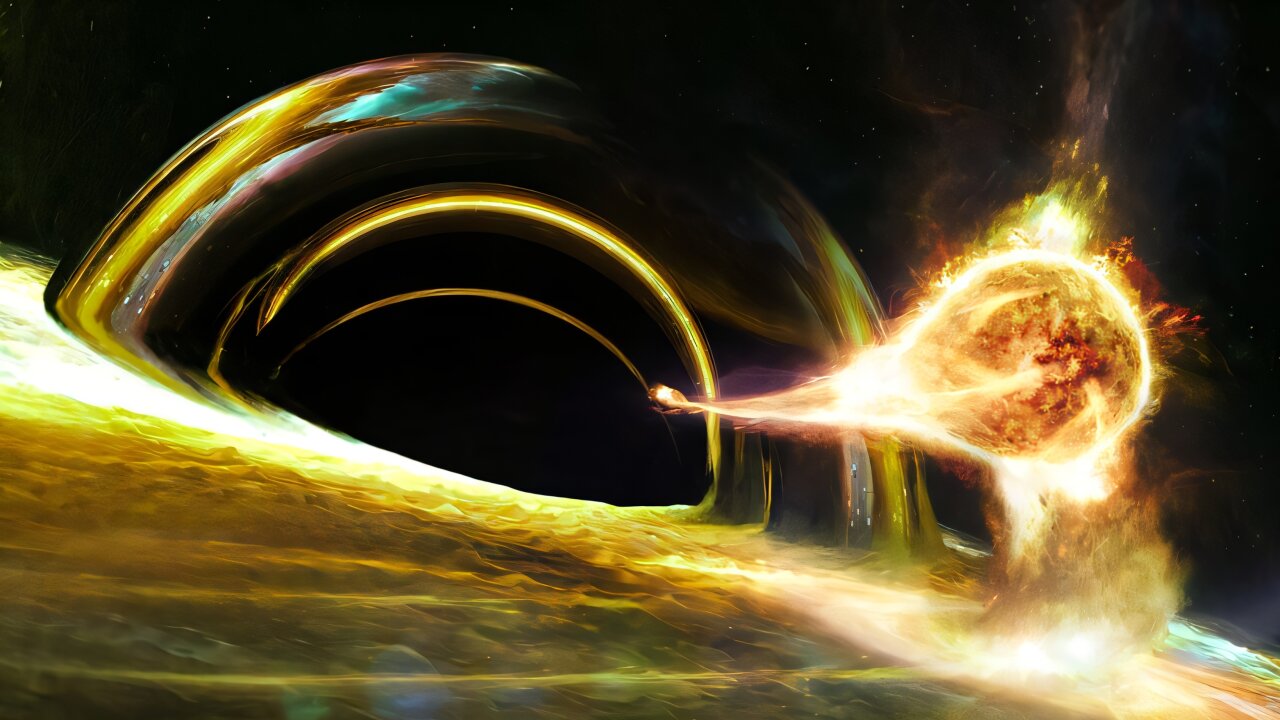
Scientists have recorded a flare from a star that is being torn apart by the gravity of a black hole. Interestingly, something similar happened to these same objects in 2022. But then the star managed to survive.
Repeated tidal destruction
Scientists from Tel Aviv University presented a study describing a flare that was recently recorded near a black hole in the center of a distant galaxy. We are talking about tidal disruption events. This is the name given to situations where stars carelessly approach such monsters and gravity tears them apart.
The sensation is that in 2022, the same supermassive black hole already recorded a tidal disruption event, AT 2022dbl. And then all decided that the star had not survived. However, the reappearance of a bright flare means that it escaped destruction.
In other words, part of the material was torn off, but the star flew past the pericenter and moved away to a considerable distance. However, the orbit subsequently brought it back to the same point.
Repetition of events
Although tidal destruction events appear to be genuine catastrophes, there is nothing surprising about them. The density of stars around supermassive black holes is the highest in their galaxies. So, it’s quite normal that somewhere once every 10,000,000 years, one of the stars is torn to pieces by them.
This is even beneficial for Earth-based scientists, as this event is visible across the entire Universe and allows them to study supermassive black holes, which usually reveal very little about themselves. And inflow destruction doesn’t always mean the star will totally die.
Now scientists are eagerly awaiting to see if the same thing will happen in the same galaxy for the third time. After all, no one knows for sure how many times a black hole can tear pieces from a star before finally pulling it apart.
According to phys.org

