

On July 15, a powerful flare erupted on the surface of the Sun. A giant solar filament — a cold, dense ribbon of gas — burst forth from our star. This led to the release of a huge amount of plasma into space. The energy of the explosion was so powerful that it left a deep “scar” of hot plasma and debris on the Sun.
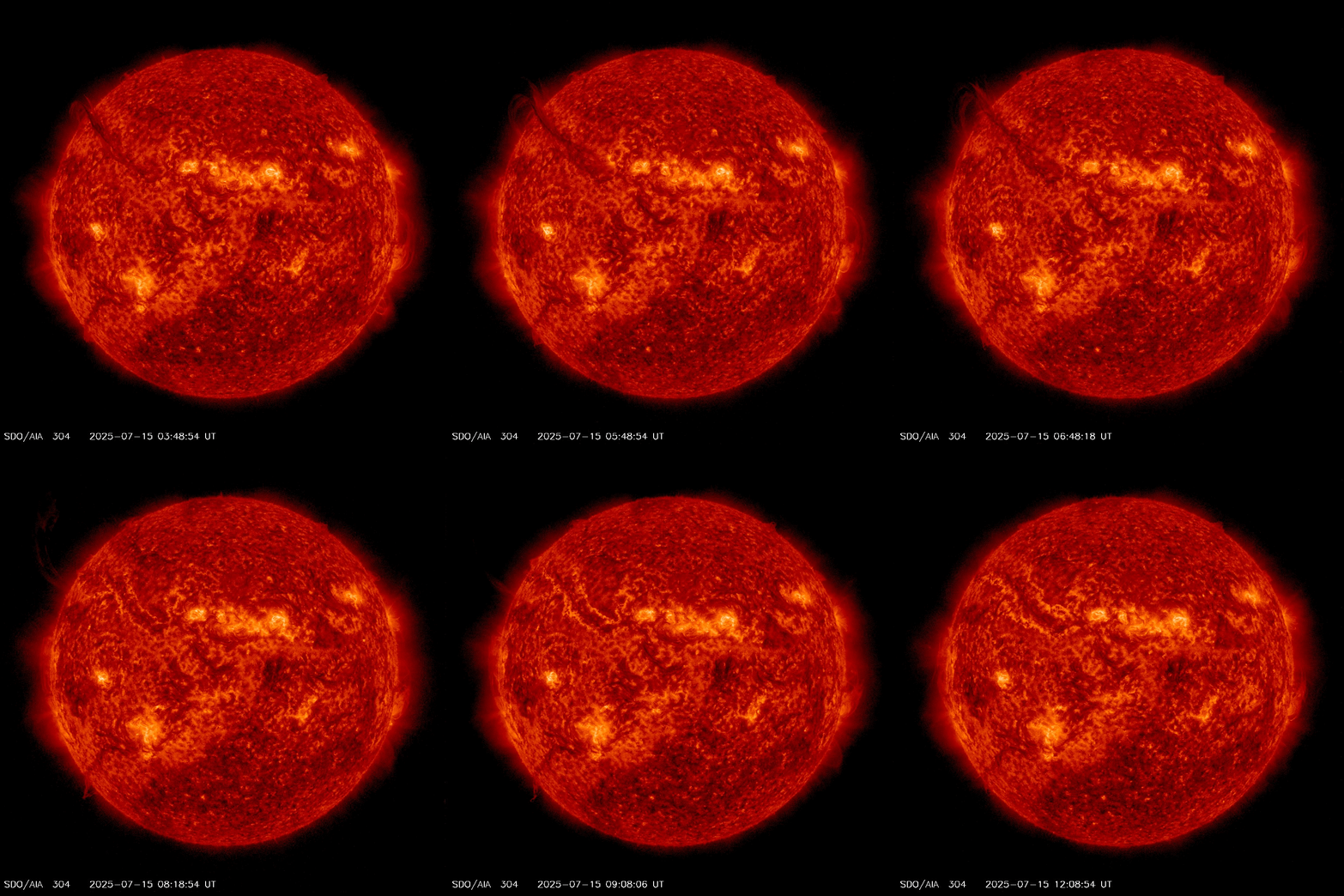
Astronomers, who had noticed an unusually large filament the day before, were ready to observe it. The Solar Dynamics Observatory (SDO) recorded its destructive consequences: the formation of a giant “fire canyon.”
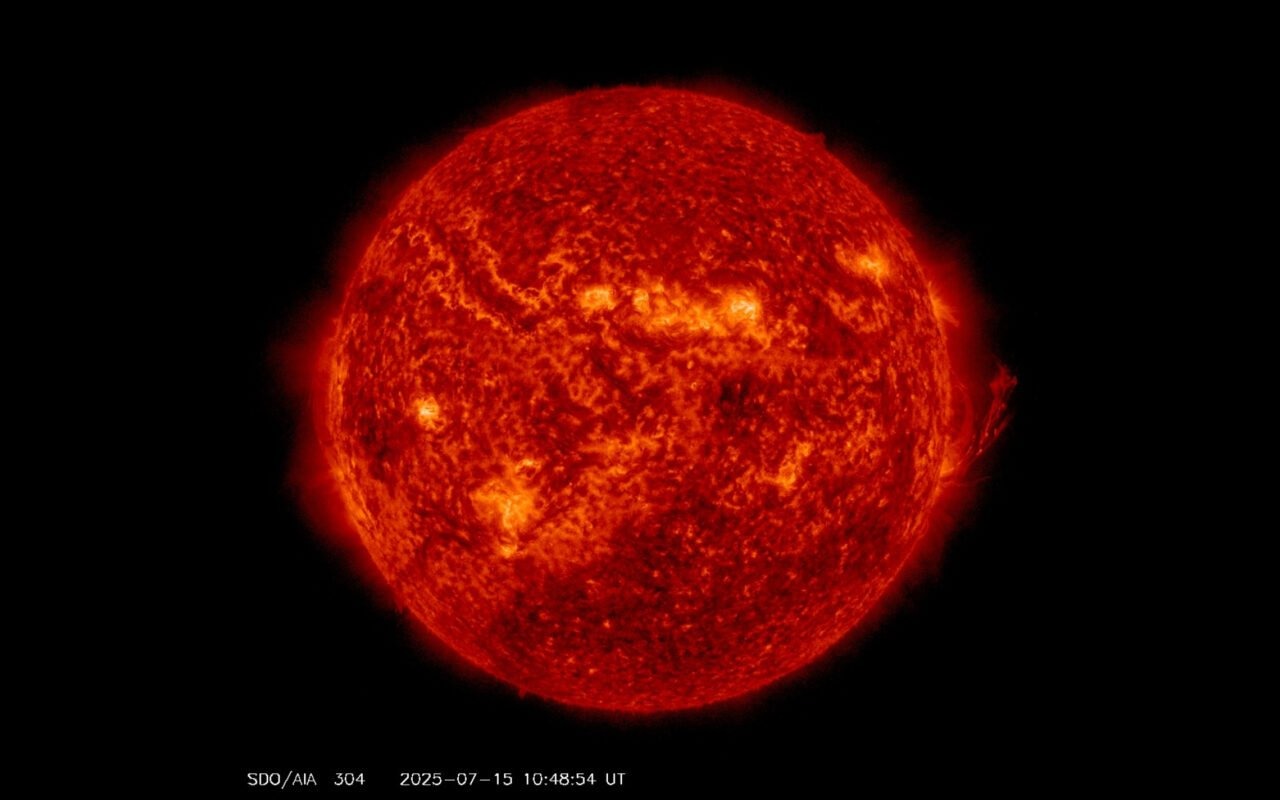
According to astronomer Tony Phillips from Space Weather, this canyon stretches over 400,000 kilometers in length and is at least 20,000 kilometers high. Phillips called this sight “a real Grand Canyon” on the Sun.
Danger of solar flares
Observing solar filaments has practical significance. Their eruptions are often accompanied by coronal mass ejections (CMEs) – powerful clouds of plasma and magnetic fields. If such an eruption reaches Earth, it could trigger powerful geomagnetic storms. These storms pose a risk to the operation of power grids, satellite communications, and navigation systems.
For astronauts in open space, they are dangerous due to increased radiation levels, which makes spacewalks impossible for a certain period of time.
Is there a threat to Earth?
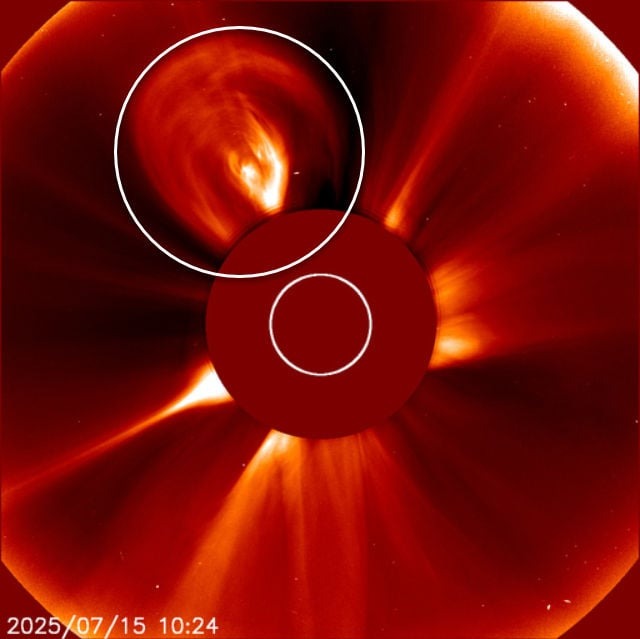
Fortunately, further data from the Solar and Heliospheric Observatory (SOHO) and the National Oceanic and Atmospheric Administration (NOAA) showed that this particular coronal mass ejection was moving away from our planet. Consequently, no serious consequences for Earth are to be expected.
Now scientists are closely monitoring how long the impressive “fire scar” will remain visible on the disk of our star.
Earlier, we explained why Earth is farthest from the Sun in summer, not winter.
According to gizmodo.com

