

In early 2023, the scientific community surprised the world with a strange discovery. German researchers studying deep-sea sediments in the Pacific Ocean have discovered an unusual spike in the concentration of the radioactive isotope beryllium-10 (10Be). This element is formed in the Earth’s atmosphere under the influence of cosmic rays and settles evenly on the planet. However, the peak found, which dates back to around 10 million years ago, was abnormally high. One of the most plausible explanations was the explosion of a supernova near our Solar System at precisely that time.
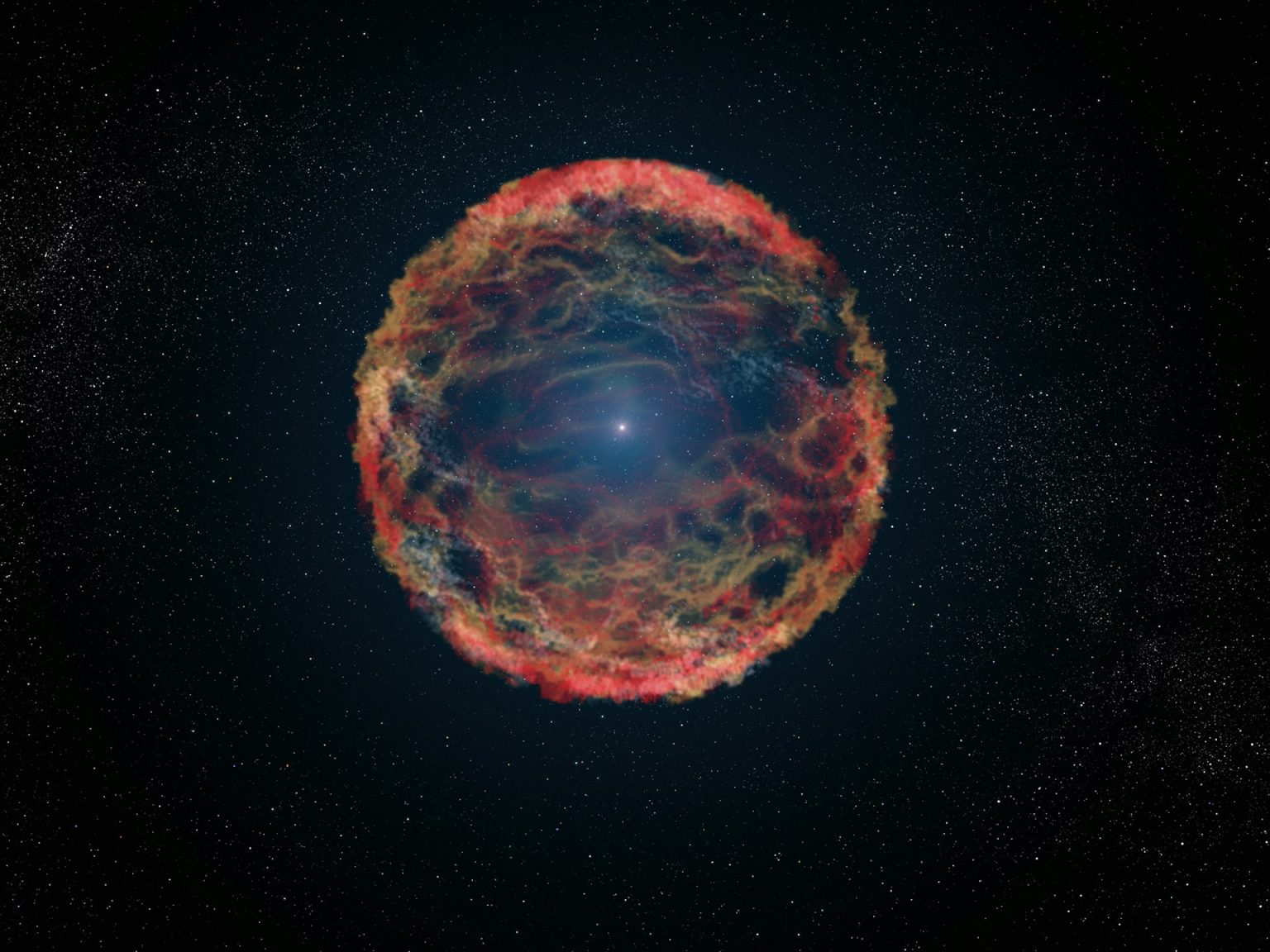
To test this intriguing hypothesis, an international team of scientists began searching for evidence among the stars. They used high-precision data from ESA’s Gaia space telescope. The goal was to recreate the movement of the Sun and 2,725 nearby star clusters over the past 20 million years. This made it possible to calculate how likely a supernova explosion was to occur near us during a specific period of time.
The results were impressive. Calculations showed that the probability of a star exploding within a radius of 326 light-years from the Sun at approximately the time of the beryllium-10 anomaly reached 68%. Moreover, scientists identified as many as 19 star clusters, each of which had a greater than 1% chance of being the source of this cosmic catastrophe. These data provide strong evidence of a connection between the ocean discovery and the supernova explosion. The results were published in Astronomy & Astrophysics.
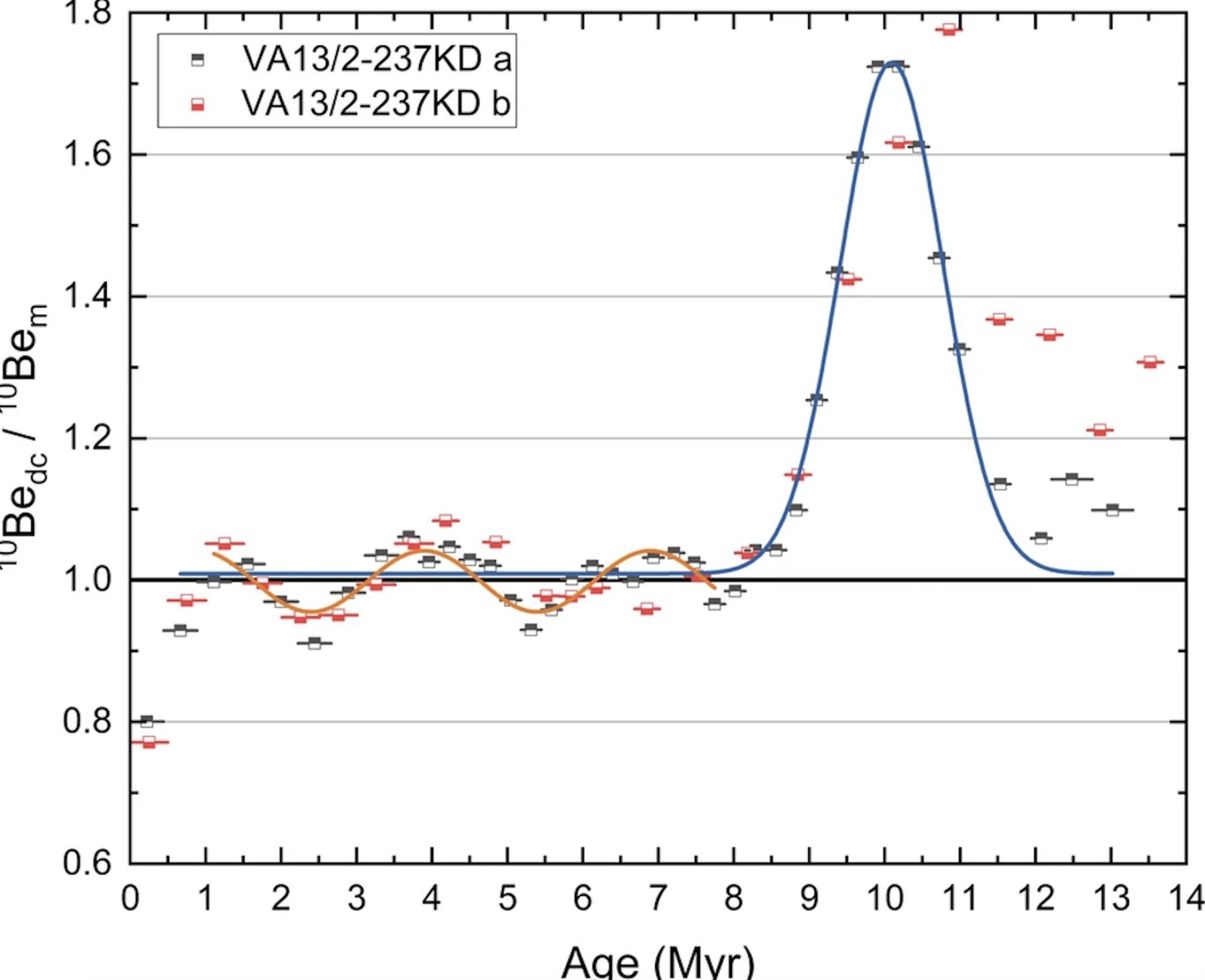
Although scientists have obtained compelling evidence, the case is not yet closed. The key question remains the global nature of the anomaly found. If elevated levels of beryllium-10 are found only in individual samples from the Pacific Ocean, this may indicate local causes, such as changes in ocean currents. But if the same peak is found in simultaneous geological layers across the planet, this will be definitive proof of the signal’s cosmic origin.
For a final verdict, geological samples from different parts of the world need to be collected and analyzed. This work resembles a fascinating space detective story, where the seafloor serves as a time capsule preserving traces of ancient stellar catastrophes. The study brings us closer to understanding how events in deep space may have influenced the history of our own planet.
Earlier, we explained how the Universe emerged.
According to Science Alert

