

The hunt for the most mysterious substance in the Universe has been successful. An international team of scientists has discovered the smallest known cluster of dark matter at the edge of the observable Universe. This discovery is not only an impressive scientific achievement, but also serves as the key to unlocking the mystery of galaxy formation. The research results have been published in the journals Nature Astronomy and Monthly Notices of the Royal Astronomical Society.
What is dark matter?
Dark matter is a mysterious substance that makes up more than 85% of the mass of the Universe, but remains completely invisible in any spectrum. It does not emit, absorb, or reflect light. We know of its existence only indirectly — through its gravitational effect on ordinary matter. It is dark matter that keeps galaxies from falling apart and causes them to rotate at incredible speeds.
How to see the invisible?
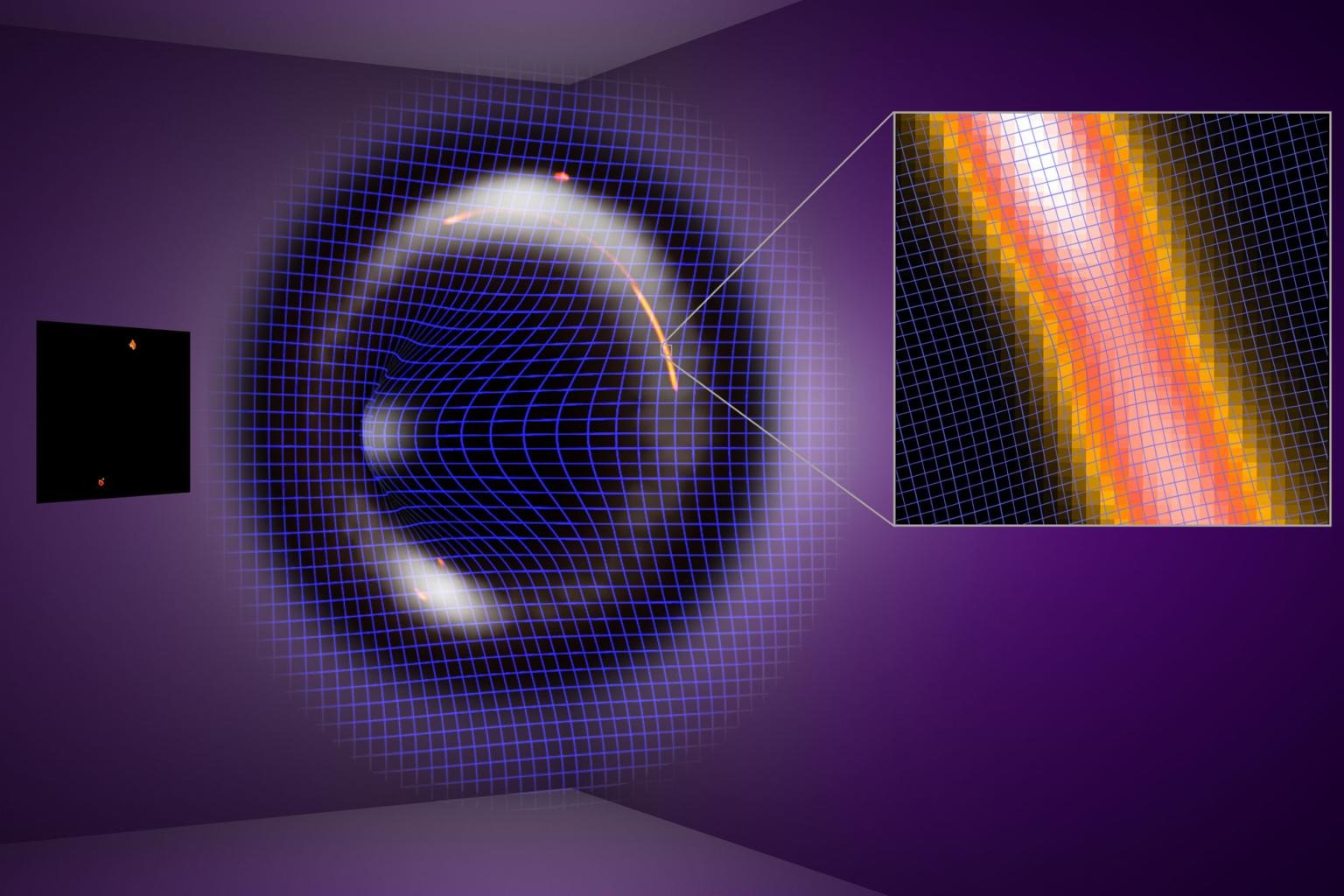
To find this dark matter, a team led by Dr. Devon Powell used an ingenious method first proposed by Einstein: gravitational lensing. Scientists observed a bright galaxy whose light, traveling toward us, was bent by the gravity of a massive object in the foreground. This created a “cosmic magnifying glass” effect — the so-called Einstein Ring.
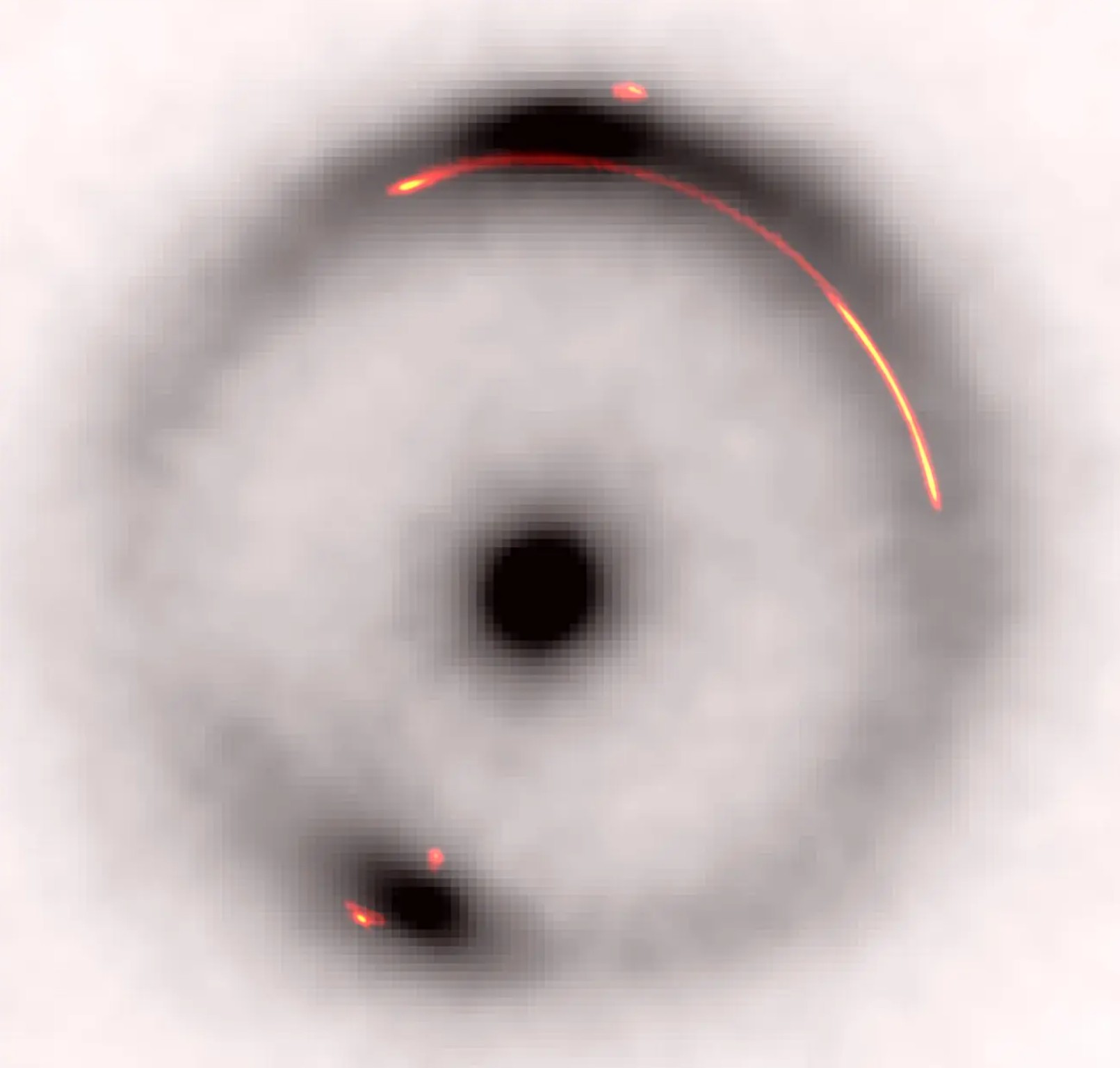
After carefully analyzing the distortions in this ring, astronomers noticed a tiny “pinch.” It was like the distortion created by an invisible glass ball lying on top of the image. This was the gravitational trace of a tiny cluster of dark matter with a mass of a million Suns, located 10 billion light-years away.

Why is this discovery so important?
The discovery of this low concentration of dark matter directly confirmed one of the key theories — the cold dark matter theory. It suggests that dark matter consists of slow-moving particles that clumped together under the influence of gravity in the early Universe. These clumps, peculiar “embryos,” then became the basis for the formation of large structures — galaxies and their clusters.
Thus, astronomers have not simply discovered another strange object. They found the fundamental “building block” from which all galaxies, including our Milky Way, were formed.
Earlier, we reported on how dark matter can still reveal itself when interacting with light.
According to Universe Today

