

The material surrounding Chiron, a small icy world in the outer reaches of the Solar System, may be forming into a separate ring system. This rare phenomenon is occurring in real time, giving astronomers a unique opportunity to observe the evolution of celestial bodies.
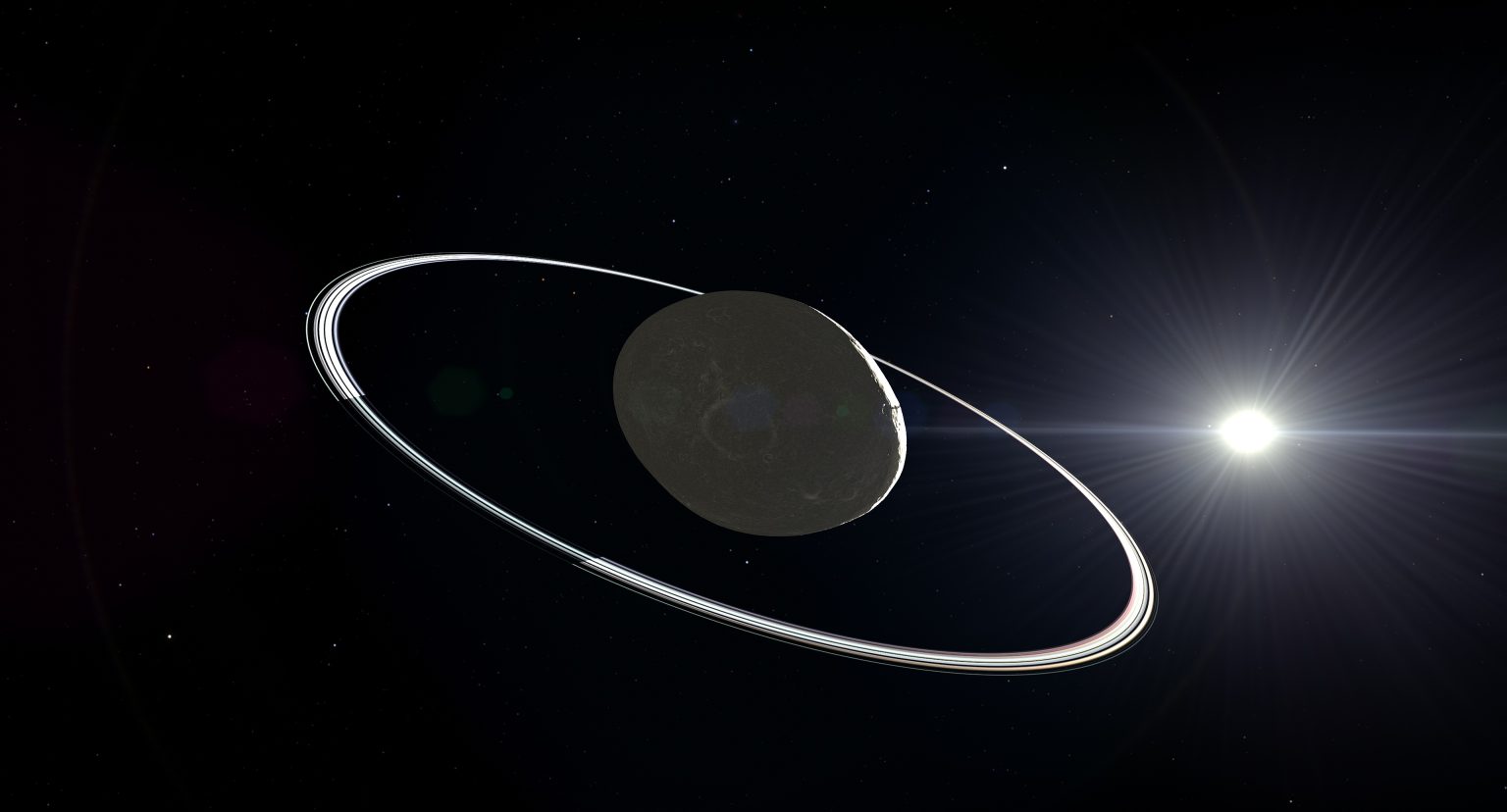
A team of scientists from Brazil has observed the first signs of three rings forming around Chiron, transforming from a cloud of debris into a full-fledged system orbiting this unusual object. The recent discoveries were published in The Astrophysical Journal Letters and may be the first time astronomers have been able to glimpse the process of rings forming around an object.
Rings in the Solar System
Although Saturn boasts the most complex ring system in the Solar System, the gas giants Jupiter, Neptune, and Uranus also have their own rings. In addition to the giant planets, the centaur Chariklo and the dwarf planets Haumea and Quaoar are the only known small worlds in the Solar System that also have rings. These rings are usually formed from debris that is pulled into the planet’s gravitational field.
Discovered in 1977, Chiron was the first object found between Saturn and Uranus that was neither a planet nor a moon. Instead, its discovery led to the creation of a new category of celestial objects known as centaurs. For many years, the most intriguing mystery about Chiron was whether this rocky world had a ring system.
When astronomers observed Chiron as it passed in front of a distant star, the star’s light dimmed not just once, but several times. This unusual pattern leads astronomers to speculate that Chiron may have a ring system, or perhaps a comet tail or temporary cloud of debris surrounding it.
How many rings does Chiron have?
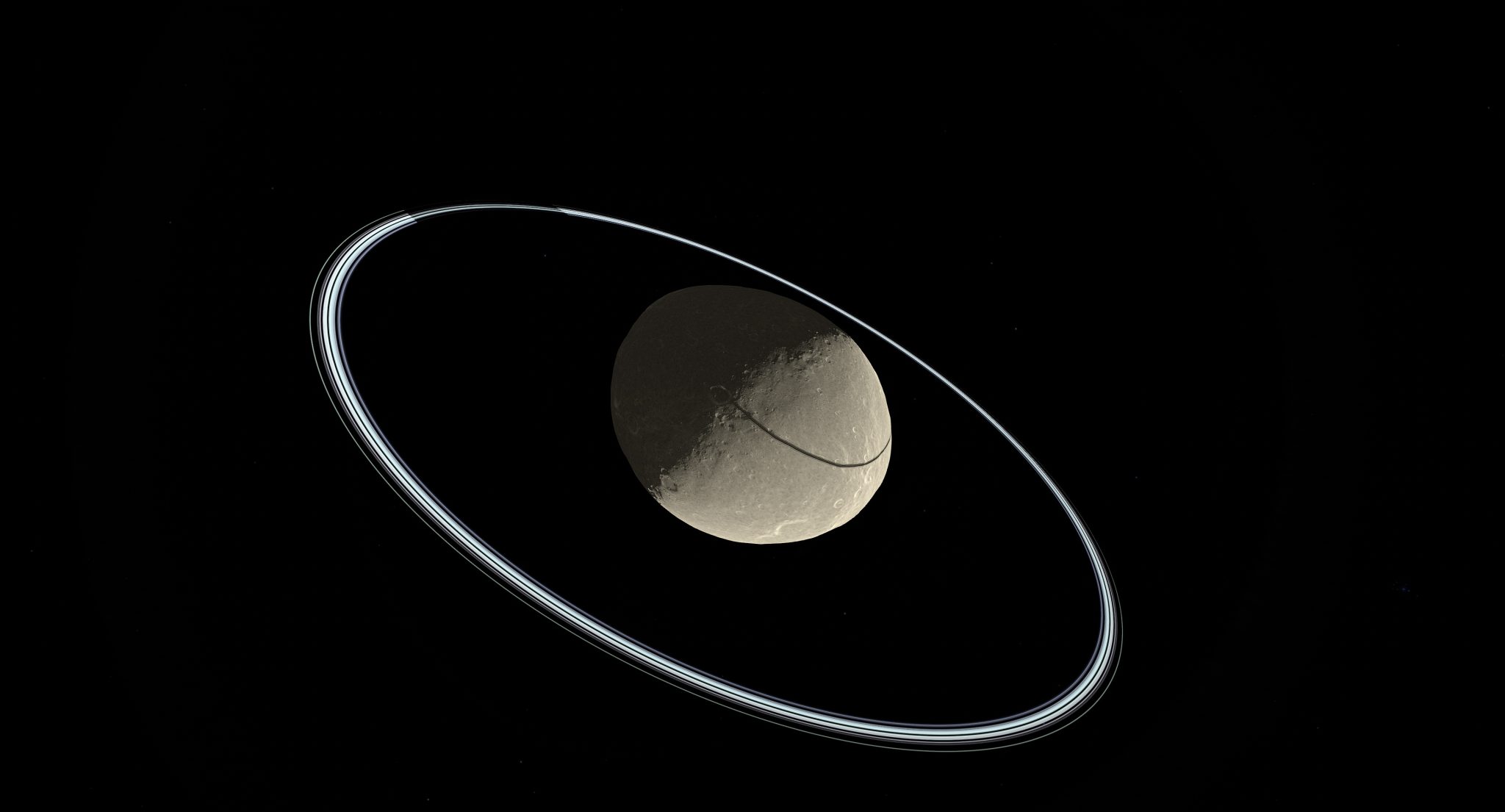
Using the Pico dos Dias Observatory in Brazil, the team of astronomers conducting the new study observed Chiron in September 2023 as it crossed the path of a distant star. The team saw repeated drops in the star’s light and compared the latest data with observations of the centaur in 2011, 2018, and 2022. The data showed that Chiron was surrounded by three distinct rings located at distances of approximately 273 km, 325 km, and 438 km from the centaur, as well as a fourth ring at a distance of approximately 1,400 km.
Comparing the latest observations with previous data, the team found that the ring system has undergone significant changes and may be evolving in real time. There have been hints of the existence of three main rings before, while the fourth ring is relatively new and requires further observation to confirm its status. The fourth ring exists beyond the Roche limit, the distance at which a smaller celestial object breaks apart and forms a ring system around a larger object. Beyond the Roche limit, the material merges to form a moon.
The team conducting the research hopes to obtain more observations of Chiron as it passes in front of distant stars to help determine the nature of the material surrounding it. If Chiron is indeed forming a ring system before our eyes, this small world will provide scientists with a rare opportunity to understand how the powerful rings of Saturn and other planets formed over time.
Earlier, we explained why planets form rings.
According to space.com

