

Researchers at the University of Manchester have discovered that civilian and military radar systems at airports, particularly at Heathrow and Gatwick in London, may be inadvertently “illuminating” Earth for intelligent civilizations within a radius of approximately 200 light years. During the simulation presented at the RAS 2025 National Astronomy Conference in Durham, scientists tracked how signals from airport radars travel through space and how visible they are from stars such as Barnard’s Star or AU Microscopii.
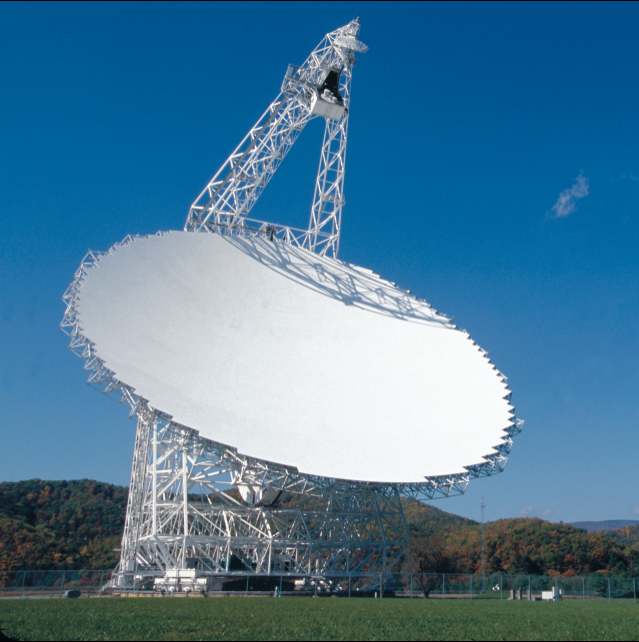
On average, the total power of civilian radars reaches 2 × 10¹⁵ W — enough to be detected by a radio telescope the size of Green Bank at a distance of several hundred light years. Focused military radars create a beam that can be hundreds of times brighter in certain directions. According to the author of the study, Ramiro Caisse Saide, such a signal would appear “clearly artificial” to any remote observer.
The animation on the top panel shows the average total power of individual airport radar systems, averaged over one-hour intervals. The bottom panel shows the total radiation power of airport radars depending on time, plotted over a 24-hour period in the direction of Barnard’s Star. Source: Royal Astronomical Society
The team notes that analyzing the “leaks” of our own technosignatures helps to assess the likelihood that we are already visible to other civilizations, and also provides information about which radio frequencies should be protected from excessive noise on Earth.
By creating a detailed map of terrestrial technosignatures, astronomers obtain a reference point for searching for similar beacons in other planetary systems. If we know which radars and what power levels are visible from afar, we can more purposefully point large radio telescopes (such as SKA) at stars with potential Earth-like planets and exclude natural sources of radio emission from the search filter. This approach makes the search for extraterrestrial intelligence (SETI) more effective and, at the same time, stimulates the development of radio astronomical methods necessary for studying magnetic fields, pulsars, and distant galaxies.
If you are interested in how our earthly “beacons” can attract the attention of distant civilizations, imagine what kind of cosmic spectacle is created by real sources of light — stellar flares. Read our article “Stars that suddenly flashed: Top 10 brightest new ones of the last decade.” Discover which stars became hundreds of thousands of times brighter overnight, turning the sky into a spectacular show that captivated astronomers around the world.
According to National Astronomy Meeting; ras; interestingengineering

