

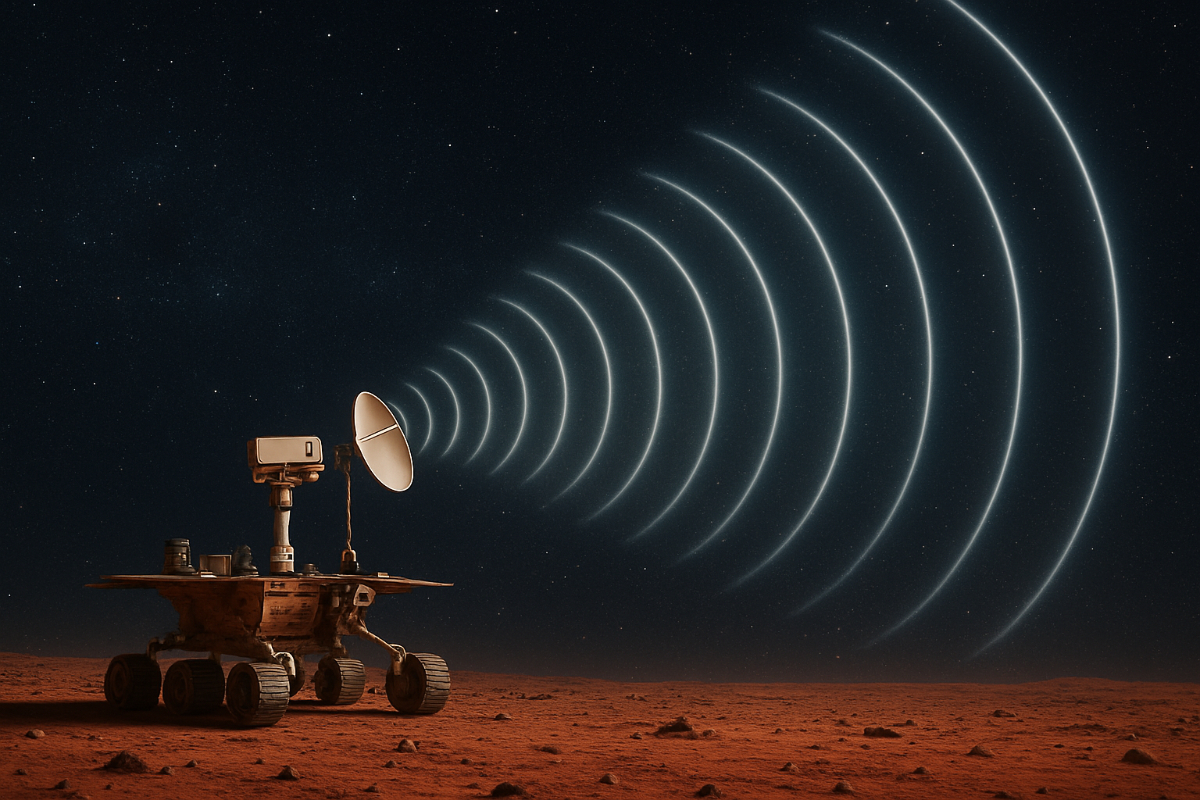
Every time NASA engineers send a command to a Mars rover or interplanetary spacecraft, they simultaneously send a message into deep space. Powerful radio signals directed at neighboring planets are only partially absorbed by the target. The other part continues its journey through space-time, spreading out almost infinitely. This “leak” of information, previously considered a side effect, is now seen as a potential beacon for extraterrestrial civilizations.
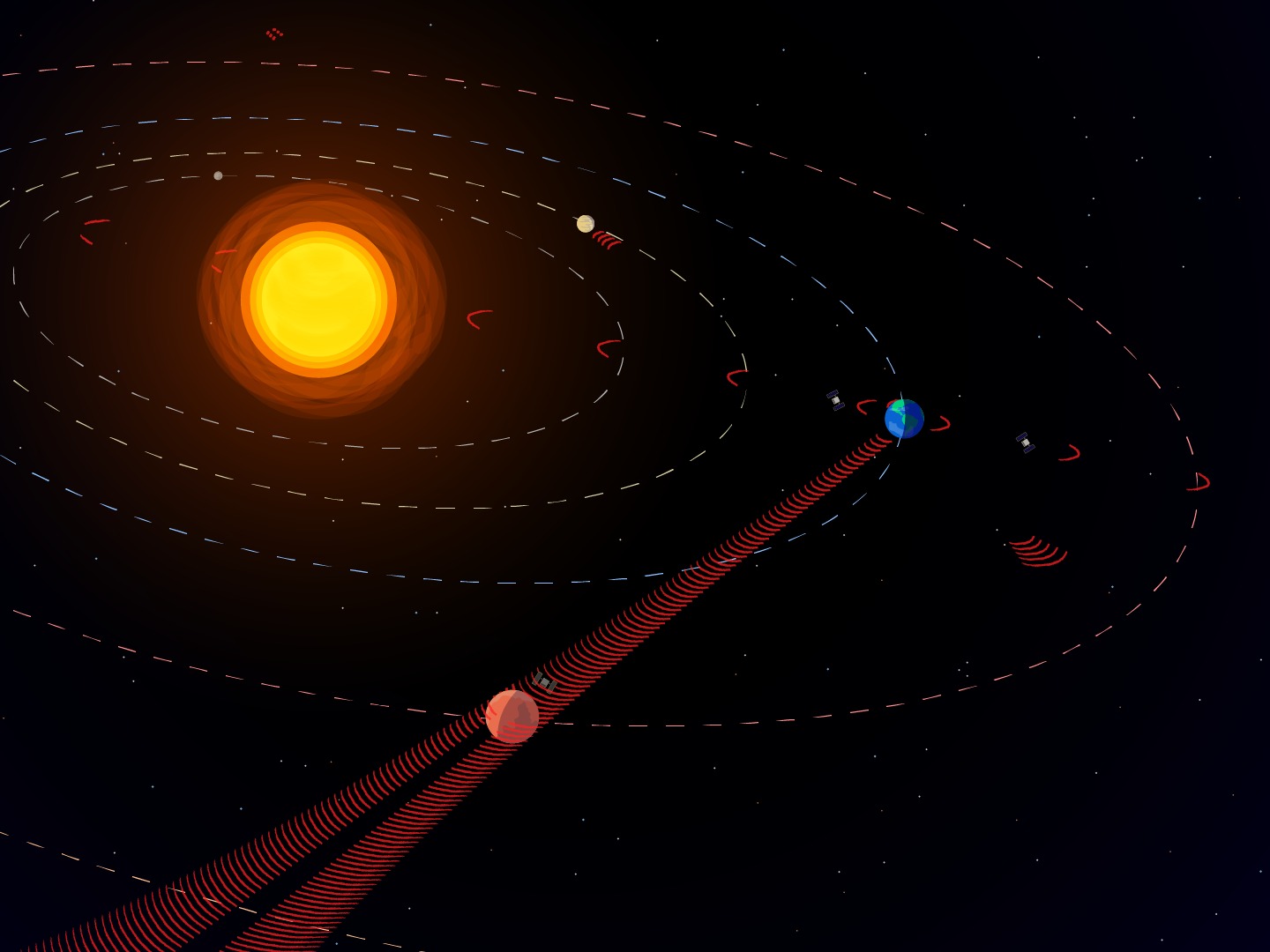
New research by scientists at Pennsylvania State University and NASA’s Jet Propulsion Laboratory offers an interesting hypothesis. Scientists analyzed data from the Deep Space Network (DSN) over the past 20 years. They concluded that an alien intelligence located at a specific point in space could easily intercept our transmissions. The key is that all the planets in the Solar System rotate in roughly the same plane — the ecliptic.
As astronomer Pinchen Fan explains, if an observer is located at the edge of this plane at a distance of about 23 light-years, their chances of entering the radio shadow of our signals to Mars or other planets increase dramatically. Calculations show that the probability of such a coincidence reaches 77%, which is orders of magnitude higher than random detection.
Mirror search
The same idea can be applied to the search for extraterrestrial life. Assuming that other technologically advanced civilizations are also exploring planets in their systems, we can point our telescopes at similar “hot spots.” The most promising exoplanetary systems will be those where, from our perspective, two or more planets periodically line up in a row — transiting in front of their star. From such positions, their potential DSN could transmit signals in our direction.
However, as Fan notes, we are only at the beginning of this journey. At present, only a few systems with multiple transit planets are known. However, future space missions, such as the launch of the Nancy Grace telescope, promise to revolutionize space exploration. This telescope is expected to discover hundreds of thousands of new exoplanets, significantly expanding our map of potential “listening zones.” v
Earlier, we explained why we still haven’t found aliens.
According to psu.edu

