

Amazon has purchased ten more Falcon 9 rocket launches from SpaceX. These are needed to deploy Amazon Leo’s broadband satellite constellation, formerly known as Project Kuiper.
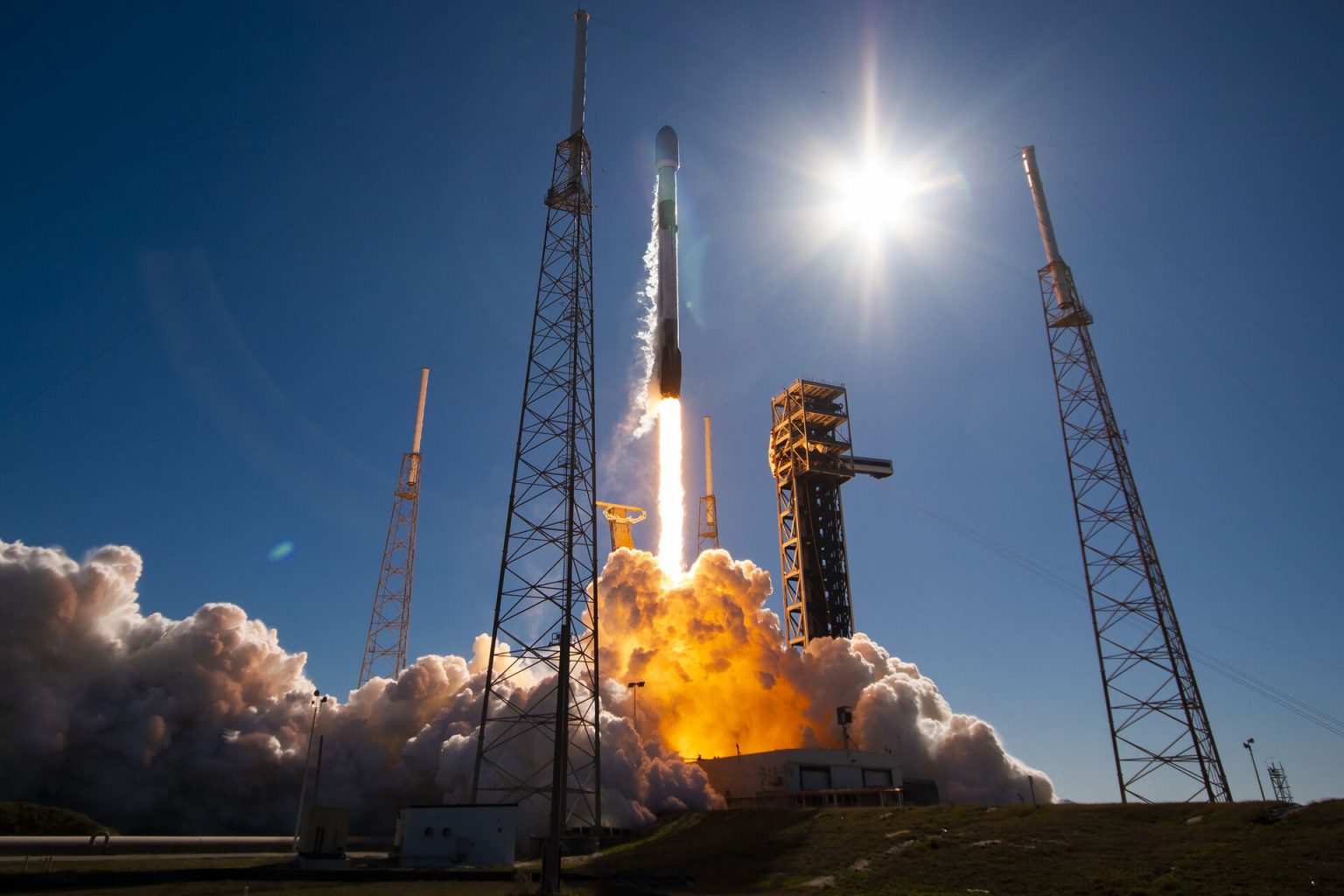
The deal, which had not been previously announced by either Amazon or SpaceX, was disclosed in a document filed with the US Federal Communications Commission (FCC) on January 30 requesting an extension of the July deadline for deploying half of Amazon’s Leo constellation.
According to the FCC license issued in 2020, Amazon must launch half of the planned 3,232 satellites by July 30, 2026, with the remainder to be deployed three years later. However, as of the end of January, the company had launched only 180 spacecraft.
In its statement, Amazon requested that the FCC either extend the deployment deadline for half of the constellation by two years or cancel it entirely, citing progress in satellite manufacturing and launch contracts. The company did not request an extension of the full deployment deadline set for 2029, stating its intention to have the entire constellation in orbit by that time.
These efforts include collaboration with SpaceX, whose Starlink constellation directly competes with Amazon Leo. In 2023, the companies announced a contract for three Falcon 9 rocket launches carrying Amazon satellites. These took place in July, August, and October 2025, each carrying 24 satellites.
Amazon also announced that it had converted options for New Glenn rocket launches into firm orders. When Amazon publicly announced major launch contracts in 2022, the deal included 12 New Glenn launches with options for 15 additional ones. The statement indicates that Amazon now has 24 New Glenn launches under contract.
All 180 Amazon Leo satellites launched to date have been placed into orbit by ULA’s Falcon 9 or Atlas 5 rockets under previously signed contracts. The first launch of Ariane 6 with Amazon Leo satellites is scheduled for February 12. During the sixth mission, the rocket will deliver 32 satellites into orbit. This will also be the first flight of the more powerful Ariane 64 configuration, which uses four solid-fuel boosters.
In its statement, Amazon said it planned to launch around 700 satellites into orbit by July and could produce up to 30 satellites per week. Although the launch schedule remains undisclosed, the company said it showed “full deployment of the Amazon Leo system well ahead of” the July 2029 deadline.
According to Spacenews

