

In the world of high-speed internet from space, intense competition is unfolding. Amazon’s Kuiper project, the main competitor to SpaceX’s Starlink satellite network, has announced its first major customer. It has become the American budget airline JetBlue, which plans to introduce advanced technology on its flights.
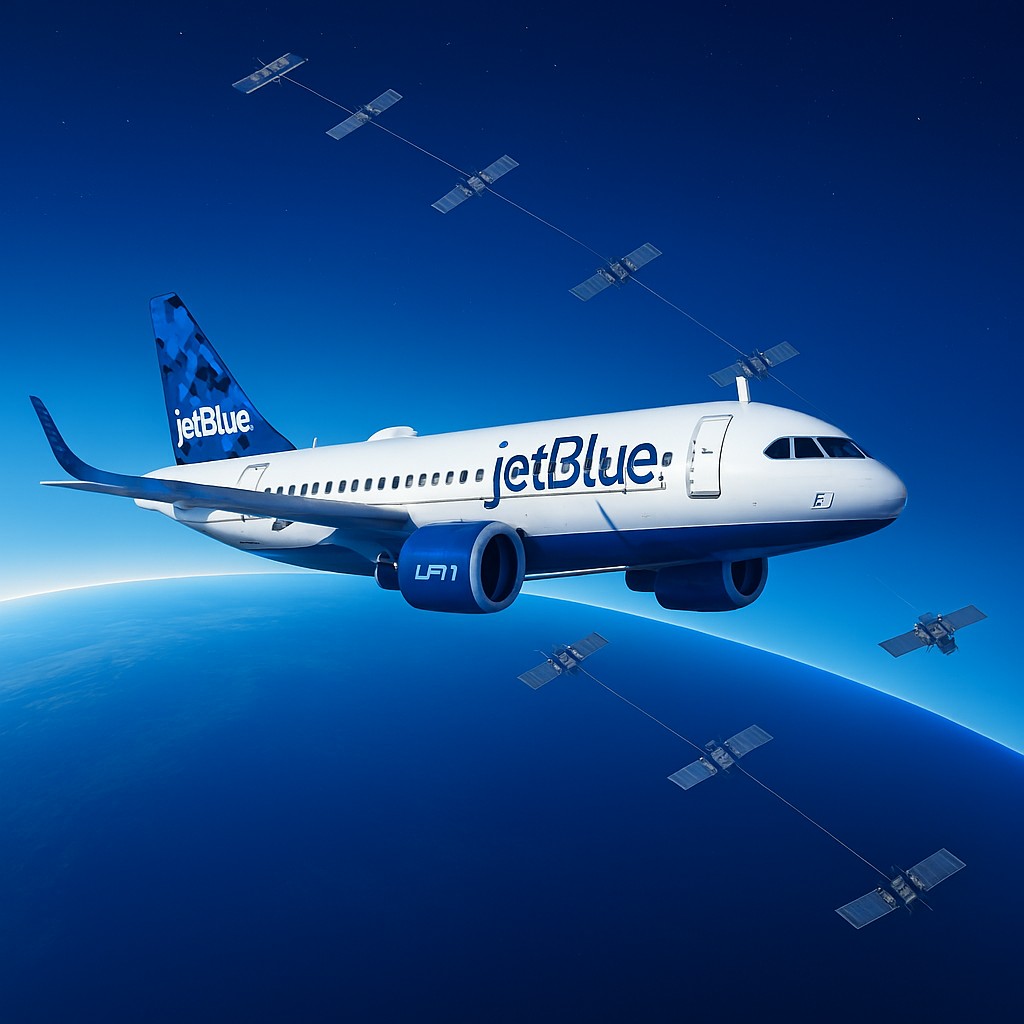
The partnership between the two companies provides that JetBlue will begin equipping select aircraft with Project Kuiper satellite terminals starting in 2027. Amazon CEO Andy Jassy emphasized that this partnership would provide airline passengers with fast internet during flights thanks to a network of satellites in low Earth orbit. JetBlue President Marty St. George called the agreement an important step toward improving the quality of in-flight communications to meet the needs of today’s passengers.
Kuiper vs. Starlink
Although Amazon’s project is in its early stages, its ambitions are great. Unlike Starlink, which has been launching satellites since 2019 and already serves millions of customers, Kuiper is just beginning its space deployment. The first satellites were launched into orbit in April 2025. To create a comprehensive network, Amazon plans to launch more than 3,200 devices, which will require more than 80 missions.However, approximately 1,000 satellites are sufficient to launch commercial service with global coverage.
Free internet at an altitude of 10 km
Two significant milestones for @ProjectKuiper this week.
— Andy Jassy (@ajassy) September 4, 2025
First, the team showed successful tests of our Kuiper network, delivering 1+ Gbps speeds using our enterprise-grade customer terminal (the first commercial phased array ever to clear that threshold to our knowledge).… pic.twitter.com/uB5ZBOyuaI
For JetBlue passengers, this partnership means they will continue to receive free high-speed internet on board. The company is a pioneer in this field, offering Fly-Fi service since 2013. The transition to Kuiper technology should significantly improve communication quality, ensuring high data transfer speeds and minimal delays, allowing for comfortable work and entertainment even at an altitude of ten kilometers. Thus, the space race between tech giants is beginning to produce tangible results for ordinary users.
According to digitaltrends.com

