

Impressions (No Spoilers)
The film Hail Mary leaves a very positive impression overall. If someone likes science fiction, they might really enjoy this movie. This is exactly the kind of film that not only shows beautiful images of space but also keeps you on the edge of your seat for almost the entire runtime. The plot constantly throws in new twists, and the characters’ decisions keep you hooked on the story.
Ryan’s acting deserves special mention. Everything is portrayed very naturally: the characters feel like real people, not just vehicles for the plot. This makes it easier to believe both the story itself and the characters’ emotional reactions. Another important plus is the attention to detail. It was particularly pleasing that the film accurately depicts one of the basic principles of space: there is no sound in outer space. For a sci-fi film, this might seem like a minor detail, but it is precisely these details that greatly enhance the film’s believability.
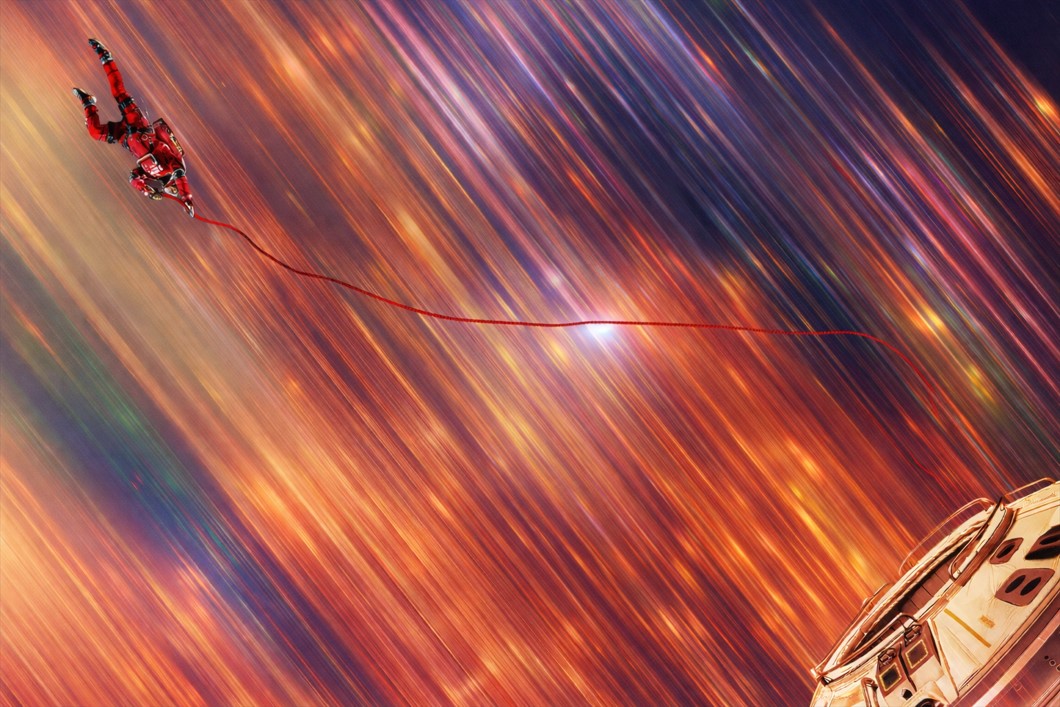
Hail Mary is a fantastic film that works on several levels: as a suspenseful adventure, as a story of survival, and as a film that strives to respect scientific logic. That’s exactly why the film resonates not only emotionally but also intellectually.
It is also interesting to compare it to the film U Are the Universe. One gets the sense that these films resonate with each other in some ways: both use space not merely as a backdrop, but as a realm of solitude, connection, hope, and human vulnerability. But while U Are the Universe is a more intimate, lyrical, and existential story, Hail Mary is a larger-scale, technically sophisticated, and plot-driven science fiction film. And there is an interesting point here: if the creators of U Are the Universe had delayed the film’s release just a little longer, and it had come out after Hail Mary, some viewers would surely have accused them of plagiarism. In reality, that would have been unfair: the Ukrainian film had already been released earlier as an independent work. And even Andy Weir’s book Hail Mary was not published until 2021.
Technical Analysis with Spoilers
From an engineering perspective, the film is particularly interesting because it invites analysis rather than just watching. And for the most part, this is a plus: if, after watching it, there is a desire to discuss fuel, the atmosphere, materials, and manufacturing technologies, then the science fiction has done its job.
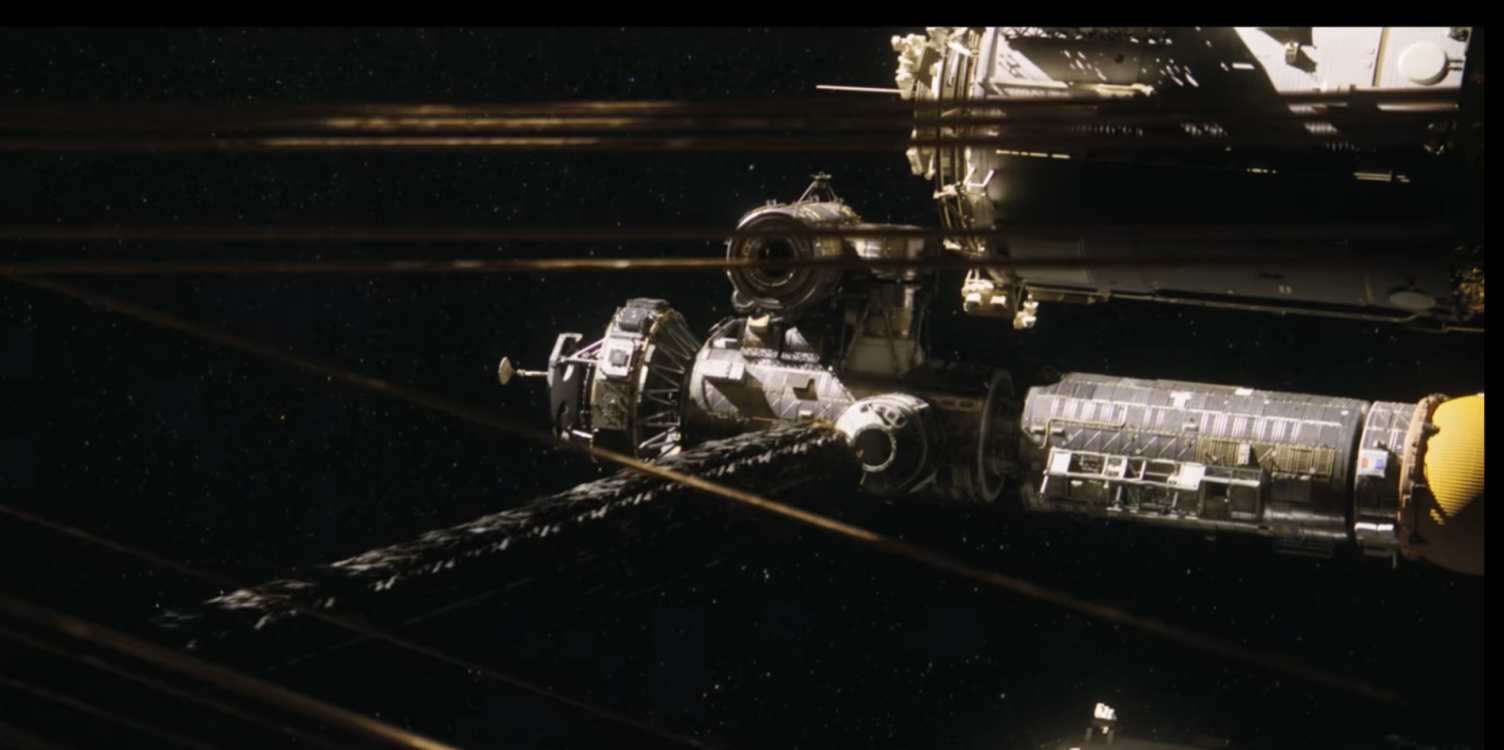
The first – and perhaps the most controversial – point concerns the logistics of the protagonist’s return journey. This is the film’s weakest point. Even with full tanks – roughly two million liters of astrofuel – the return trip would take about four years, so questions about the mission’s supplies arise at this stage. Based on the plot’s logic, there was enough food for about two years, and after subsequent events, the available fuel supply is further reduced by two sections. As a result, the return mission begins to look less like an engineering-driven scenario devised by the protagonist and more like a very optimistic hope for a miracle. This does not ruin the film entirely, but it is here that the tension between the drama and the real-world logistics of interstellar flight is felt most acutely.
Source: Hail Mary trailer
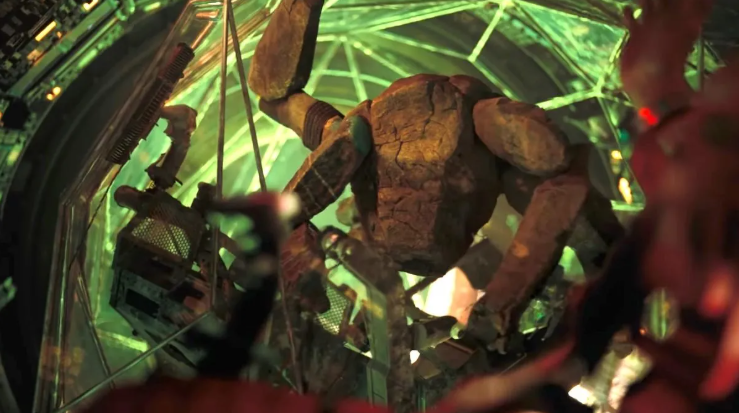
The second point of contention is taumeba and xenonite. Conceptually, this is a very striking idea, but it raises the most questions precisely from the perspective of the world’s internal physics. If xenonite is presented as a reliable structural and airtight material, then taumeba’s ability to pass through it requires a very serious explanation. It is not enough here to say that this is unusual biology; there needs to be a clear mechanism that explains exactly how it happens, under what conditions, and due to which properties of the material and the organism. That is why this particular plot point raises the most scientific doubts for me. It works as a dramatic twist, but as a hard sci-fi premise, it looks noticeably weaker than many of the film’s other ideas.
That said, the atmosphere on the ship and the final dome actually struck as quite plausible. Here, the film, on the contrary, enters the realm of logical engineering solutions. When it comes to a pressurized environment for humans, the basic principles are quite clear: controlling pressure, gas composition, temperature, humidity, removing carbon dioxide, and maintaining a safe environment. In this sense, the dome in the finale can be seen as a development of the same ideas used in space life support systems (e.g., the ISS), only adapted to a different technological platform. Therefore, this aspect should be defended rather than criticized.
Source: Hail Mary trailer
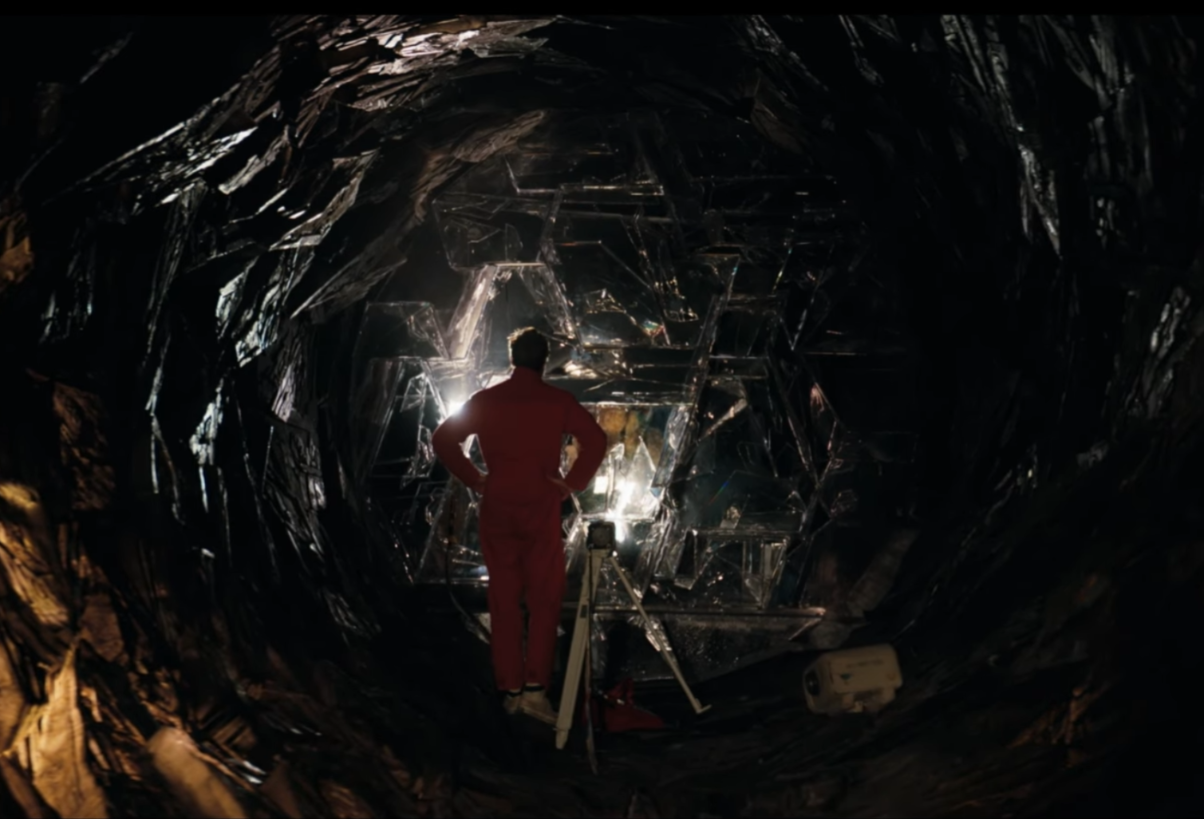
The idea of highly advanced 3D printing on an alien spacecraft struck as particularly compelling. The way tunnels, structures, and various objects are formed is an extremely advanced form of 3D printing or programmable manufacturing. And this is precisely one of those ideas that, in science fiction, does not seem like magic but rather a logical progression of real-world technologies. If a civilization is capable of building complex structures directly within the required environment, with high precision, using readily available materials, and tailored to a specific task, then this seems very realistic for a highly advanced engineering culture.
The same applies to the translator. The film presents him not as a magic button, but as the result of a gradual search for patterns, the comparison of signals, learning, and the development of a common language. It is precisely this approach that makes the idea convincing. This is no longer a fairy-tale “universal understanding of aliens,” but an engineering problem of communication that is solved step by step. And within the realm of science fiction, it makes perfect sense.
Source: Hail Mary trailer
Ultimately, what makes Hail Mary great for me is that it can be viewed in two different ways. The first is simply a powerful, intense, and emotional science fiction film. The second is a film that invites technical analysis. And even its controversial moments are not so much a drawback as a reason for discussion. Because the most interesting sci-fi films are not the ones that leave no questions, but the ones that make viewers want to debate trajectories, materials, atmosphere, biology, and technology.
What differences and nuances did you notice? Let’s discuss them in the comments.

