

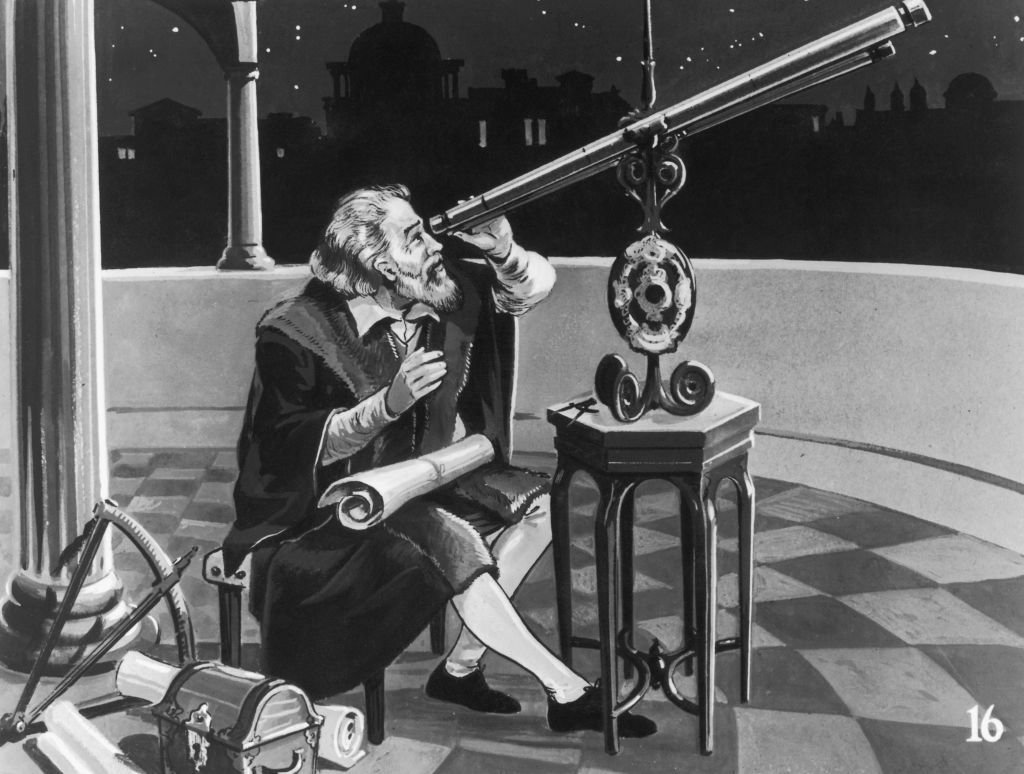
The history of modern astronomy dates back to 1609, when Galileo Galilei first looked at the sky through his telescope. The name “telescope” appeared a little later. It really allowed for a real breakthrough in science, and even now, many astronomical discoveries are made thanks to the improvement of instruments for observing the celestial sphere.
Large modern professional telescopes are completely different from Galileo’s tubes, and scientists usually no longer look “into them” – the results of observations are displayed on computer monitors, where they can be immediately saved and analyzed. But until the end of the 19th century, astronomers observed the sky with their own eyes, armed with appropriate optics. What advantages did this give them?
The human eye is the most complex and important sensory organ. With its help, a healthy person receives more than 80% of information about the surrounding world. For it to see the image of a light source or any object at all, its radiation must be focused into a tiny spot the size of a light-sensitive cell in the retina of the eye. The problem is that the rays from each source diverge as the distance from it increases. Therefore, they must be brought back together at a single point. This is done by the lens, which is essentially a convex magnifying lens. Focusing is achieved by the effect of refraction – a change in the direction of an electromagnetic wave (wave front) when it crosses at an angle the boundary between media with different densities or different refractive indices. In this case, it is air and the material of the lens.
It is difficult to say what prompted ancient Greek scientists to use a transparent glass ball to examine small objects, study the structure of the human eye, or observe natural objects such as water droplets. The first mention of using a lens to make fire is found in Aristophanes’ comedy “The Clouds,” dated 424 BC. However, the magnifying devices of that time performed the opposite function of a telescope: they converted rays of light diverging at a large angle from a nearby object into conditionally parallel rays, which are easier for the eye to work with. Nowadays, microscopes are used for this purpose.
How does a telescope work?
To see a point source of light, the eye must focus on it. To see two different sources separately, the rays coming from them must be focused on two different light-sensitive cells, and not on adjacent ones. The diameter of the “outputs” of the cones – the smallest such cells concentrated in the center of the retina – is about 2 microns. The depth of the eyeball, i.e., its size in the longitudinal direction (its shape is slightly different from spherical), averages 23.5 mm. We divide one by the other, multiply by 2 to account for the “non-neighborhood” factor, and get 0.00017. This is the minimum resolution of the human eye, expressed in radians. The corresponding value in degrees is 0.01, or 2/3 of an angular minute. In reality, for many people, it is one and a half to two times greater and also deteriorates with age.
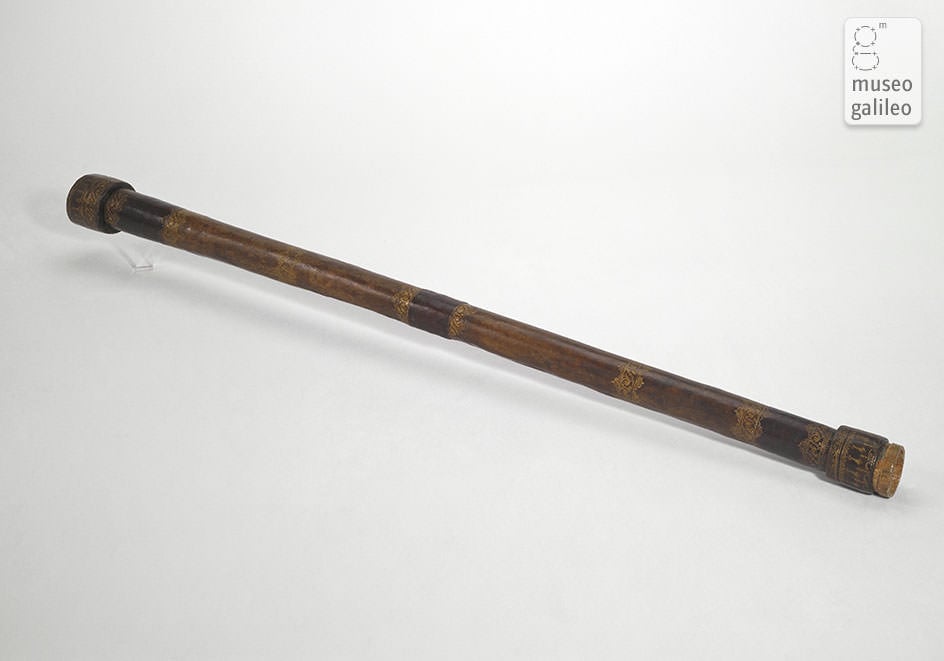
How can this resolution be increased? We cannot significantly influence the size of the eye or light-sensitive elements. But we can place an additional lens with a longer focal length in front of the crystalline lens…
In reality, one lens is not enough, because the eye is unable to focus converging rays on the retina – it is not evolutionarily adapted for this. Therefore, another lens must be placed in front of the crystalline lens, this time a concave (dispersing) lens, which will again make the light beam parallel. Because it faces the eye, it is called an eyepiece, while the collecting lens that faces the object of observation is called an objective lens.
This is how Galileo’s simplest telescope was designed. Nowadays, this design is used in the smallest (so-called theater) binoculars with up to 4x magnification. It is impossible to achieve significant magnification with this design, as it requires the installation of a very strong dispersive lens, which significantly distorts the image. Another important disadvantage of such a system is its small field of view. However, it provides a so-called direct image, in which “top” and “bottom” are located in their usual places.
What Kepler and Newton came up with
Shortly after the invention of the telescope, mathematician and astronomer Johann Kepler familiarized himself with its design. He saw all its shortcomings and, in 1613, proposed his own design, which actually became the basis for all astronomical instruments intended for visual observations.
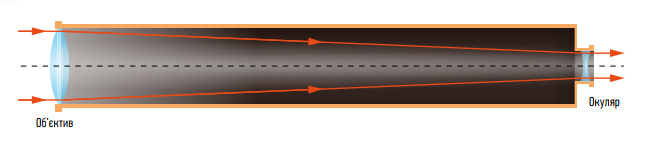
The idea was not to place a diffusing lens between the lens and the eye, but to allow light rays from distant sources to focus. A virtual image will appear in the so-called focal plane (the larger the focal length of the objective lens, the larger the scale), which, however, can be seen quite clearly. It is even better to view it with a magnifying glass, i.e., to further increase the resolution.
Although Kepler’s system produced an inverted image (which is insignificant for astronomical observations), it helped to achieve significantly better resolution and had a wider field of view. As a bonus, under certain conditions, it could collect all the light entering the lens into a small spot smaller than the human pupil. Thus, telescopes of this system greatly increase the amount of light entering the eye from the object of observation. This made it possible to see much fainter celestial bodies.
So far, we have only discussed telescopes that change the direction of light rays by refracting them in transparent objects (glass lenses) that have been processed in a specific way. They are also called refractors. It is worth mentioning that the glass in the first telescopes was not very transparent and had internal imperfections and bubbles. All these flaws were gradually eliminated by improving glass-making technology, but one of them was the most difficult to get rid of. The fact is that the refraction of light with different wavelengths, i.e., different colors, occurs slightly differently. As a result, even in the first instruments of this type with relatively small lenses, images of celestial bodies were surrounded by multicolored halos that made it difficult to see fine details. This effect was called chromatic aberration.
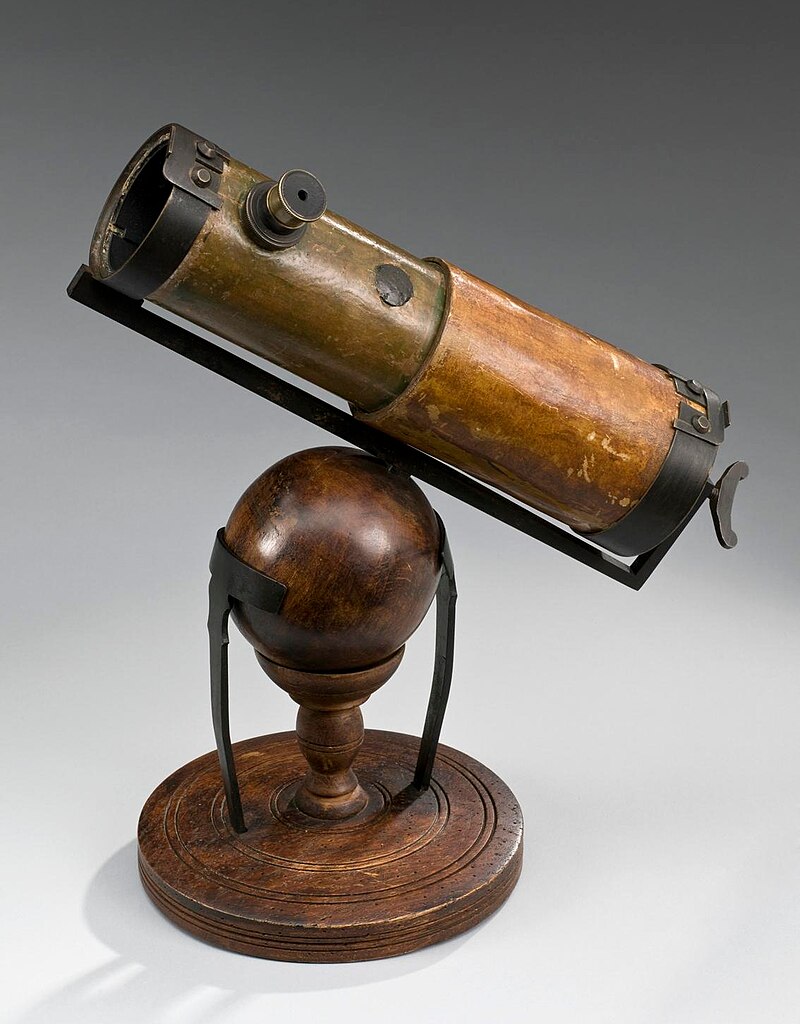
The great English scientist Isaac Newton understood this problem perfectly and proposed a radical solution – to abandon the lens altogether. In his system, light rays were focused by a concave mirror (reflector) with a carefully polished surface, and he considered the shape of a parabola of revolution to be optimal. Of course, one had to look into such a telescope from the same direction from which light entered it. And so that the observer’s head would not obscure the object of observation, Newton introduced a small secondary flat mirror into the system, tilted at 45° to the optical axis of the primary mirror. It “caught” the beam of rays near the focus and deflected it at a right angle. The vast majority of amateur instruments are now built according to this scheme.
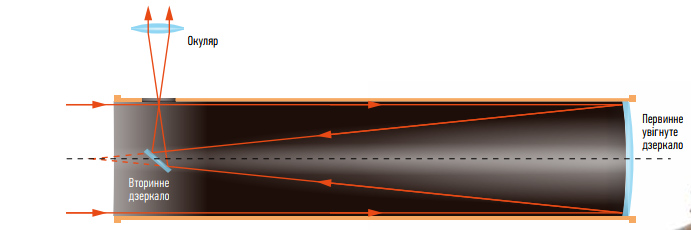
The first reflecting telescopes had heavy metal mirrors that were expensive and quickly tarnished when exposed to air, so they had to be polished frequently. But in the early 19th century, a technology was invented for grinding and polishing glass discs and then coating them with a thin layer of silver through chemical deposition. Together with the advent of relatively simple methods of controlling the shape of the surface, this made such instruments more affordable – now amateurs could make them on their own. Moreover, the transparency of the glass was no longer important, since light did not pass through it. More important were its strength, uniformity, and ability to expand minimally when the temperature rose.
The evolution of telescopes
Like all technology, telescopes have been improved over time, with different types being developed for different tasks. Instead of ordinary magnifying glasses, small “microscopes” with two or more lenses began to be used as eyepieces – these are the systems that are now called eyepieces (a high-quality eyepiece with a large field of view sometimes costs more than a good telescope). Refractor lenses also began to be made from two or three lenses of different types of glass, with their surfaces shaped in such a way as to reduce chromatic aberration significantly.
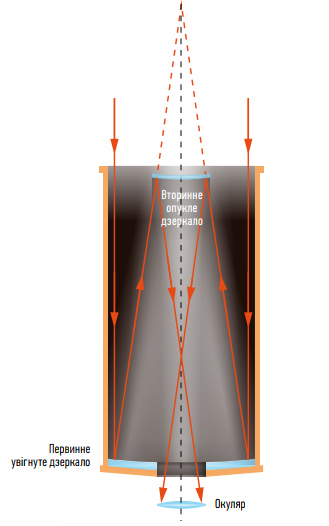
The transformations of the reflectors mainly concerned the secondary mirror: in the version proposed by French priest Laurent Cassegrain, it has a convex shape and a hyperbolic surface (this is where the origins of Garin’s hyperboloid lie) and reflects rays in the direction of the primary mirror, in the center of which there is a hole for the eyepiece. Despite the complexity of its manufacture, this design produced very high-quality images and became widely used. It now has several modifications that differ in the shape of the reflecting surfaces.
Finally, in the 1940s, Soviet optician Dmitry Maksutov invented a novel combination of a refractor and a reflector, known as a catadioptric or meniscus telescope. It is also often named after him. It has a sealed tube, closed at the objective end by a convex-concave lens (meniscus) with specially calculated surfaces that minimize chromatic aberrations and compensate for distortions caused by the primary mirror. It is easy to understand that such a system is the most labor-intensive to manufacture and, therefore, the most expensive. But it is very easy to use, has a relatively short tube with a long focal length, and, unlike classic reflectors, does not require constant adjustment to obtain clear images. Optics of this type are most often installed on satellites designed to observe the Earth’s surface. For space telescopes, however, the use of a meniscus is still undesirable.
All of the optical designs listed in this section, despite their significant differences, have one thing in common: they focus light from distant objects onto a focal plane, creating a virtual image that can be viewed through an eyepiece. The magnification of a particular telescope can be easily calculated by dividing the focal length of the lens by the focal length of the eyepiece. But now, as already mentioned, it is most often not viewed with the eye, but rather some other image receiver is placed in the focal plane – a photographic plate or a semiconductor light-sensitive element (CCD matrix). This allows us to “take a photo for memory” and look into those parts of the spectrum that humans cannot see – the infrared and ultraviolet ranges. For the latter, it is better to use reflecting telescopes, since not all types of glass are sufficiently transparent for them.
Size matters
Once the best possible glass quality and the most accurate mirror surface finish had been achieved, improving the resolution of telescopes ran into another obstacle: the wave nature of light. The fact is that electromagnetic waves interact with the edge of a lens or primary mirror, creating an additional source of radiation. Because of this, the image of an infinitely distant point source is actually focused not at a point, but in a small circle (diffraction disk), which is larger the longer the wavelength.
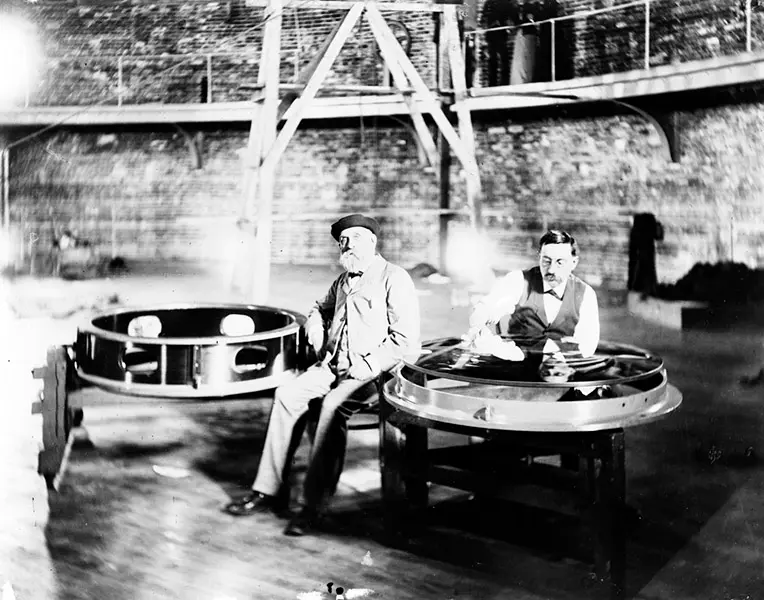
Source: lib.uchicago.edu
However, for light of the same wavelength, the diffraction disk will decrease as the diameter of the lens increases. This imposes a limitation on the magnification of fixed-size telescopes. It is not possible to simply view the image in the focal plane with the strongest microscope possible in an attempt to obtain higher resolution. For green light at 501 nm, to which the human eye is most sensitive in the dark, the maximum magnification will be approximately equal to the diameter of the lens in millimeters multiplied by one and a half. So, if we have a 10-centimeter lens with a focal length of 900 mm, there is no point in combining it with an eyepiece with an equivalent focus of less than 6 mm (i.e., one that gives 150× magnification) – we will not see any additional image details.
Another reason for building increasingly larger telescopes is the desire to increase their penetrating power, i.e., the ability to see fainter celestial objects. The collecting surface of a lens is proportional to the square of its size, so, for example, a 20-centimeter lens will collect four times more light from a distant source than a 10-centimeter lens, which corresponds to an increase in sensitivity of one and a half magnitudes.
It would seem that refractors would have an unconditional advantage here, since their light flux is not blocked by a secondary mirror. But in reality, in the pursuit of size, they were the first to drop out of the race: at sizes greater than one meter, the lens begins to bend unacceptably under its own weight in a telescope position approaching vertical. In the design of a reflector, this can be avoided by “propping up” the primary mirror with a special unloading system. Therefore, the world’s largest refractor at the Yerkes Observatory (Wisconsin, USA) has a diameter of 102 cm, and the largest reflector telescope, installed at the Mount Graham Observatory in Arizona, is equipped with solid mirrors with a diameter of 8.4 m.
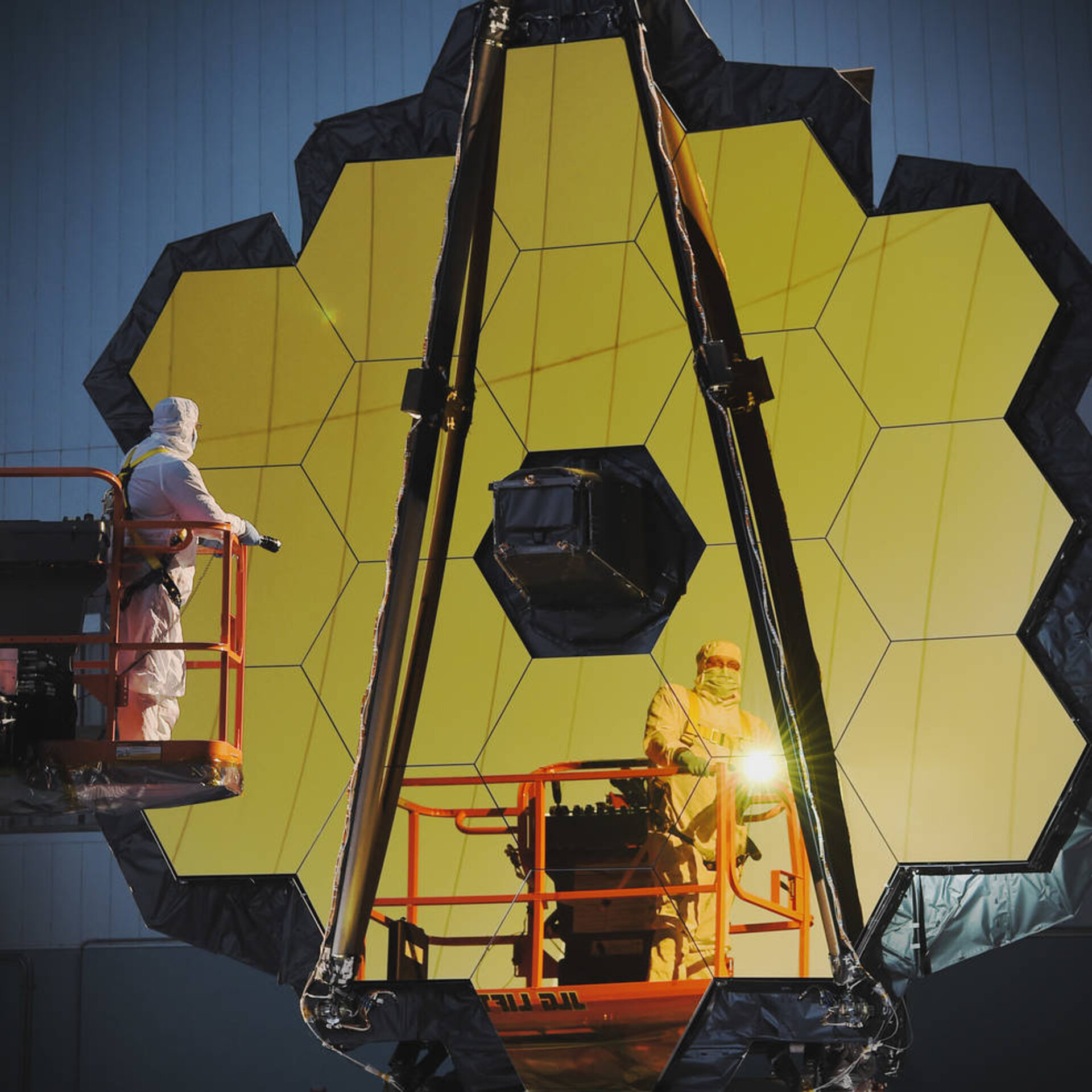
However, this was also a kind of maximum – larger mirrors are very difficult to install and maintain in working order. It should not be forgotten that during operation, the telescope is aimed at different areas of the sky, and when it looks at the zenith, the lens is subjected to completely different mechanical loads than when it is directed towards the horizon. The solution was segmented mirrors consisting of a large number of separate elements (hexagonal in shape) measuring 1.4-1.5 m. This technology was first used in the construction of the 9-meter Keck I and Keck II reflectors at the Mauna Kea Observatory in Hawaii. We also owe the successful James Webb Space Telescope project to this technology. Its 6.5-meter primary mirror is made up of 18 hexagonal elements, which were folded during launch into space – otherwise, they would not have fit under the main fairing of the Ariane 5 rocket.
A little bit of the future
The limited scope of this article does not allow for a detailed discussion of radio telescopes, as well as X-ray and gamma-ray observatories. These ranges of the electromagnetic spectrum have significantly different characteristics, therefore requiring different instruments for focusing and recording images. In addition, a significant part of them is blocked by the Earth’s atmosphere. Therefore, the most promising direction for the development of astronomy in the near future is the launch of space telescopes. Even when observing in visible light, they offer many advantages, allowing you to avoid distortions associated with atmospheric inhomogeneities and eliminate the influence of artificial light pollution. Orbital observatories allow observation during a full moon. Their main but decisive disadvantage is the high cost of creation, launch, and maintenance.
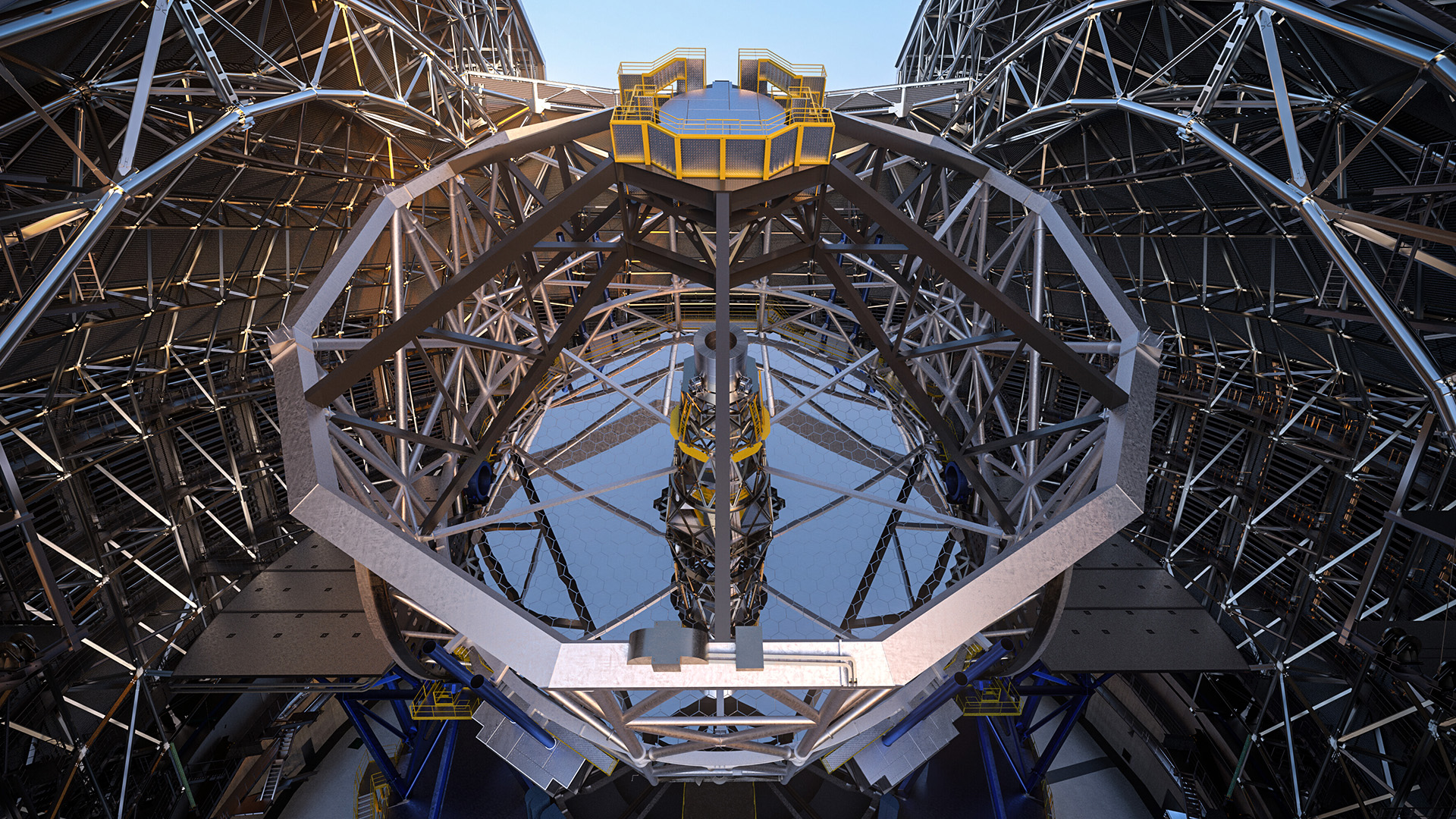
For this reason, astronomers are not yet ready to abandon ground-based instruments. The latest technologies allow for the construction of very large segmented mirrors. For example, a 39-meter reflector called the Extremely Large Telescope is currently under construction in South America. It will belong to the European Southern Observatory (ESO) complex. Its secondary mirror will be equipped with a state-of-the-art adaptive optics system. This system will change its shape, compensating for image distortions that occur when light passes through the atmosphere. Because the telescope will be installed in the high mountains in low-humidity conditions, it will be able to see quite far into the infrared part of the spectrum. This is very promising for the search for and study of exoplanets.
What can astronomy enthusiasts expect in this field? On the one hand, simple, small instruments will become cheaper and more accessible to beginners. On the other hand, more expensive telescopes, which can already be called semi-professional, will become higher quality. There will be more optics tailored to specific tasks (such as astrophotography). Finally, many observatories are currently being built around the world, which anyone can “visit” via the internet by paying a small fee for access to the equipment for a certain period of time and conduct observations without leaving their own home. We can already follow almost all significant astronomical events online, such as eclipses, comets, and asteroids approaching Earth, and so on. In the future, there will be even more opportunities like this, which is something to be welcomed.
This article was published in issue No. 1 (189) of Universe Space Tech magazine in 2023. You can purchase this issue in electronic format from our store.

