

After its unexpected “disappearance” after launch, the US Space Force finally detected the Chinese experimental satellite Shiyan-28B 01 in extremely low orbit. Its trajectory and maneuvers raise questions about the true purpose of the aircraft.
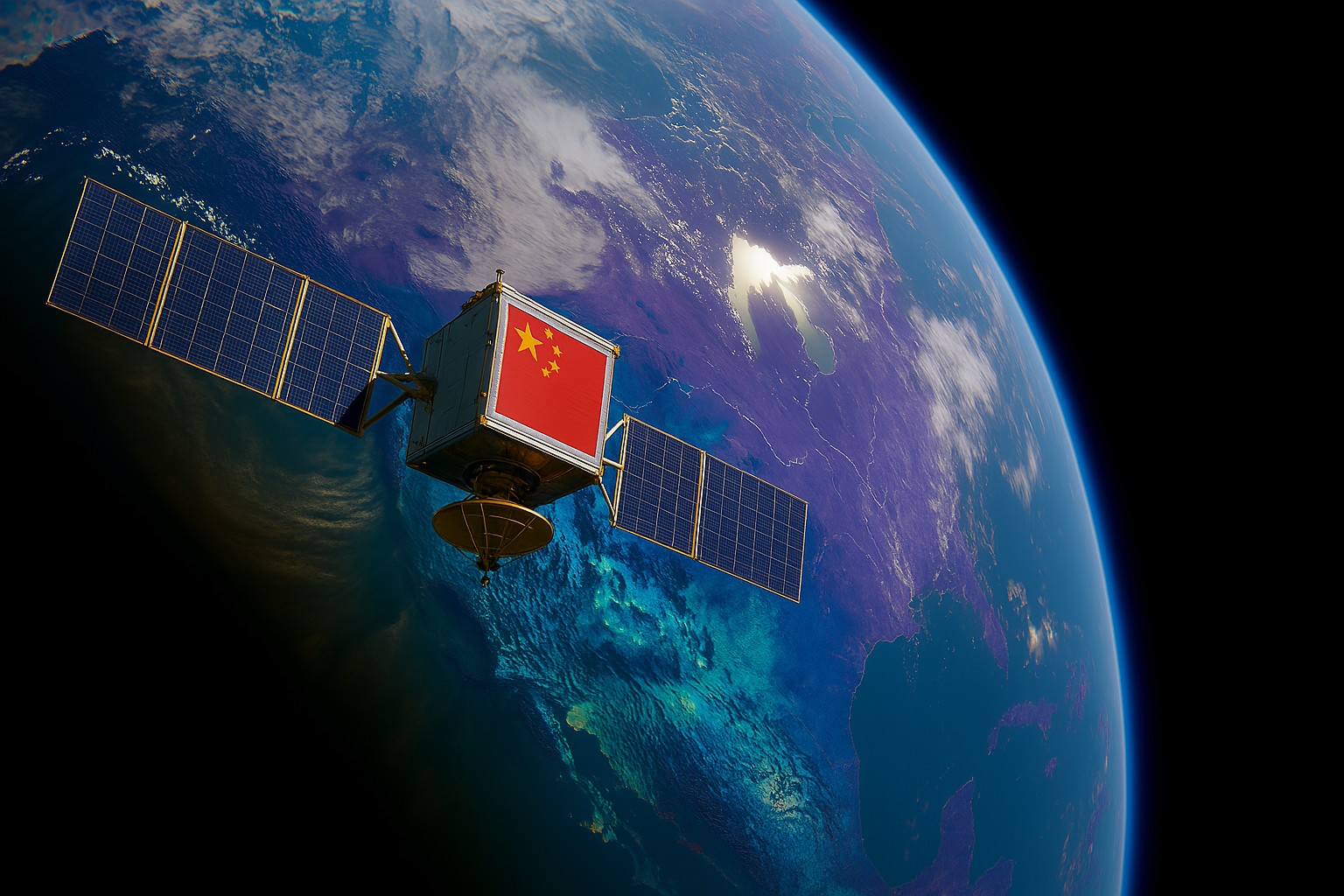
Launched on July 3 from the Xichang Space Center, the Shiyan-28B 01 satellite belongs to a series of research spacecraft that are officially designed to study the space environment and test new technologies. However, this vehicle immediately attracted the attention of the US Space Force: standard tracking systems, which usually detect objects within 1-2 days, were unable to find it for a full six days. It was only on July 9 that the American space monitoring unit was able to catalog it.
Unusual orbit and maneuvers
The discovery has raised new questions. Astrophysicist Jonathan McDowell reported that the satellite was in a very low Earth orbit at an altitude of about 795 km with an incredibly low inclination of only 11° to the equator. This contrasts sharply with the expected slope of 35°. According to McDowell, this trajectory undoubtedly indicates that the Long March 4C launch vehicle performed a complex dogleg maneuver — a sharp change in flight direction during ascent. To reach its final orbit, the second stage of the rocket activated its engine three times.
Possible objectives and international interest
Shiyan 28B-01 now cataloged by the US (6 days after launch) as 2025-145A in a 793 x 796 km x 11 deg orbit. The CZ-4C second stage probably put the third stage in a 28 deg trajectory from Xichang, and two stage 3 burns were made to reduce inclination to 11 deg.
— Jonathan McDowell (@planet4589) July 10, 2025
The reason for this unusual maneuver and the choice of a unique low-inclination orbit remains unknown. Experts note that China has never used such trajectories before. Analysis of the orbit indicates that the spacecraft will regularly fly over the South China Sea and the Indian Ocean. This raises speculation about its possible use for regional surveillance or testing of special communication technologies that are sensitive to specific geography.
Context of secret experiments
This launch comes amid active but often secretive Chinese space experiments. The country recently successfully demonstrated technology for refueling satellites in orbit.
China traditionally reveals minimal details about its experimental missions, forcing international observation systems to closely analyze every unusual maneuver. The case of Shiyan-28B 01 clearly demonstrates China’s technological capabilities in space and raises interest in the true purpose of this mysterious satellite.
Earlier, we reported on how Chinese satellites arranged a mysterious encounter in geostationary orbit.
According to spacenews.com

