

In the future, humanity plans to establish a colony on the Moon. Astronauts and scientists may live and work in space for weeks or even months. One of the urgent needs will be housing, as space modules or modular stations manufactured on Earth can only be a temporary solution. Eventually, it will be necessary to figure out how to use local materials for construction.
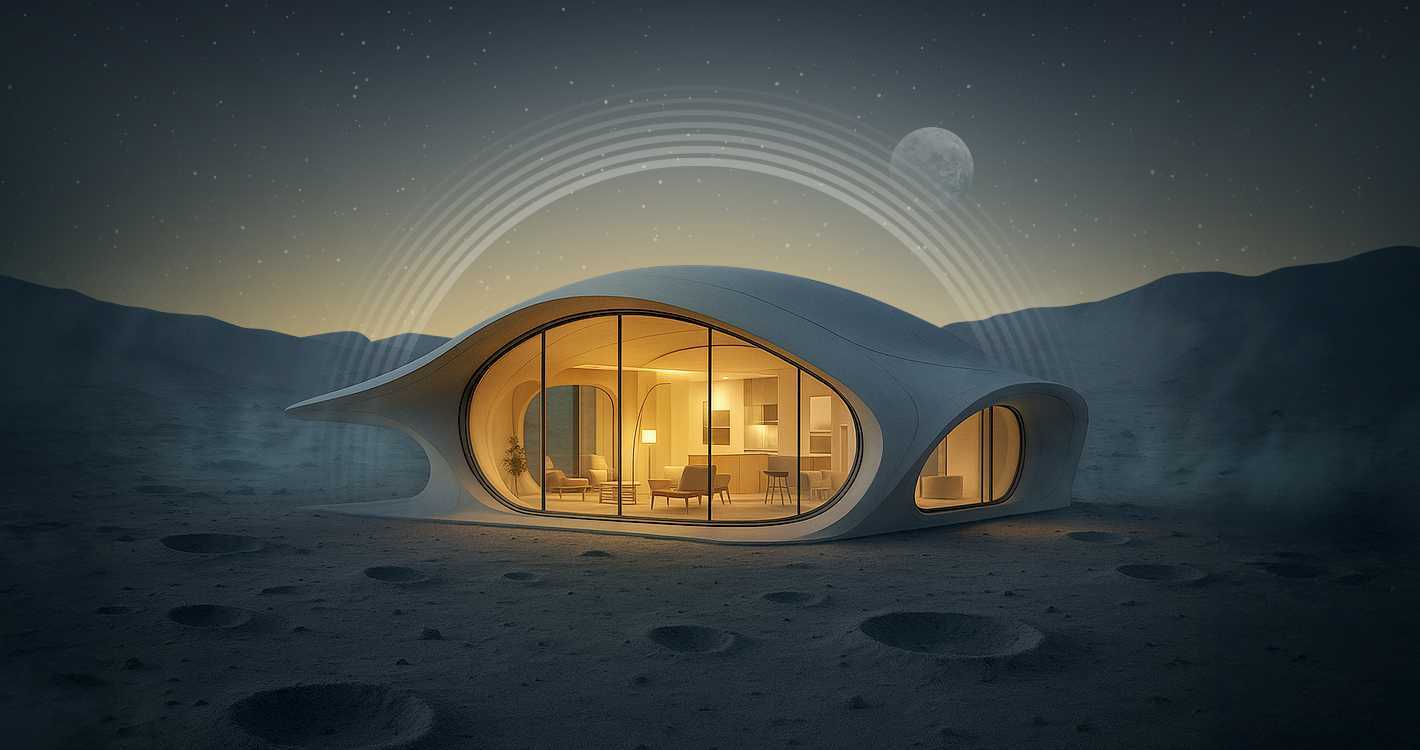
When will we start building cities on the Moon?
In the second half of the 2020s, US astronauts are scheduled to land at the south pole of the Moon as part of the Artemis program and soon begin construction of a base. Specific drawings are not yet available, but it is already clear that, at least initially, this concept will be based on sealed modules. Production will take place on Earth, and they will be brought into working condition on the Moon. Additionally, the living quarters will be covered with lunar regolith to protect them from solar radiation and meteorites.
At least, that is the case with all the concepts developed over the past decades. In fact, we are talking about the same technologies that are still used to build orbital stations. However, this is the least efficient way of constructing buildings that humanity has ever used. Essentially, the cost of a room consists of the cost of lifting every gram of its walls into orbit, transporting them through space, and landing them on the surface. Add to this the cost of materials and the construction of structures that can withstand space travel.
Inflatable housing and materials from Earth
Inflatable structures would be the simplest way to solve housing problems on the Moon. This technology is called the Bigelow Expandable Activity Module (BEAM) and has been in operation on the International Space Station for several years. So far, this module serves exclusively as a storage facility, since its main task is to demonstrate the reliability of such structures. After all, it is clear that even a tiny hole in the wall can cause destruction.
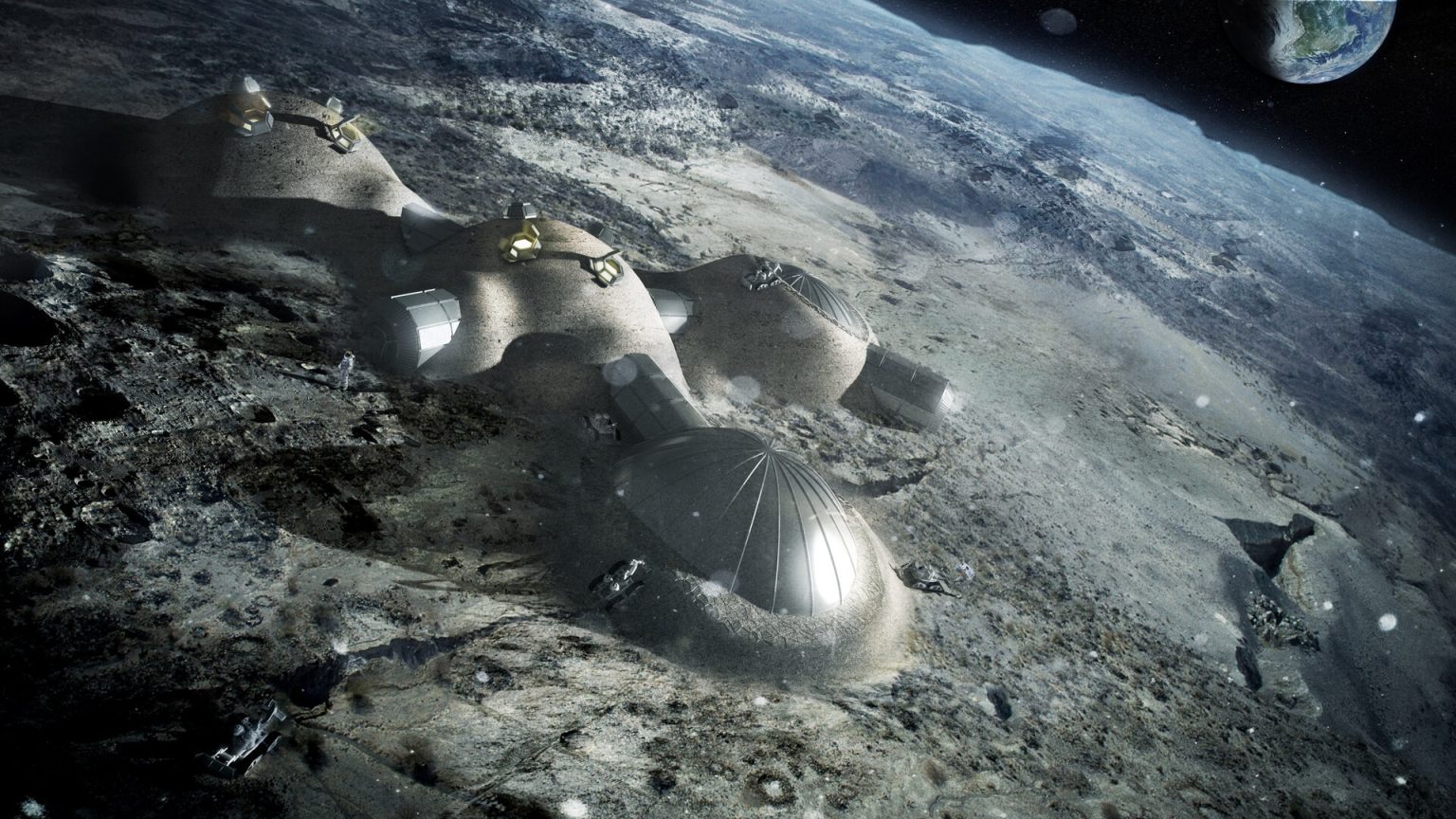
Inflatable living modules are also being tested for future space stations. They may also be useful at the lunar base. However, sharp-edged regolith could pose a danger, as it could damage the shell.
Going further, it is possible to completely abandon pre-manufactured modules on Earth. All that is needed is to load plates, profile parts, and fasteners for connecting them to the rocket. Essentially, it is a construction set that can be used to assemble a building on the Moon, and then seal all the joints and start placing equipment inside.
Of course, the materials for such a construction set must be of high quality, and the design must be calculated in advance. And assembling it on the Moon will be much more difficult than on Earth. However, the use of such technology will allow buildings with an internal volume of hundreds of cubic meters to be constructed there. At the same time, materials can be conveniently delivered to the lunar surface using relatively small launch vehicles, which means that private companies can be involved.
However, the cost of construction will be extremely high compared to the most expensive buildings on Earth, if calculated per cubic meter of living space. It can only be reduced by using local materials. But before considering this option, it is necessary to decide on the design of the buildings.
What buildings on the Moon should be like
Unlike on Earth, construction on the Moon should be carried out in such a way that going to the surface is only necessary when essential. A system of airlock passages can help with this. However, it should be noted that each of these will be a separate structure, the construction and operation of which will be extremely expensive. Therefore, for maximum efficiency, such tunnels should be short and few in number.
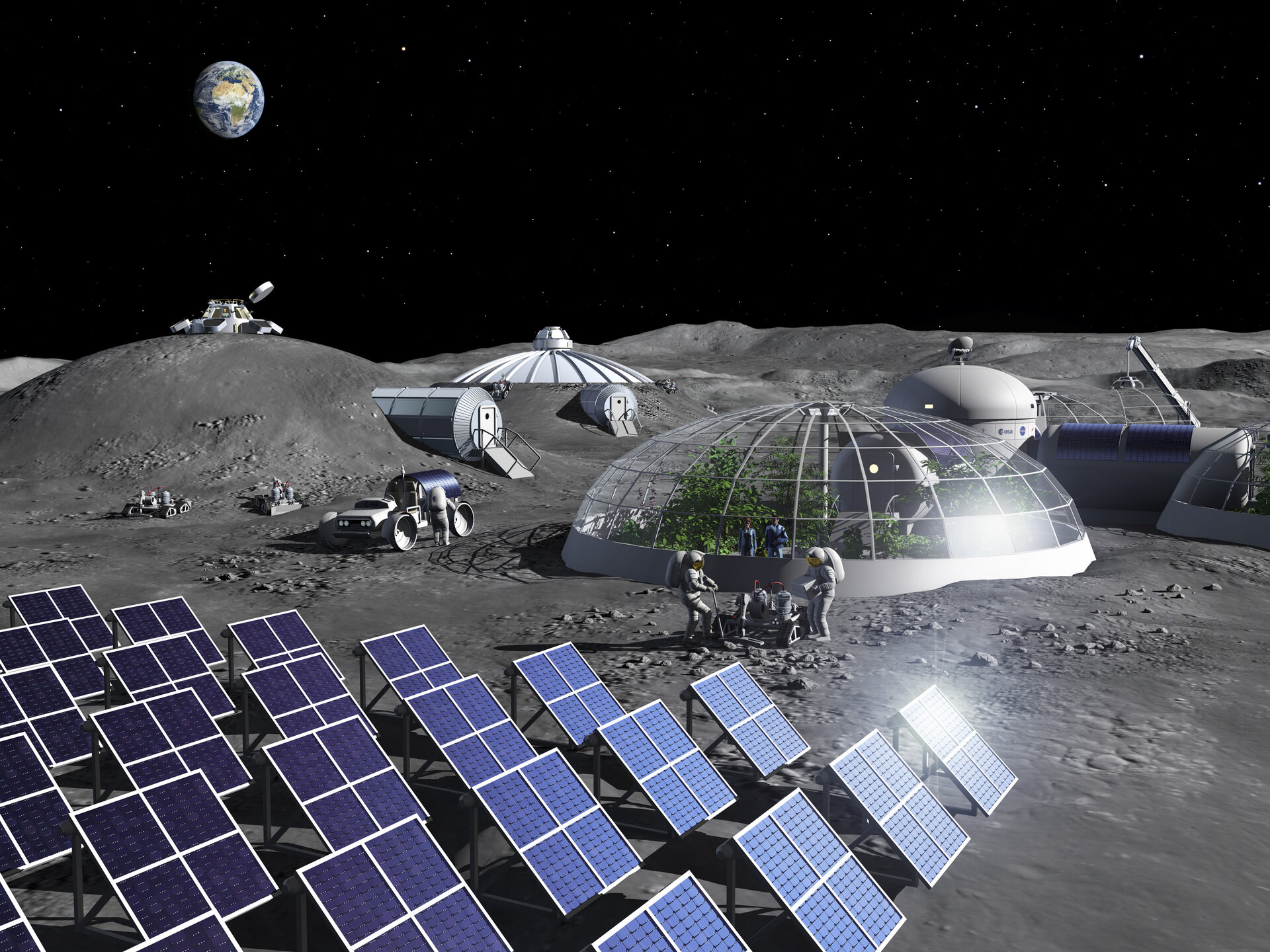
The optimal building for the Moon is one giant sealed complex that contains everything needed. The only things that should be located separately are production facilities and power generation facilities, as the latter will most likely be based on radioisotope thermoelectric generators, or even full-fledged nuclear or thermonuclear reactors.
Unlike on Earth, all communications in a space building must also be located entirely inside it, if possible. First and foremost, of course, this applies to water supply and drainage systems. In space, where there are no open rivers for water intake and discharge, they must be combined into a single water recycling cycle. It is illogical to place a water treatment plant outside the complex, since any accident or scheduled maintenance will require going outside in spacesuits. Therefore, the best option is for the water to circulate entirely inside.
Ventilation and heating systems are even more interesting. There should be a single complex of engineering networks that ensures a certain air quality. The ideal option would be a station for regenerating and purifying air from solid pollutants, from which pipes with forced circulation would spread to all corners of the complex. The system should also include air heaters, humidifiers, and a large number of sensors connected to an automated climate control system inside the building.
There must also be a large space here where a garden can grow to ensure the psychological comfort of residents, who will spend practically all their time indoors.
Building design
The optimal shape of the building can be determined mathematically by optimizing efficiency with respect to a specific key parameter. On the Moon, this should ensure maximum volume with minimum surface area. We are talking about a sphere. However, building it even on celestial bodies, where gravity is quite low, is problematic because it requires strong supports. Therefore, a better, though not as optimal, solution would be a hemisphere.
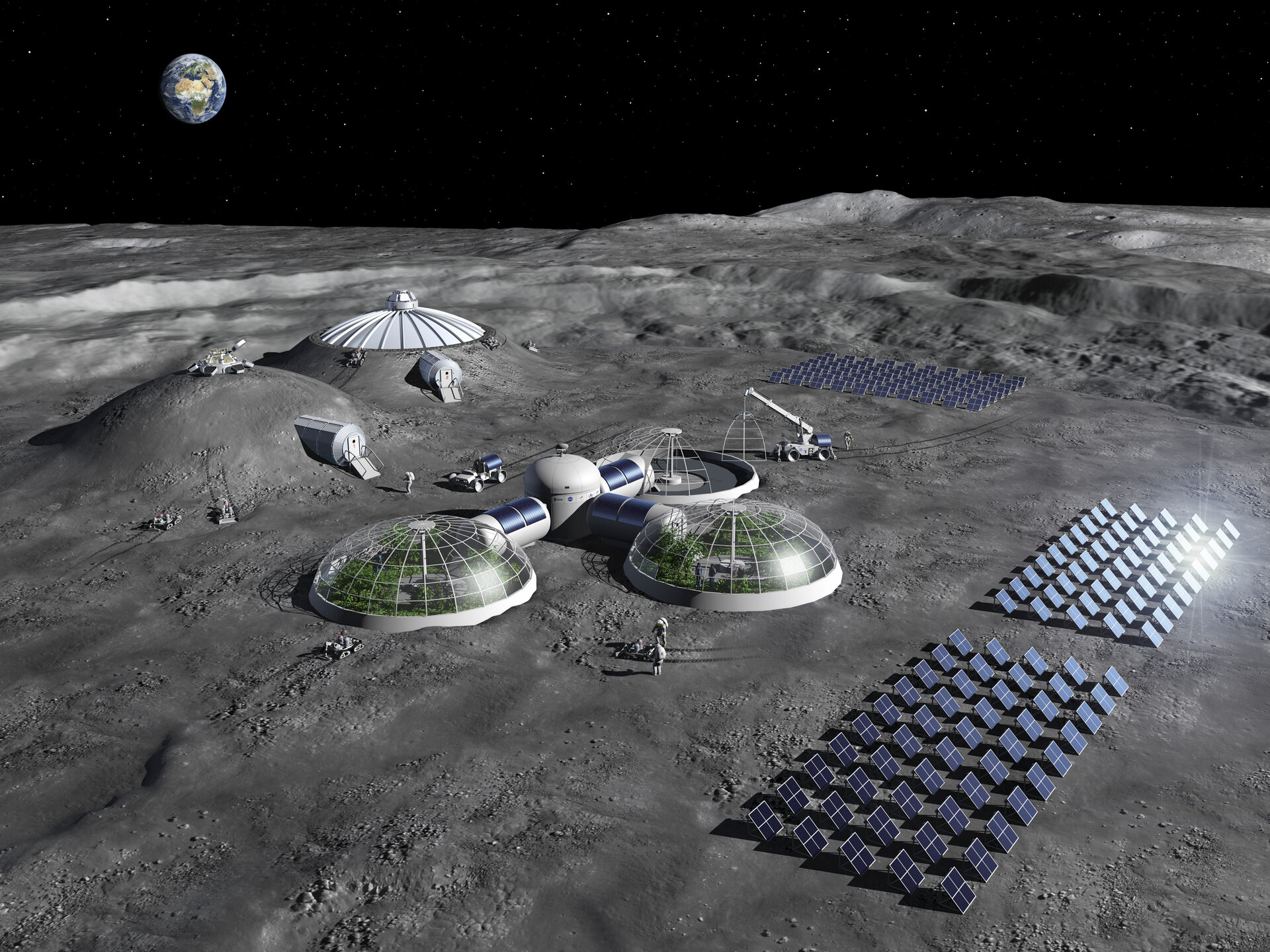
A dome, a structure known since the days of the Roman Empire, will be reliable and effective here. The main advantage of a dome structure is the redistribution of its own weight to the base on which it rests. Thanks to this, its structures will be quite light even if they are quite large.
It is worth noting that on the Moon, it is possible to construct buildings that are as close to a perfect sphere as possible, while also protecting them from radiation and meteorites. However, this cannot be done just anywhere.
The smartest solution seems to be to find a small crater with the most regular shape possible, which can be covered with a dome. Cover the surface with local soil, and the depression will turn into a hill that can accommodate hundreds or even thousands of people.
Concrete on the Moon and Mars
So, what local materials can be used to build these giant domes? The standard solution here would be to use the same alloys that we would use if we were importing everything from Earth. There is enough aluminum and titanium in lunar rock, although the latter is not found everywhere – only where ilmenite rock is common. But with iron, chromium, and magnesium, the situation is much worse.
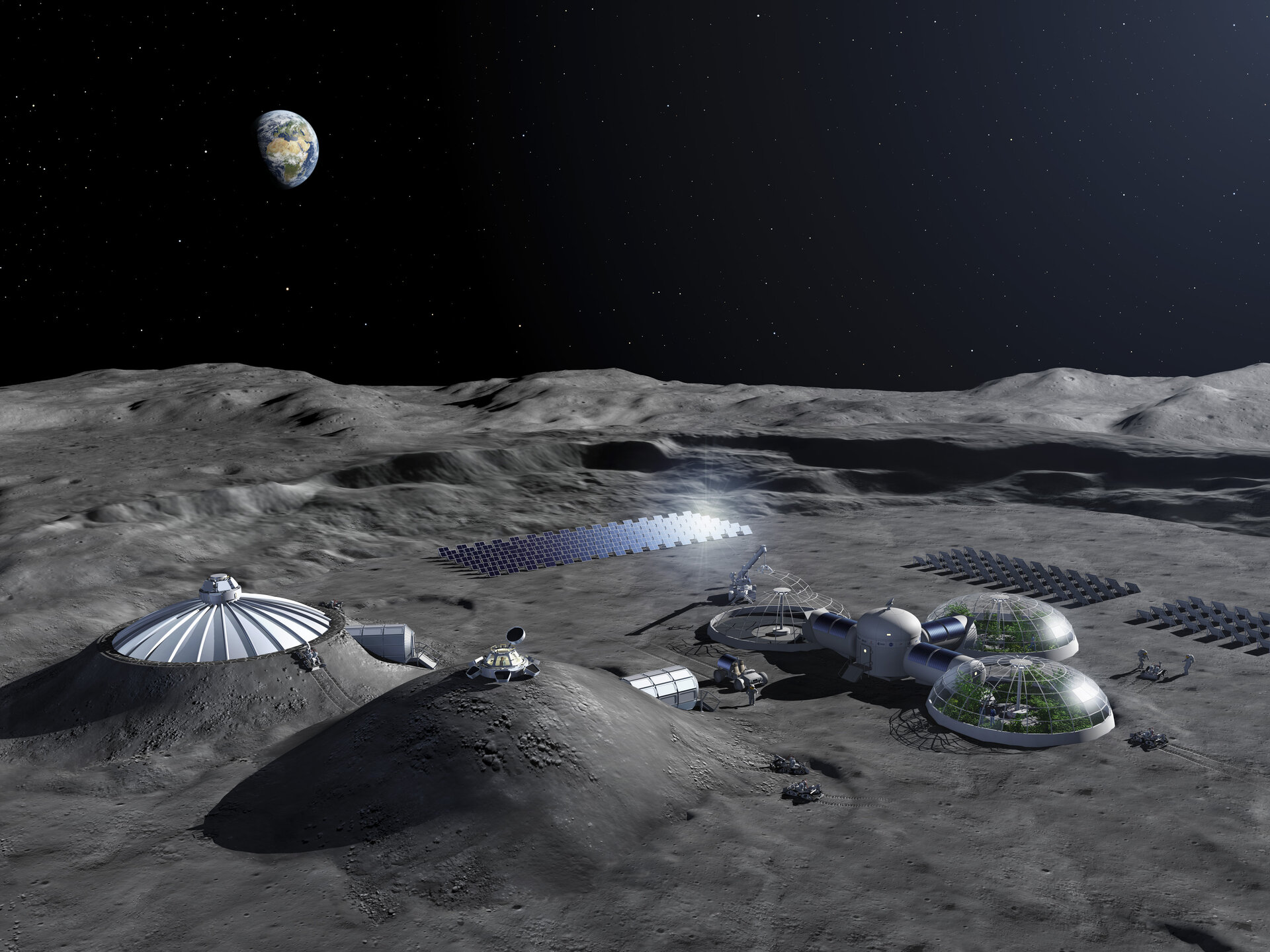
However, using alloys, especially such expensive ones, to manufacture building materials directly on site is not the best solution. Since the products do not have to be transported anywhere by rocket, they may not be as strong.
Mass construction on Earth relies on the widespread availability of concrete. This composite material consists of crushed rock, sand, and cement, which reacts with water to form a strong stone that ultimately binds all the components together. Concrete can be molded into any shape, and when combined with steel reinforcement, it can be used to build structures that are comparable in lightness and strength to aluminum alloys.
However, it is practically impossible to use this most important building material on the Moon. There is plenty of granite and basalt debris, including very fine particles, but there is nothing to make cement from. This requires clay and calcium-containing rocks. There is something vaguely similar to the former on the Moon, but there are serious problems with the latter.
In addition, a mixture of cement and water on the surface of the Moon will not harden to sufficient strength due to the absence or thinness of the atmosphere. The water in the mixture will simply evaporate before a chemical reaction can take place.
Theoretically, aqueous solutions of potassium silicates can be produced in sufficient quantities on the Moon. On Earth, they are known as liquid glass or silicate glue. This substance hardens through the evaporation of water, so we do not use it to make building composites here due to the relatively long hardening time. However, in the absence of an atmosphere, this will happen much faster. However, it is possible that the process will occur instantly, which will complicate the manufacture of structures with the correct shape.
Melting rocks on the Moon
To create material for building domes on the Moon or Mars, it is not necessary to build chemical plants to convert local rocks into cement or liquid glass. And it will not even be necessary to smelt metals from them in large quantities.
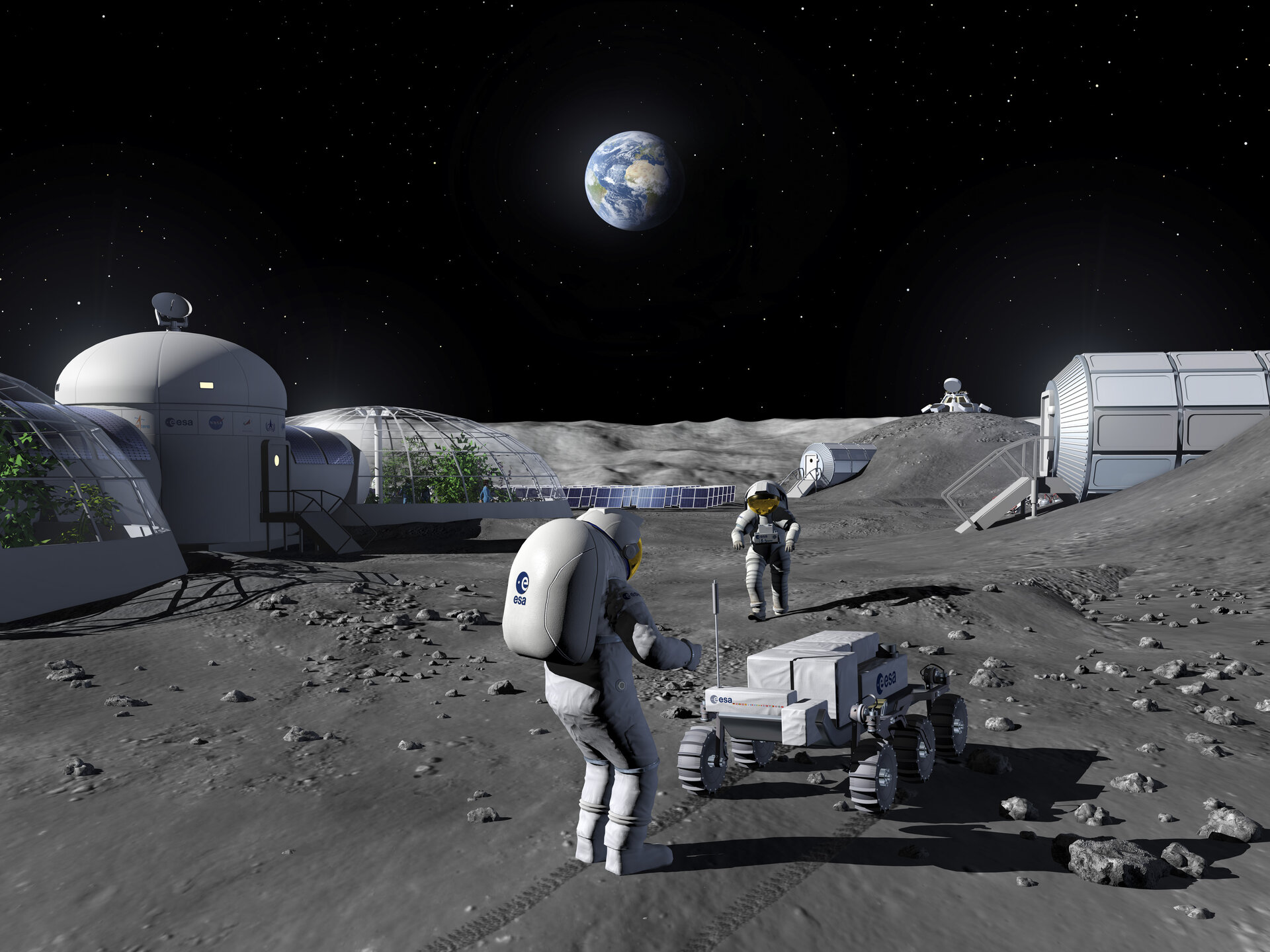
The fact is that stone, primarily granite and basalt, can simply be melted down and used to make building products of the required shape. Of course, this requires temperatures above a thousand degrees. On Earth, basalt reinforcement bars and tiles have been manufactured for quite some time. Mineral wool, which is widely used as insulation, is actually very fine fibers of molten and solidified stone.
If molten basalt is made sufficiently homogeneous, products made from it are not significantly inferior to aluminum and steel in terms of their characteristics. For example, they can be used to make a dome frame and panels for it. Assemble the structure and then seal it.
How to build walls on the Moon
Despite all this, building on the Moon is extremely difficult. This is mainly due to the need to perform all work in spacesuits, which turns routine operations on Earth into a real challenge. Laying a wall of hewn stone blocks and even fastening them with a solution of the same liquid glass would be technically possible and sometimes even make sense, but it is physically very difficult.
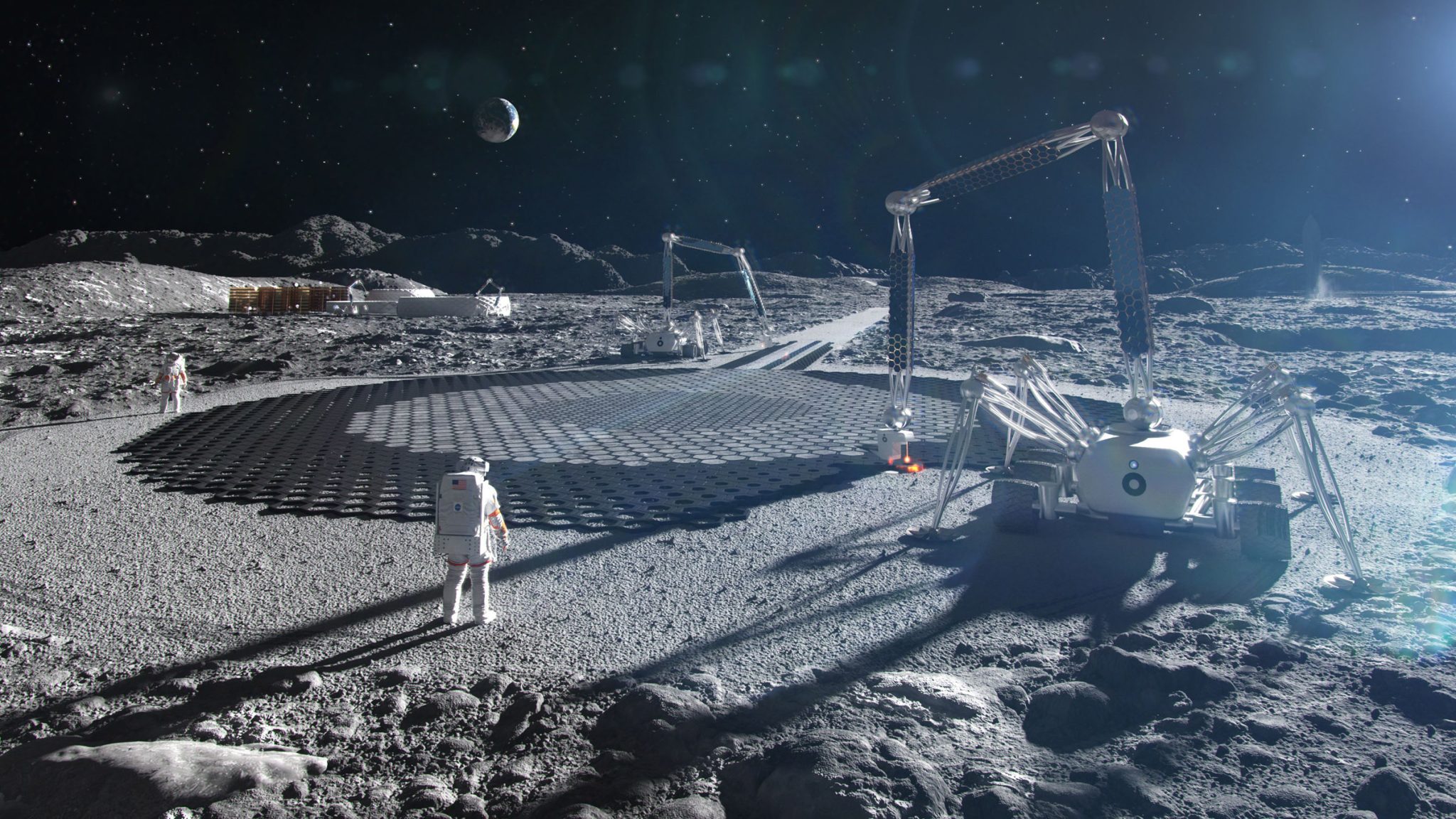
Therefore, all construction work on the Moon should be automated and mechanized whenever possible. And this is not only, but also not so much about the use of 3D construction printers. For example, the process of assembling a dome from separate blocks using lifting cranes can be automated. Robotic platforms can also be used to transport materials and cover buildings with soil.
However, there are not many advantages to building on the Moon. In fact, there are only two: geological stability and low gravity. This means that structures here can be thinner than on Earth and easier to lift. And laying foundations will not be as difficult as usual.
This article was published in issue No. 2 (191) of 2024 in Universe Space Tech magazine. You can purchase this issue in print or electronic format from our store.

