

The Kepler space telescope completed its mission many years ago. However, scientists continue to study its image archive. Recently, they discovered a world orbiting at the outer edge of the “habitable zone” of the star HD 137010. It is likely to be very cold.
Planet
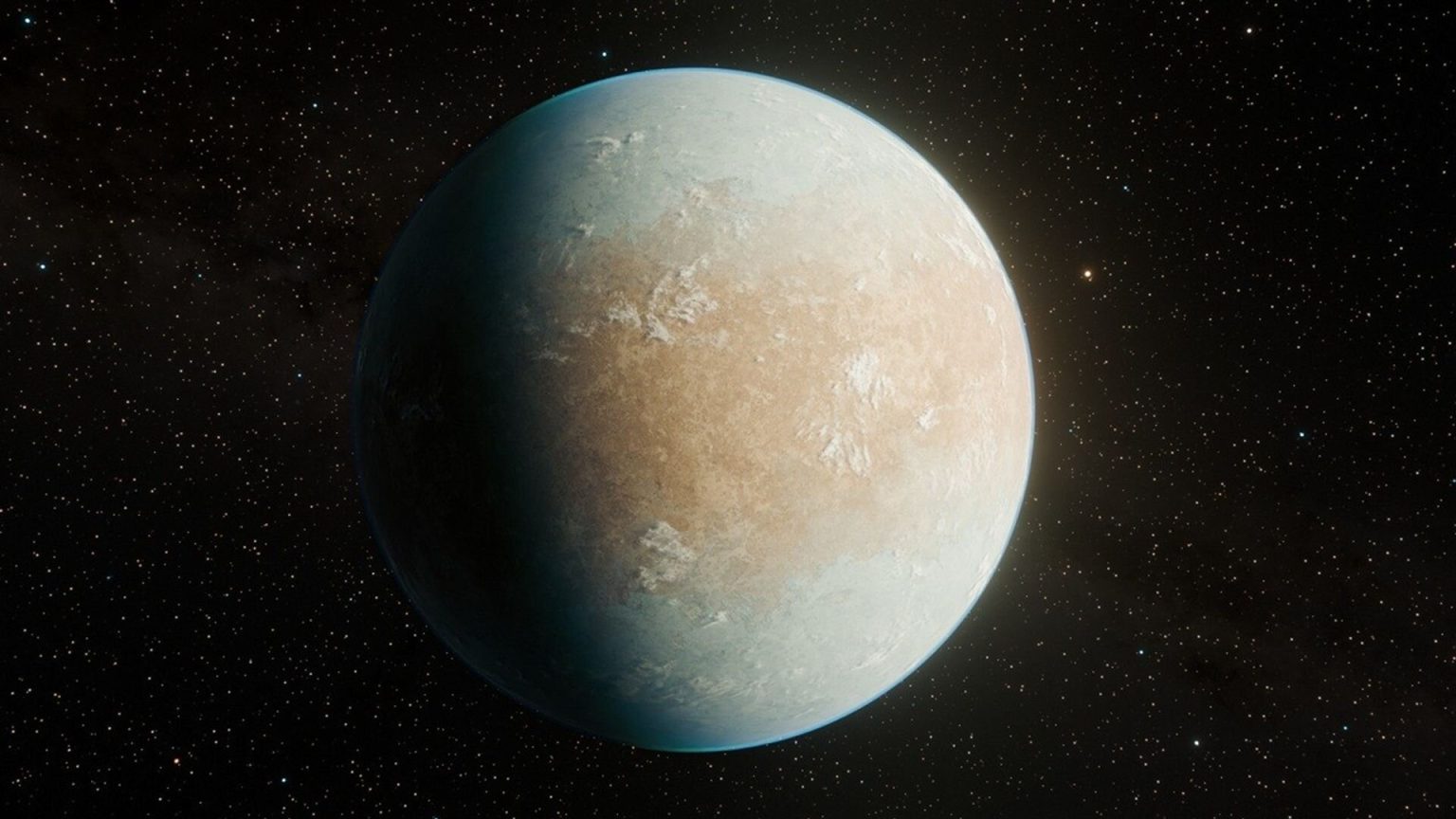
Scientists have discovered a planet orbiting the star HD 137010, which is 146 light-years away from us. An article about this discovery has been published in Astrophysical Journal Letters. The unique feature of this discovery lies in the fact that it was made using archived images rather than new ones.
Traces of an exoplanet have been found in data from the Kepler space telescope. For many years, it searched for new worlds in the infrared range, but in 2018, its mission was finally completed. However, astronomers continued to work with its data, which resulted in the discovery of the planet HD 137010 b.
The orbital period of the planet, which is still considered a “candidate” and requires further confirmation, will likely be similar to that of Earth, i.e., approximately one year. Planet HD 137010 b may also be located at the outer edge of its star’s “habitable zone,” i.e., at a distance from it that allows liquid water to form on the planet’s surface with the appropriate atmosphere.
The planets orbiting other stars are known as “exoplanets.” And this may be the first exoplanet with Earth-like properties that, from our perspective, crosses the disk of a Sun-like star that is close enough and bright enough for meaningful further observation.
However, the bad news is that the amount of heat and light that such a planet would receive from its star is less than a third of what Earth receives from the Sun. Although the star HD 137010 is similar to our Sun in type, it is cooler and dimmer. This could mean that the planet’s surface temperature does not exceed -68°C. For comparison, the average surface temperature of Mars is around -65°C.
How to record transits of the planet HD 137010?
Planet HD 137010 b will also require further observation to move from “candidate” to “confirmed” status. Scientists studying exoplanets use various methods to detect them, and this discovery is based on a single “transit” — the only instance when the planet crossed the disk of its star, forming a kind of miniature eclipse — detected during Kepler’s second mission, known as K2.
Even with just one transit, the authors of the study were able to estimate the orbital period of the candidate planet. They tracked the time it took for the planet’s shadow to move across the surface of the star — in this case, 10 hours, whereas Earth requires about 13 hours — and then compared it with orbital models of the system. However, although the accuracy of this single detection is much higher than that of most transits recorded by space telescopes, astronomers need to see these transits repeat regularly to confirm that they are caused by a real planet.
And it will be difficult to record a larger number of transits. The planet’s orbital distance, similar to that of Earth, means that such transits occur much less frequently than for planets orbiting their stars in closer orbits (this is one of the main reasons why exoplanets with Earth-like orbits are so difficult to detect). Confirmation may come in a few months from further observations by Kepler/K2’s successor, NASA’s TESS (Transiting Exoplanet Survey Satellite), which is still the workhorse for planet discovery, or the European Space Agency’s CHEOPS (CHaracterizing ExOPlanets Satellite). Otherwise, we may have to wait for the next generation of space telescopes to gather additional data about the planet HD 137010 b.
Suitability for life in the discovered world
Despite the possibility of a cold climate, HD 137010 b could also turn out to be a temperate or even wet world, according to the authors of the article about this exoplanet. To achieve this, it simply needs an atmosphere richer in carbon dioxide than ours.
Based on modeling of possible atmospheres for the planet, the scientific team gives it a 40% chance of falling within the “conservative” habitable zone around the star and a 51% chance of falling within the broader “optimistic” habitable zone. On the other hand, the authors of the study claim that the planet has about a 50% chance of completely leaving the habitable zone.
According tophys.org

