

One of the most ambitious hunting expeditions in history — the search for signals from extraterrestrial civilizations — is getting a new lease on life. The SETI@Home project, which has attracted more than 2 million enthusiasts from around the world, is completing its analysis of a colossal array of data collected by the legendary Arecibo telescope. Despite the destruction of the observatory, scientists now have a unique “golden hundred” of candidate signals for detailed verification.

The idea of searching for extraterrestrial intelligence (SETI) faces a fundamental problem: space is filled with radio noise from stars, gas, and other natural sources. It is incredibly difficult to pick out a possible technological signal from this chaos. In 1999, a team of scientists decided to enlist the help of the entire planet. They asked volunteers to install a special program on their home computers that would analyze real data from Arecibo in the background. They expected 50,000 participants, but ended up with a true global collective mind — millions of people from 100 countries used their home computers to help science.
The Legacy of Areisibo
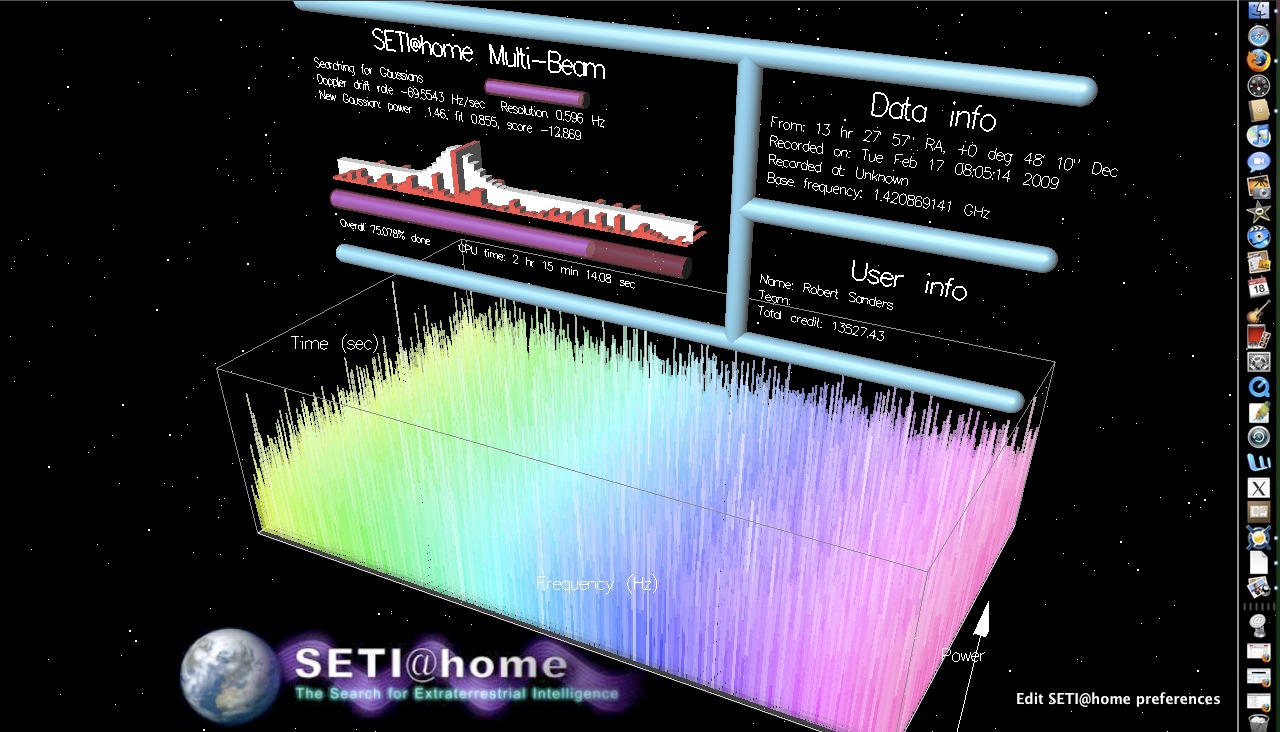
Over the course of 21 years, volunteers sifted through the information and identified more than 12 billion “interesting” signals. Now, this list has been narrowed down to the 100 most promising ones. Their detailed verification has been entrusted to a new giant — the Chinese FAST radio telescope, the world’s largest single-dish antenna. This is a symbolic passing of the baton from the late Arecibo, who in 1974 sent the famous message about humanity into space.

So far, none of the candidate signals has provided irrefutable evidence of extraterrestrial intelligence. However, as project co-founder David Anderson notes, this work is of immense value: “If we don’t find aliens, we can say that we have established a new level of sensitivity. We have a long list of things we would do differently.”
Path to future discoveries
SETI@Home has concluded as a large-scale experiment in citizen science. It has not only sifted through cosmic noise, but also created an invaluable database of knowledge and methodologies. This experience will serve as a foundation for future, even more accurate searches, proving that the most complex scientific problems can be solved through the combined efforts of all humanity.
Earlier, we explained the reasons behind humanity’s failure to detect extraterrestrial life to date.
According to berkeley.edu

