

On October 1, a small asteroid flew past Earth. The event was remarkable in that the distance between it and our planet was comparable to the orbit of the International Space Station.
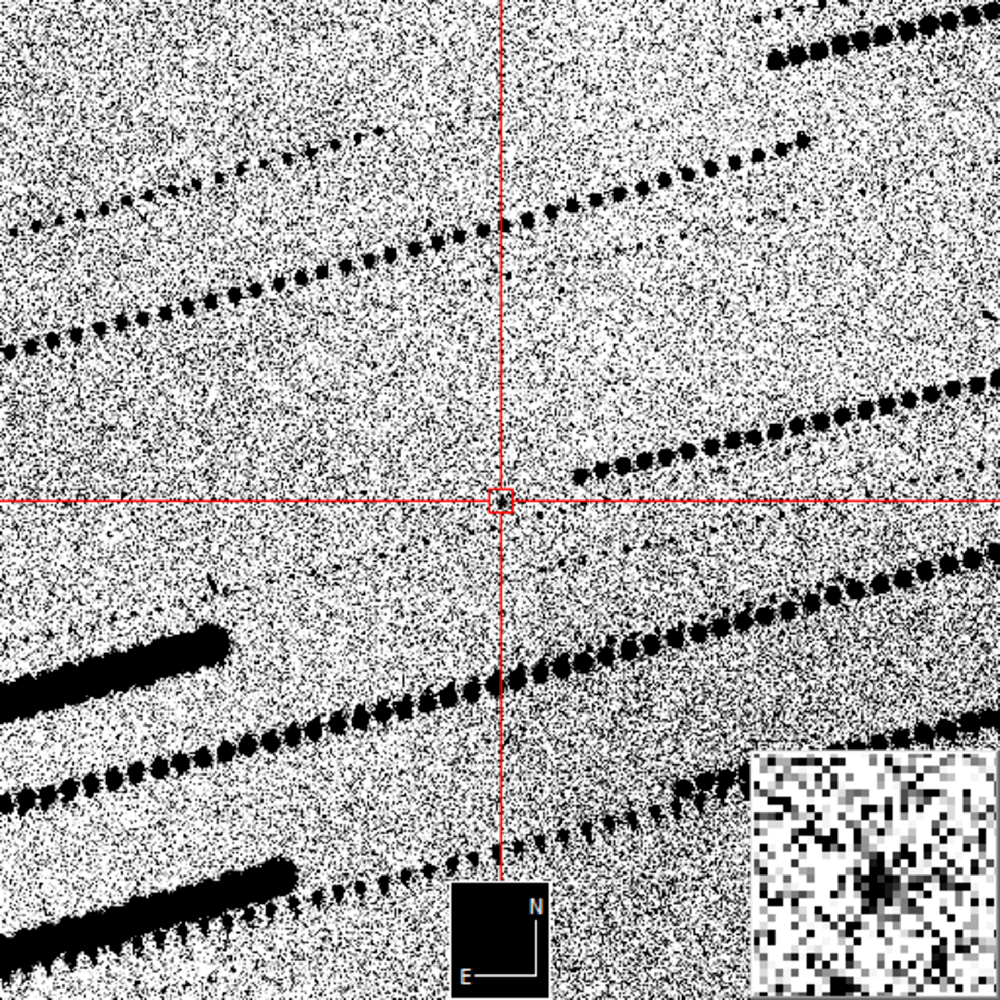
The asteroid that nearly collided with our planet has been designated 2025 TF. It was discovered by the Catalina Observatory a few hours after passing Earth. It was subsequently observed by astronomers from ESA’s Planetary Defense Division using the telescope at the Las Cumbres Observatory in Australia.
According to scientists’ calculations, on October 1, 2025 TFf lew over Antarctica, approaching the Earth’s surface at a distance of 428±7 km. This altitude is similar to the orbit of the International Space Station, approximately 415 km.
The flyby posed no danger to our planet. The diameter of 2025 TF ranges from 1 to 3 meters. Thus, even if the asteroid had entered Earth’s atmosphere, it would not have reached the surface, having disintegrated at a high altitude.
In any case, the discovery of such a small object as 2025 TF and its subsequent tracking is a clear demonstration of the significantly increased capabilities of astronomers. As technology improves, they are beginning to find more and more small asteroids that previously escaped their attention.
At the same time, it is worth noting that despite such a close flight, this is not a record. In 2020, asteroid 2020 VT4 flew even closer, passing about 370 km from the Earth’s surface.

We can also recall the Great Daytime Fireball of 1972: a celestial body observed in North America that passed through the upper layers of the Earth’s atmosphere, accompanied by the formation of a fireball, and then returned to space. According to astronomers’ estimates, its original diameter was between 3 and 14 meters, and its flight altitude was 57 km.
According to ESA

