

An international group of astronomers has discovered a second exoplanet orbiting a red dwarf star close to the Sun. It is a super-Earth.
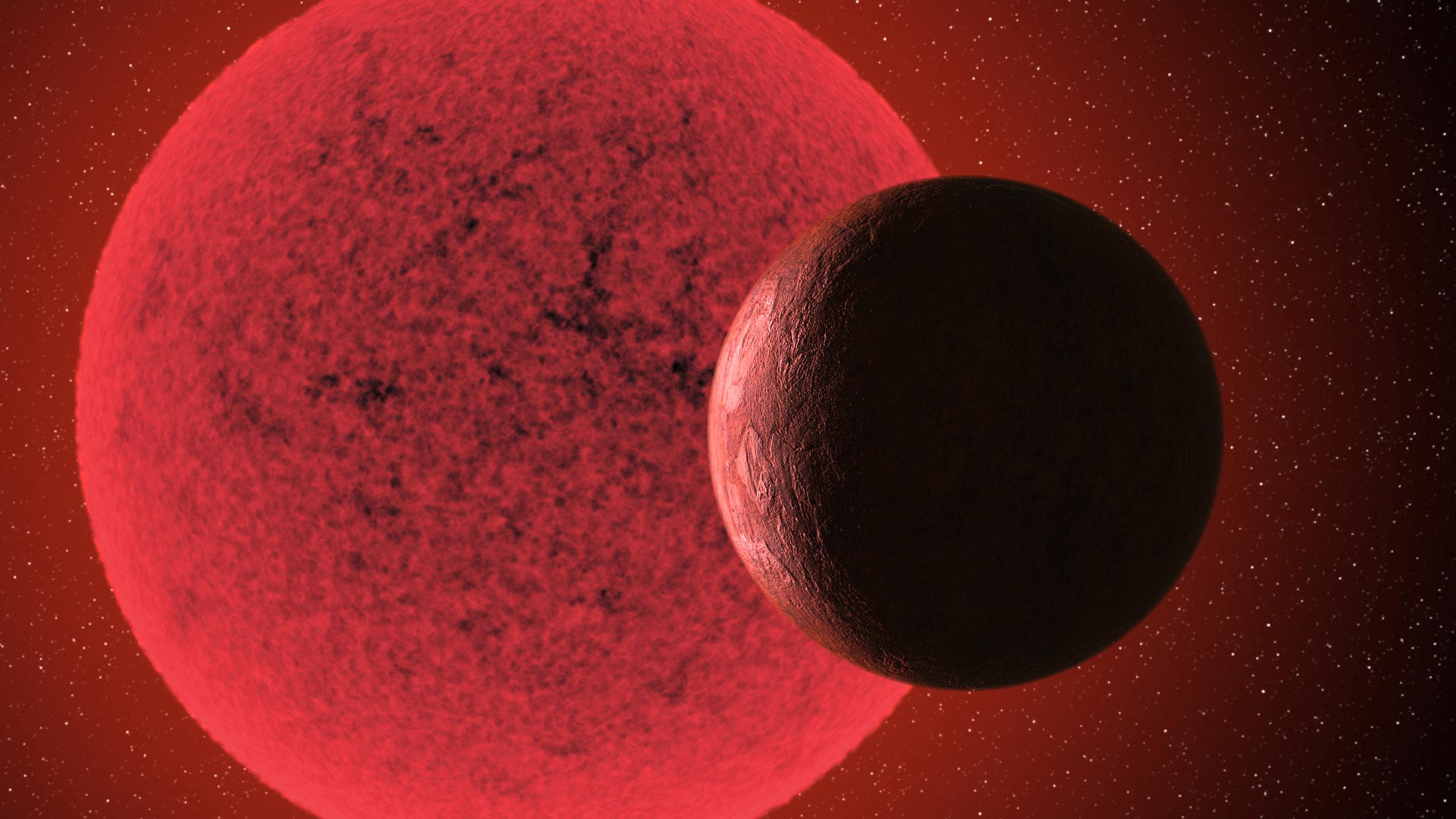
The newly discovered exoplanet orbits the star Gliese 536. It is located 34 light-years from Earth and is approximately half the size and mass of the Sun. The star is estimated to be 4.2 billion years old.
In 2017, astronomers discovered an exoplanet orbiting Gliese 536. It is believed to be a super-Earth, as its mass is 6.37 times that of Earth. The exoplanet orbits its star at a distance of about 0.067 AU (10 million km), and its equilibrium temperature is approximately 180 °C.
Now, a group of astronomers from the University of La Laguna (Spain) has announced the discovery of another exoplanet in this system. The discovery was made using the radial velocity method. It is based on searching for changes in the speed of a star caused by the gravitational influence of its companions. Using this technique, astronomers have discovered more than 600 exoplanets.
According to the study results, the minimum mass of the newly discovered exoplanet is approximately 5.89 times that of Earth, with an orbital period of 32.76 days. Its orbit passes at a distance of about 0.16 AU (24 million km) from the star.
According to scientists, the exoplanet is a super-Earth that receives slightly less energy from its star than Venus. Its equilibrium temperature is estimated at 70 °C.
Scientists also managed to determine the rotation period of the red dwarf. It is 43.63 days. This, together with the observed fluctuations in radial velocity, suggests that the surface of the star is covered with a large number of spots.
Earlier, we discussed whether space exploration could exist on super-Earths.
Provided by Phys.org

