

Every star in the Universe emits energy in different ways. Their radiation is the key to understanding their birth, life, and death. Young stars are particularly interesting: they are extremely powerful and active, with incredibly strong winds and magnetic fields. The jets of matter formed by magnetism are a spectacular sight. And now, a new discovery sheds light on the magnetic secrets of the most massive ones.
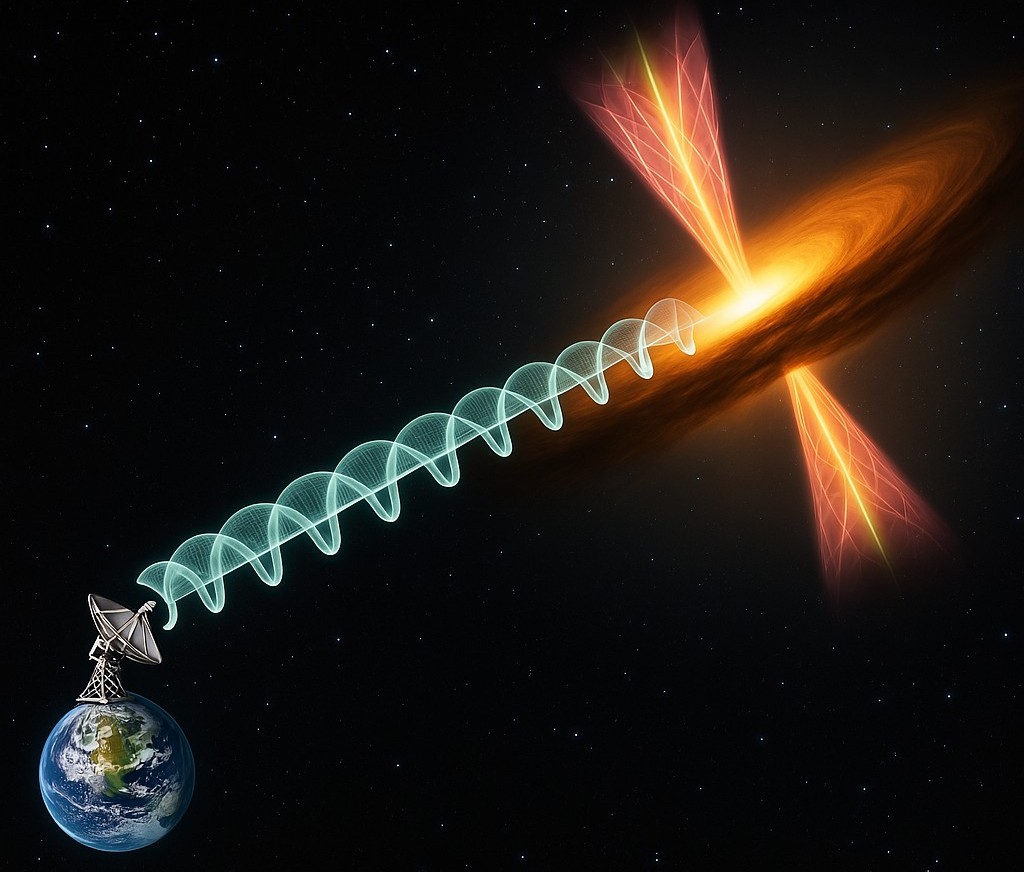
An international team of astronomers led by Amal Cheriyan (Indian Institute of Space Sciences) has discovered circular polarization of radio emission near the massive young star IRAS 18162-2048 for the first time. This phenomenon is a direct result of powerful magnetic fields at the surface of the star. The study, published in The Astrophysical Journal Letters, was conducted using the giant radio telescope, VLA. Previously, circular polarization had only been observed in low-mass stars or even black holes, but never in such a giant.
A special star
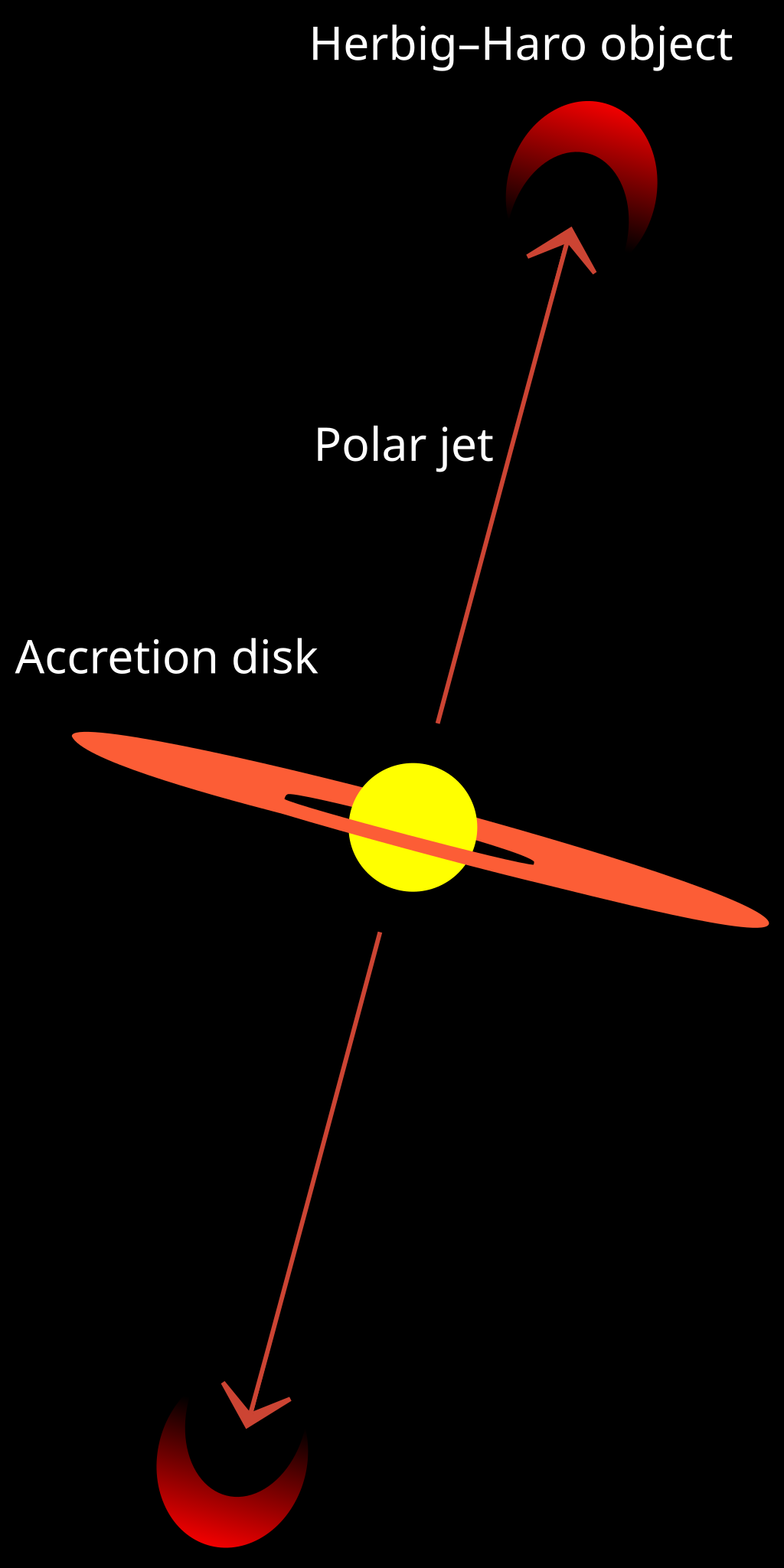
IRAS 18162 is a true cosmic monster. Its mass exceeds that of the Sun by ten times, and it is located 5,500 light-years away from us. The star produces the largest, brightest, and most distinct jet in our galaxy — the well-known Herbig-Haro object, HH 80-81. This jet is the result of ionized gas being ejected into the surrounding dust clouds.
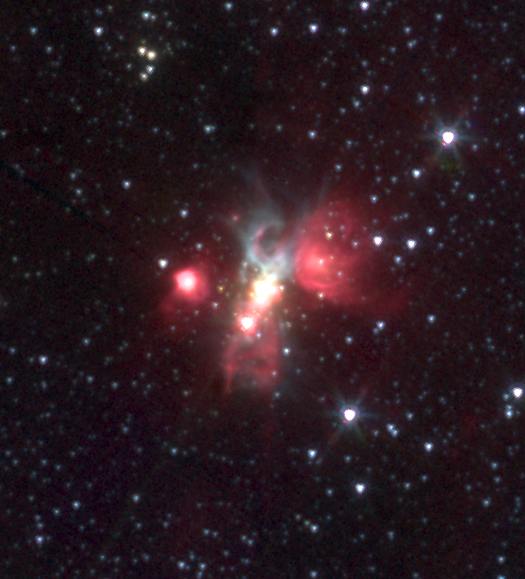
Massive stars like this one have a dramatic impact on their surroundings. Their UV radiation ionizes the gas, and incredibly strong winds “carve out” bubbles in the interstellar medium, heating it and slowing down the birth of new stars. It was incredibly difficult to study their magnetic field up close — until now.
Connection between stars and black holes
The discovery of a CM near a massive protostar is not just a technical triumph. It establishes an important bridge. Circular polarization has been observed in active galactic nuclei with supermassive black holes and near low-mass protostars. Now it has been detected in a massive protostar. This confirms a long-standing hypothesis of astrophysicists: the mechanisms behind the formation of powerful jets in stars of different masses and even in black holes are universal.
“This is the first measurement of the magnetic field strength of a massive protostar using circular polarization in radio waves,” emphasizes Professor Sarita Vig.
Residual magnetism hypothesis
The magnetic field strength of IRAS 18162 is estimated to be hundreds of gauss (on the Sun, it is ~1 gauss). Where does this power come from? The most likely theory is residual fields. It is believed that magnetic fields in the interstellar medium are drawn into molecular clouds during their collapse into a star, becoming stronger. This generates powerful fields in massive stars.
“Given the strength of the field, IRAS 18162 could be a massive magnetic star,” the authors explain.
This discovery provides key data for improving star formation models, even if the exact mechanism of CM formation requires further study. It shows that magnetic forces are a fundamental factor in the life of stars of all masses, uniting even stars and black holes.
Earlier, we reported on how an artificial magnetic field turned out to be 800,000 times stronger than Earth’s.
According to nrao.edu

