

Scientists observed Saturn using the James Webb Space Telescope. It turned out that there are aurorae on this planet, but they form a very strange structure, unlike anything they had seen before.
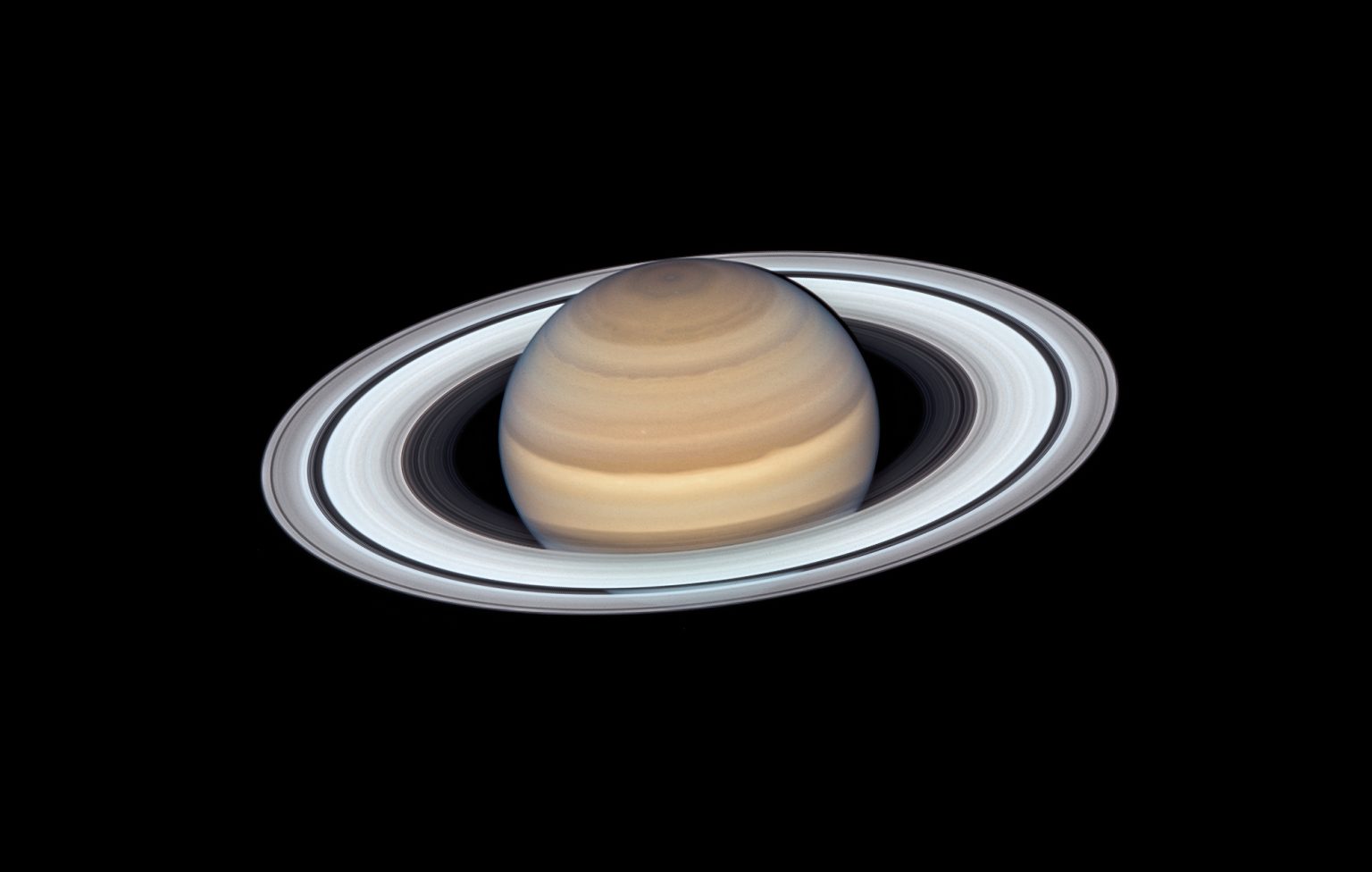
Aurorae on Saturn
Aurorae are not only found on Earth, but also on many other planets. They are slightly different everywhere, but scientists thought they knew what to expect. However, recent studies of Saturn conducted with the James Webb Space Telescope have revealed something they did not expect to see at all.
It has long been known that Saturn also has aurorae. However, the planet’s atmosphere reliably concealed them, so a powerful instrument such as James Webb was needed to see them. And now scientists are very surprised by what they look like.
Because all the lights observed so far have had one thing in common: they are phenomena that extend across space and emit energy across a fairly broad spectrum. However, on Saturn, for some reason, they look like a large number of pearls and stars located in the planet’s atmosphere at different altitudes and quite far from each other.
Connection with a hexagonal storm
At least, this is the picture painted by observations conducted over 10 hours back in 2024. Scientists observed H₃⁺ ions, which are an important part of the planet’s atmospheric composition. And it is at those frequencies that they emit light and look like a set of separate beads.
To be precise, this set is not entirely random. It seems that all these individual sources are somehow connected and form a hexagonal star covering a significant part of the northern hemisphere of the planet.
In addition, it is somehow connected with the most distinctive feature of Saturn’s atmosphere – a hexagonal storm located at the planet’s north pole. At least, that is what the peculiarities of the aurora’s pattern suggest.
Provided by: phys.org

