

Scientists analyzing archived data from the Cassini mission have discovered new complex organic molecules being ejected from Saturn’s moon Enceladus. This is a clear sign that complex chemical reactions are taking place in its underground ocean. Some of them may be part of chains leading to the formation of even more complex molecules that are potentially biologically significant.
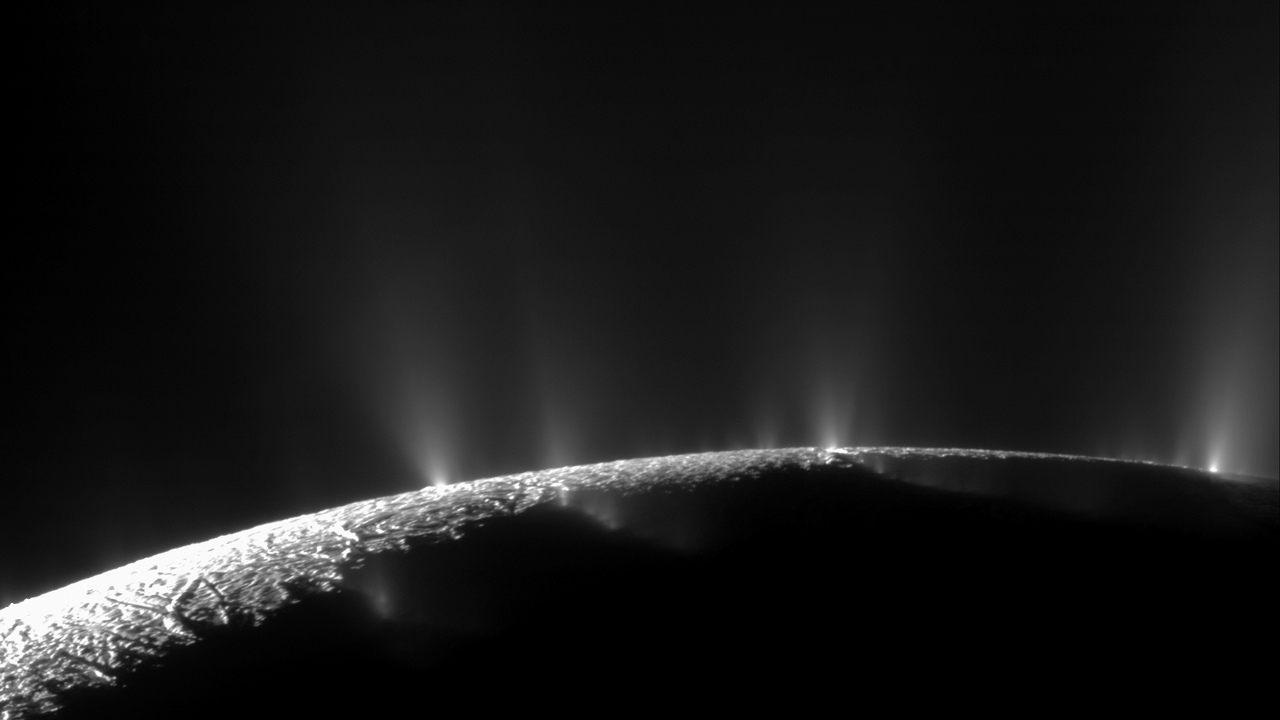
In 2005, Cassini discovered the first evidence that an ocean lies beneath Enceladus’ icy surface. Water sprays out of cracks near the moon’s south pole, ejecting ice particles into space. Some of these tiny pieces of ice, smaller than grains of sand, fall back onto the surface of the moon, while others fly away and form the E ring around Saturn.
During its mission, Cassini flew through this ring several times and analyzed it using its instruments. In particular, the vehicle detected many organic molecules in its ice grains, including amino acid precursors.
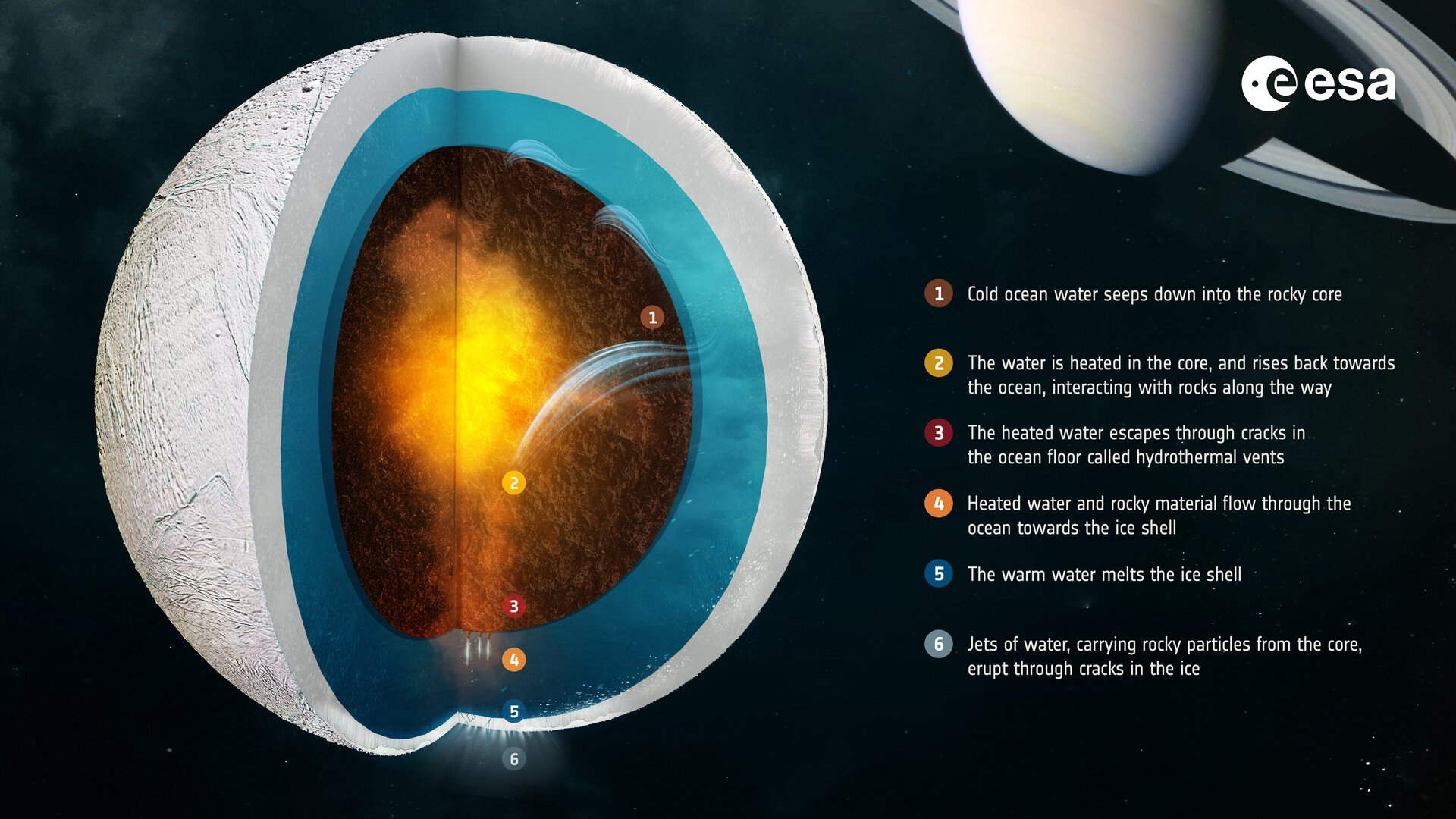
The problem was that the ice grains in the ring could be hundreds of years old. As they aged, they could have been subject to “weathering” and changed under the influence of intense cosmic radiation. Scientists wanted to study fresh grains ejected much later to better understand what exactly was going on in Enceladus’ ocean.
Fortunately, researchers already had this data. Back in 2008, Cassini flew right through a fresh plume from Enceladus. Uncontaminated ice grains struck the CDA dust analyzer at a speed of approximately 18 km/s. These were not only the freshest ice grains Cassini had ever detected, but also the fastest.
Speed was of the essence. At lower impact speeds, the ice breaks up, and the signal from clusters of water molecules can mask the signal from certain organic molecules. But when ice grains hit the CDA quickly, water molecules don’t stick together, which has made it possible to see signals previously hidden.
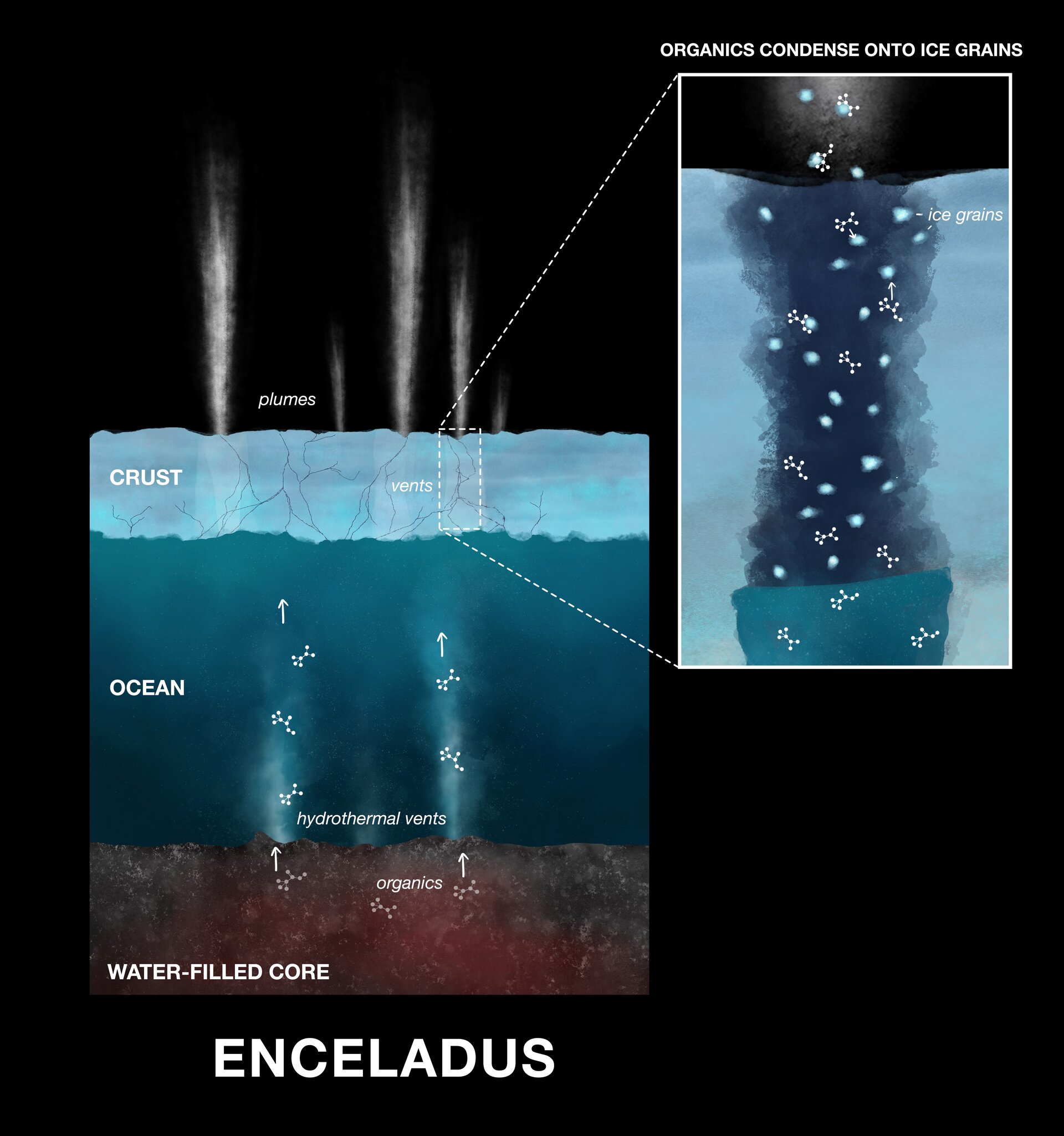
After analyzing all the available data, scientists were able to determine which molecules were present inside the fresh ice grains. Some of them had previously been detected in the E ring, confirming that they originate from Enceladus’ ocean.
Completely new molecules were also found that had never before been encountered in Enceladus’ ice grains. These included aliphatic, (hetero) cyclic esters/alkynes, esters/ethyls, and presumably compounds containing nitrogen and oxygen. On Earth, these molecules participate in chains of chemical reactions that ultimately lead to the formation of more complex molecules necessary for life.
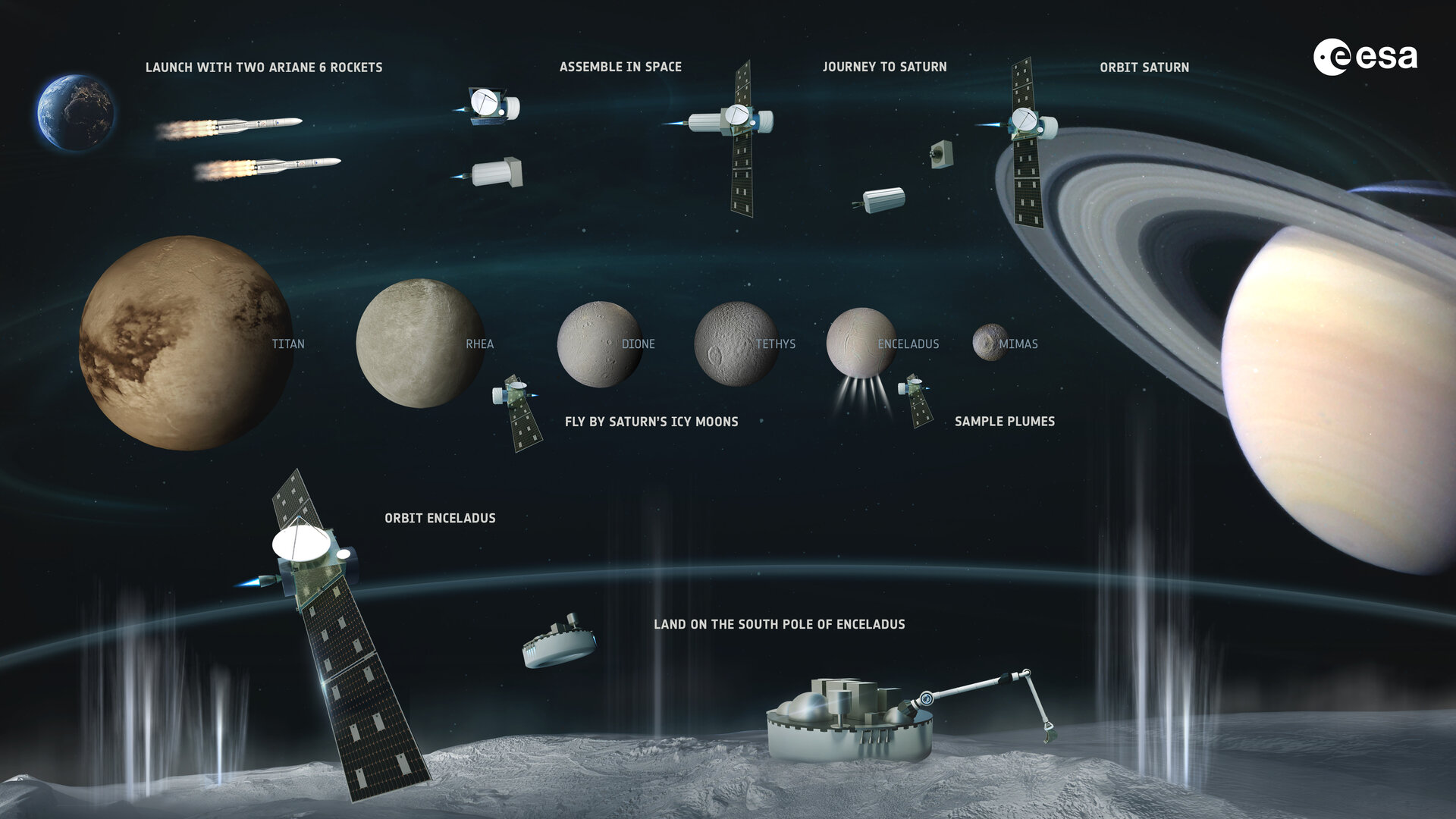
This discovery is important for future missions that will study Enceladus and search for life in its ocean. ESA recently began preliminary design work on such a mission, which could be launched in the early 2040s.
According to ESA

