

Image Credit & Copyright: George Pachantouris
Agree, there is something special about celestial phenomena that cannot be seen. We enjoy the bright beauty of the full moon, but what do we know about its dark brother – the Black Moon? This rare guest will appear in our sky at the end of August, and its visit is shrouded in a thick fog of myths, confusion, and mysteries. Do not worry, we are here to shed some light on the matter. This article contains only verified facts that will help you understand what this event is and why it is worth your attention.
What is the Black Moon?
Image Credit & Copyright: Pixabay / fill
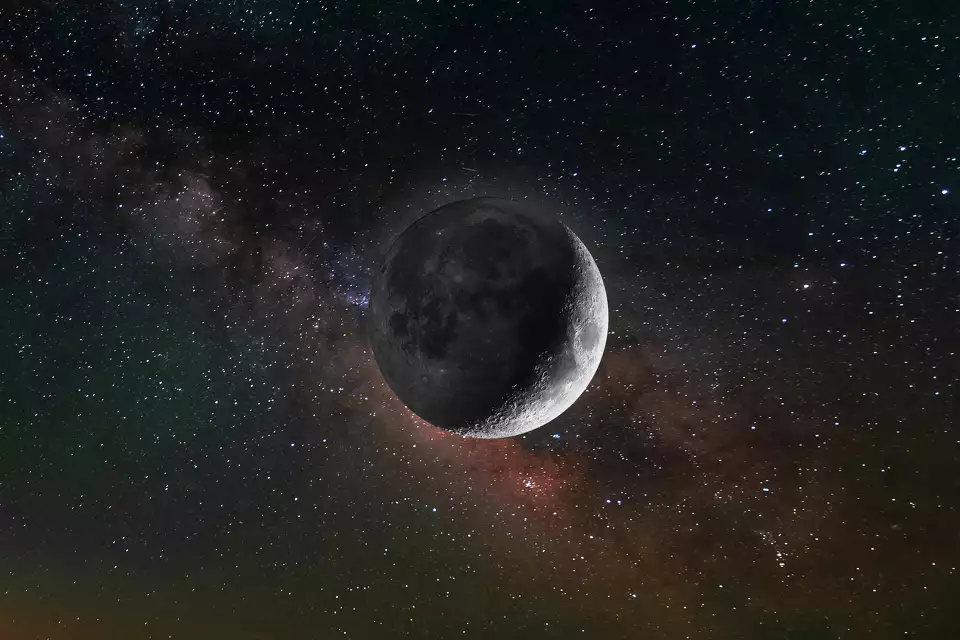
Essentially, a black moon is a special type of new moon. It is called “black” because it is during this phase that our satellite becomes invisible; it is located between the Earth and the Sun, facing us with its unlit side.
However, although a new moon occurs every month, the status of “Black Moon” is not given to every new moon, but only to an “extra” or additional new moon. Its appearance is a direct consequence of a calendar discrepancy: the shorter lunar cycle gradually “overtakes” the longer calendar month, which over time creates a “window” for another such event.
Depending on how this calendar anomaly manifests itself, there are three types of Black Moon:
- The second new moon within one calendar month. This is the most common occurrence, which occurs approximately once every 29 months. If the first new moon falls on the 1st or 2nd day of the month, the second one manages to “fit” into the 30th or 31st day.
- The third new moon in an astronomical season that contains four new moons instead of the usual three. This occurs once every 33 months and is the result of a process known as intercalation (the synchronization of calendar and astronomical cycles by adding a leap day).
- A month without a new moon. The rarest scenario. The opportunity to observe it occurs once every 19 years, and only in February, due to its brief duration.
All these definitions lead to one conclusion: the Black Moon is not a celestial body, but rather a “glitch in the time matrix” that arose from our attempt to “squeeze” the flexible lunar cycle into the rigid framework of the Gregorian calendar.
When will the Black Moon occur in 2025?
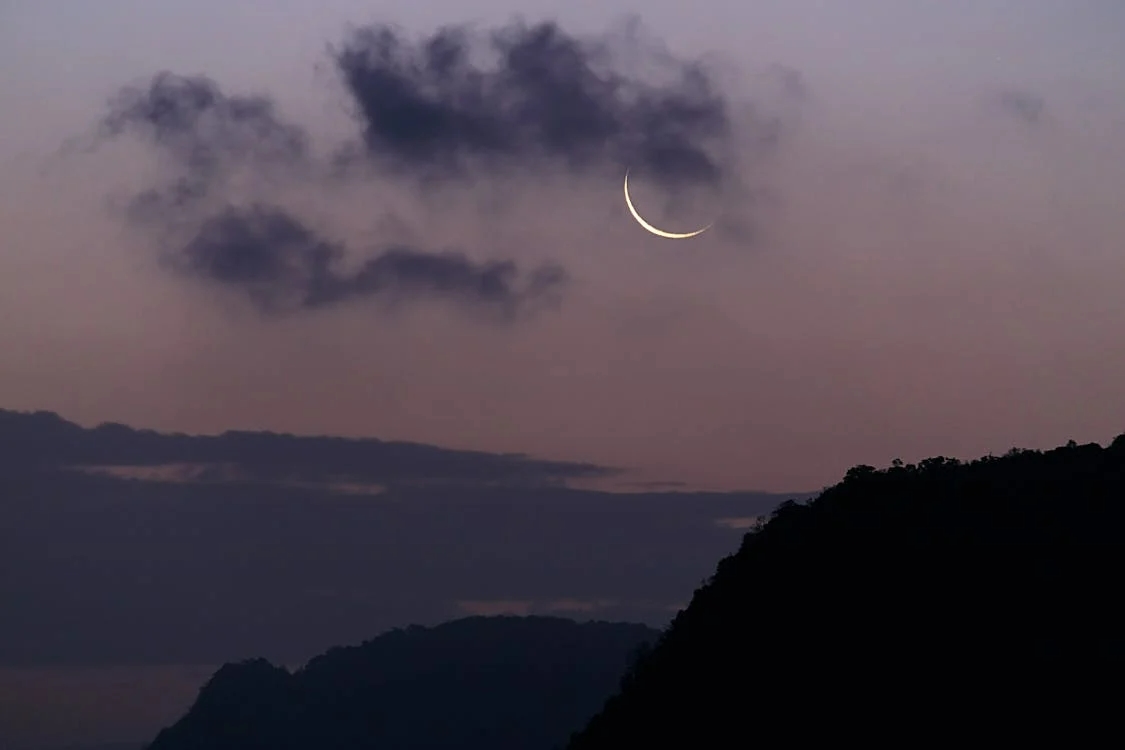
Image Credit & Copyright: Pexels / Vladyslav Dushenkovsky
In 2025, the Black Moon will occur according to the “seasonal” scenario. During the summer season, between the summer solstice on June 21 and the autumn equinox on September 22, nature will give us four new moons instead of three.
The event will take place on August 23, exactly two weeks after the August full moon, also known as the Sturgeon Moon. The peak of the phenomenon, i.e., the moment of maximum darkness, will occur at 06:06 a.m. UTC. For residents of Ukraine, this will be 09:06 a.m. Kyiv time.
Where can you observe this?
The main paradox of the Black Moon is that it is impossible to observe it because it is invisible. However, this invisibility is a real gift for amateur astronomers. The complete absence of moonlight promises us the darkest night, in which the Milky Way and distant nebulae and galaxies previously invisible to the naked eye will put on an amazing show in the celestial amphitheater.
Mark the best locations where you can best observe the starry sky:
- in Ukraine: the Carpathians (especially areas near mountain observatories, such as Mount Pip Ivan), or national parks or nature reserves, such as Askania-Nova;
- in the world: “International Dark Sky Parks”, such as the Atacama Desert in Chile, Death Valley in the United States, and others.
Important tip: Use an online light pollution map to find the best place for observations in your area.
Interesting facts about the Black Moon
Image Credit & Copyright: Pixabay / Bru-nO
The phenomenon of the Black Moon is more multifaceted than it may seem. Behind a simple calendar glitch lie amazing details that are worth your attention.
Confusion with Lilith
Astrology has its own “Black Moon” – the apogee (the furthest point) of the Moon’s orbit, where the Moon’s influence is considered to be the weakest and its energy the most “wild” and unpredictable. This point is named after Lilith, Adam’s first wife, who, according to legend, refused to obey him and chose freedom over paradise. Therefore, in horoscopes, Lilith symbolizes our secret desires, instincts, and the part of our personality that does not accept rules.
It is important to understand the difference: while the calendar Black Moon is a brief astronomical event, Lilith is a permanent, “built-in” point in your horoscope.
The opposite of the Blue Moon
It can be said that the Black Moon and the Blue Moon are the astrological yin and yang of the same calendar phenomenon. Both are the “second” event of their kind in a month, which makes them rare. But that is where their similarity ends and their mirror opposition begins.
The Blue Moon (the second full moon) is yang: maximum light and a symbol of external energy and culmination. The Black Moon is yin: complete darkness, the peak of inner strength, intuition, and introspection.
Darkness that brings light
So, the Black Moon is not a mystical sign, but an interesting result of the combination of celestial mechanics and human chronology. Its astronomical value lies in the fact that it provides ideal darkness for stargazing. And if you also believe in astrology, use this new moon for new intentions, because it is in the darkness that you can best see where to direct your inner ray of light.

