

On September 7, a lunar eclipse will be visible across most of the globe. Ukraine will be no exception. In the evening after sunset, you will be able to see our planet’s satellite turn red, with a bright star-like object next to it – the planet Saturn.
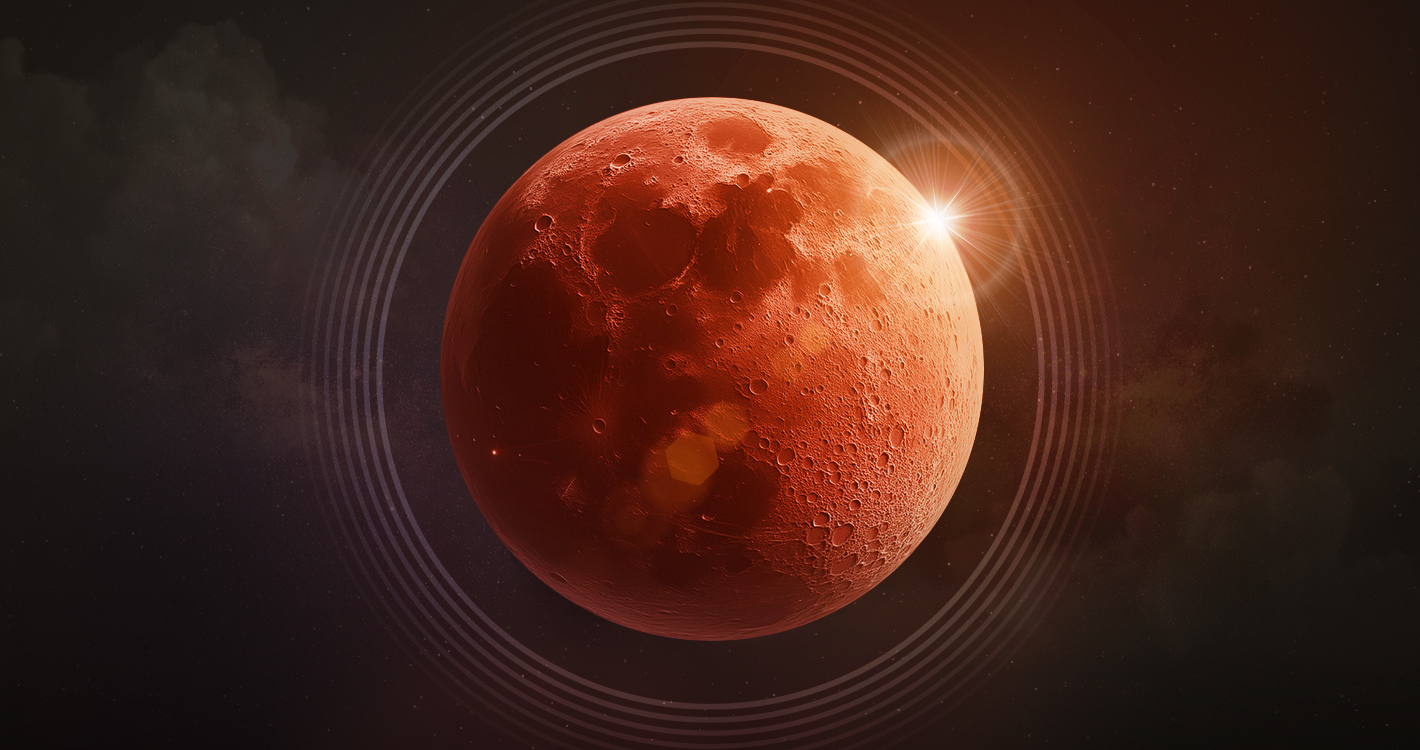
Eclipse during a full moon
On the night of September 7-8, there will be another full moon. Many people call it the Corn Moon, although this name was most likely given to it only in the 20th century. However, it will be interesting because during this full moon, our planet’s satellite will turn red for a while.
There is nothing ominous or mysterious about this event. It is called a lunar eclipse. The Earth is positioned exactly between the Sun and its own satellite, and its shadow falls on the latter. It is not very dense, so the Moon does not become completely dark, but takes on a dark crimson color. This happens because the blue part of the spectrum is scattered in the atmosphere, while the red-orange part passes through it, refracts, and partially curves around the Earth, falling into the geometric shadow of the planet.
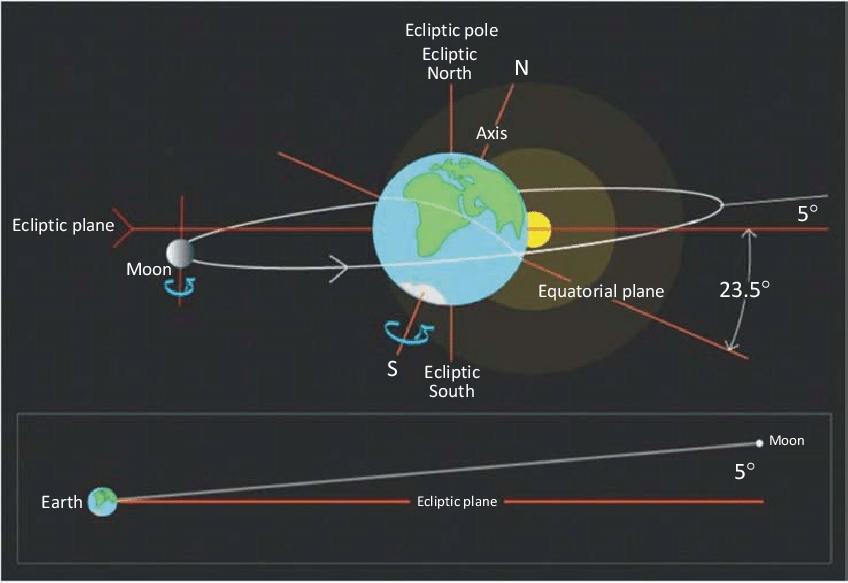
Why does this not happen every time there is a full moon? The reason is that the Moon’s orbit is tilted at an angle of 5.14° to the ecliptic. Because of this, in most cases, during a full moon, it is either above or below the Earth’s shadow. However, this time we are all lucky and will be able to see this wonderful phenomenon.
It should be noted that the current full moon and, accordingly, the lunar eclipse will be visible, at least partially, to 7.03 billion people, or 88% of the Earth’s population. So, if you have clear skies, we recommend that you don’t miss this amazing phenomenon.
When and how to observe the eclipse
The exact moment of the Corn Moon is 7:08 p.m. GMT. The maximum phase of the lunar eclipse, which will last a total of 82 minutes, will occur at 7:11 p.m. GMT, i.e., three minutes later. However, in reality, events will begin to unfold much earlier.
According to Kyiv time, the penumbral phase will begin at 6:28 p.m. (3:28 p.m. GMT). However, the drop in brightness will be so insignificant that it can only be noticed with the help of special instruments. At the same time, it will still not be possible to see this moment from the territory of Ukraine, because even in Luhansk, the moon will rise only at 6:48 p.m. (3:48 p.m. GMT), and in Kyiv, only at 7:25 p.m. (4:25 p.m. GMT). The sun will set in the capital of Ukraine only 4 minutes after that, so everything will still begin in the light sky.
The partial phase of the eclipse will begin at 7:27 p.m. Kyiv time (4:27 p.m. GMT). This means that residents of eastern regions will be able to see the Moon, which will be above the eastern horizon at that time, begin to darken and turn red on one side at dusk.
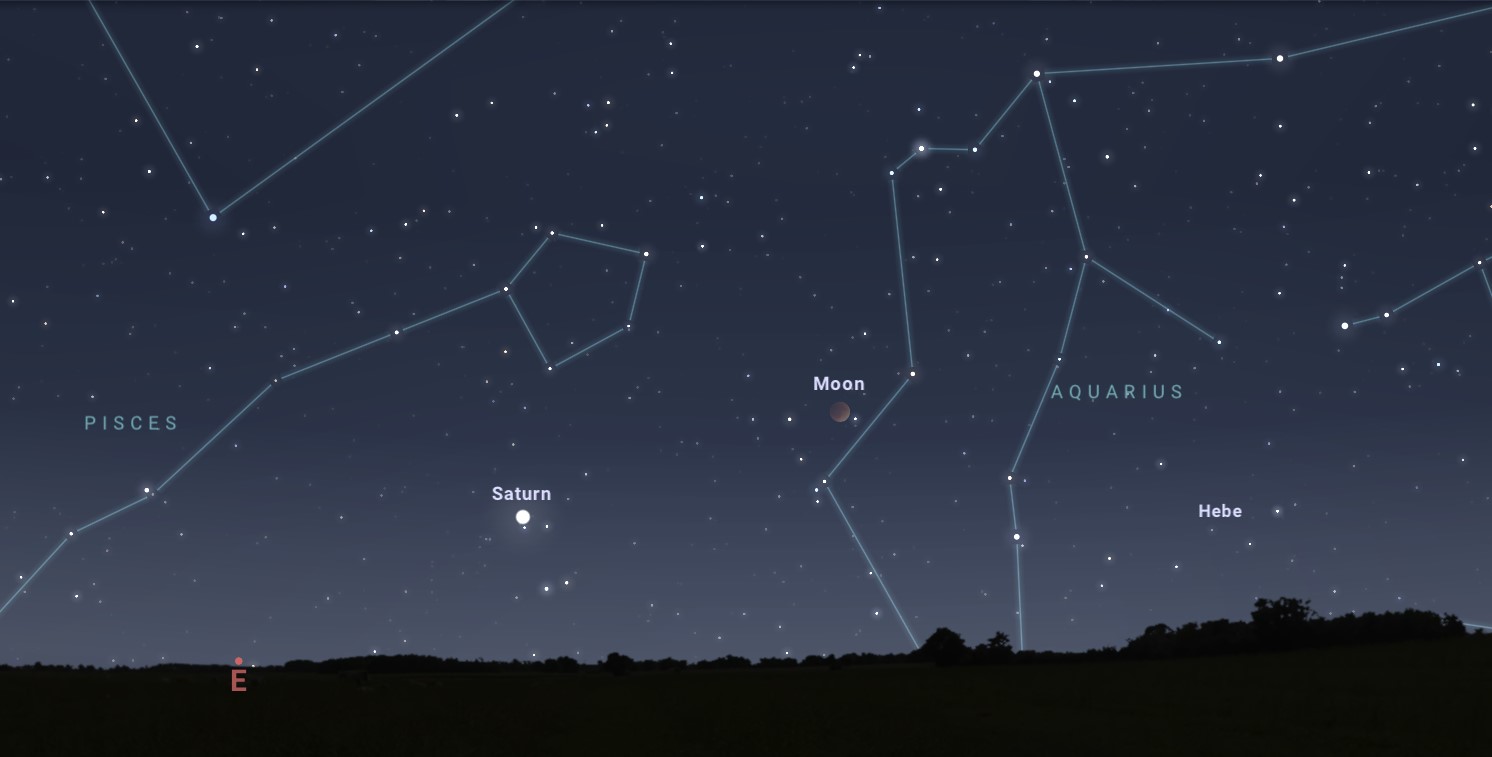
But for residents of Kyiv, it will appear in the sky in this form. As for Lviv and the westernmost regions of Ukraine, the situation will actually be similar there, except that the Earth’s satellite will rise above the horizon of the city of Lviv at 7:51 p.m. (4:51 p.m. GMT). And will already be noticeably dimmed.
The total eclipse phase will begin at 8:30 p.m. Kyiv time (5:30 p.m. GMT) and will last until 9:52 p.m. (6:52 p.m. GMT). The maximum will occur at 9:11 p.m. (6:11 p.m. GMT). At this time, it will be dark enough throughout Ukraine to admire the Moon.
Interestingly, Saturn will be located nearby at this time. Of course, its famous rings will not be visible to the naked eye, just like on any other day. But if your attention is drawn to a bright star next to the dark red Moon, know that it is actually the sixth planet in the Solar System.
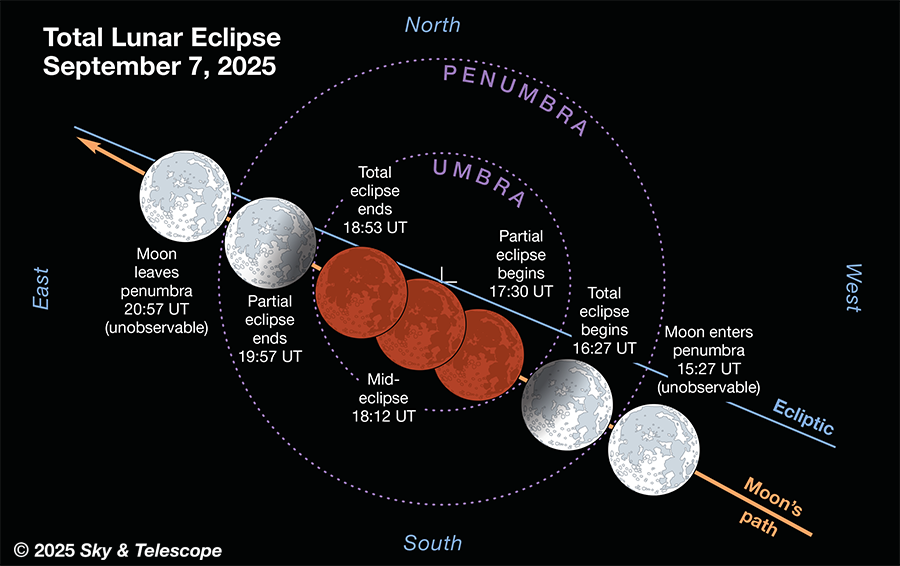
After the total eclipse phase ends, a partial eclipse will begin again, and our satellite will gradually start to brighten. This time, it will be clearly visible throughout Ukraine, as the Moon will be high above the horizon and will gradually shift southward.
The partial phase will last until 10:56 p.m. local time (7:56 p.m. GMT). After that, it will be replaced by a penumbral phase. It will last until 11:55 p.m. local time (8:55 p.m. GMT). During this time, it will be convenient to observe the Moon from anywhere in Ukraine, as long as you have a relatively open eastern and southeastern horizon.
How the eclipse will look from other points on Earth
But could it be that this eclipse will be more visible somewhere else? Yes, but you need to know where. For example, in London, the conditions for observing it will be even worse than in Lviv. There, the moon will rise at 7:25 p.m. local time (4:25 p.m. GMT), and by that time, the maximum eclipse will already have passed, so you will only be able to see the events that follow it.
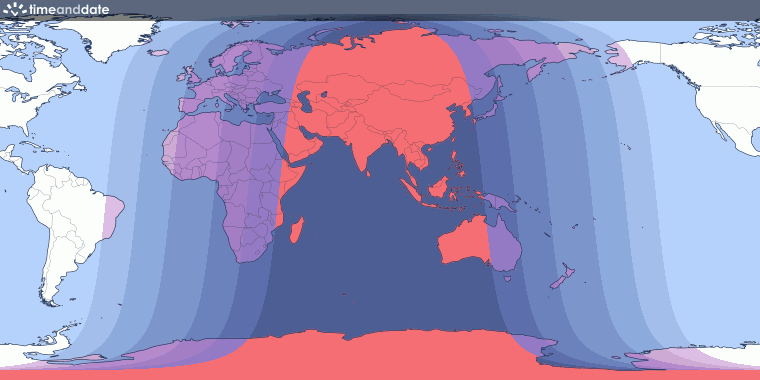
As for the United States, it will be impossible to observe the eclipse from this country this time. However, if you are in Western Australia, for example, in Perth, you will be able to observe all phases of the eclipse when the Moon is high above the horizon in the middle of the night. The viewing conditions in India and China will be just as good.

