

On the night of September 7 to 8, residents of the Eastern Hemisphere witnessed a spectacular total lunar eclipse. The eclipse, which gives our moon its characteristic red color, is also known as the “Blood Moon.” This phenomenon has amazed observers in Western Australia, Asia, Africa, and Europe. However, the most impressive images did not come from Earth, but from near-Earth orbit, from the crew of the International Space Station.
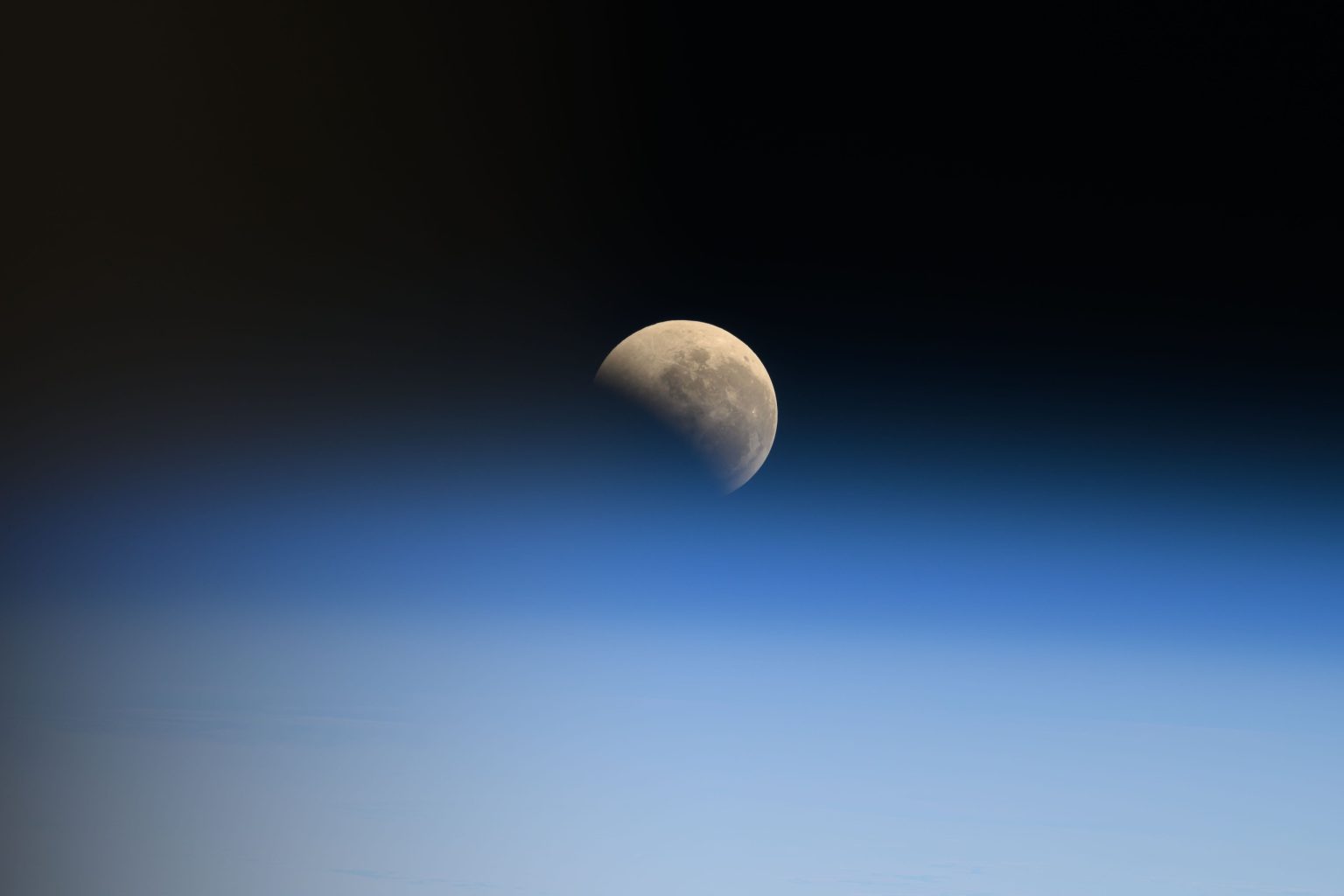
At an altitude of 400 km above our planet, ISS astronauts had the privileged opportunity to observe the eclipse without any interference from clouds. However, their mission to photograph Earth’s satellite proved to be a real challenge. As NASA astronaut Zena Cardman explained, due to the position of the moon and the lack of windows on the opposite side of the ISS, the Moon was only visible for a few minutes before disappearing behind the station’s hull and then beyond the horizon.
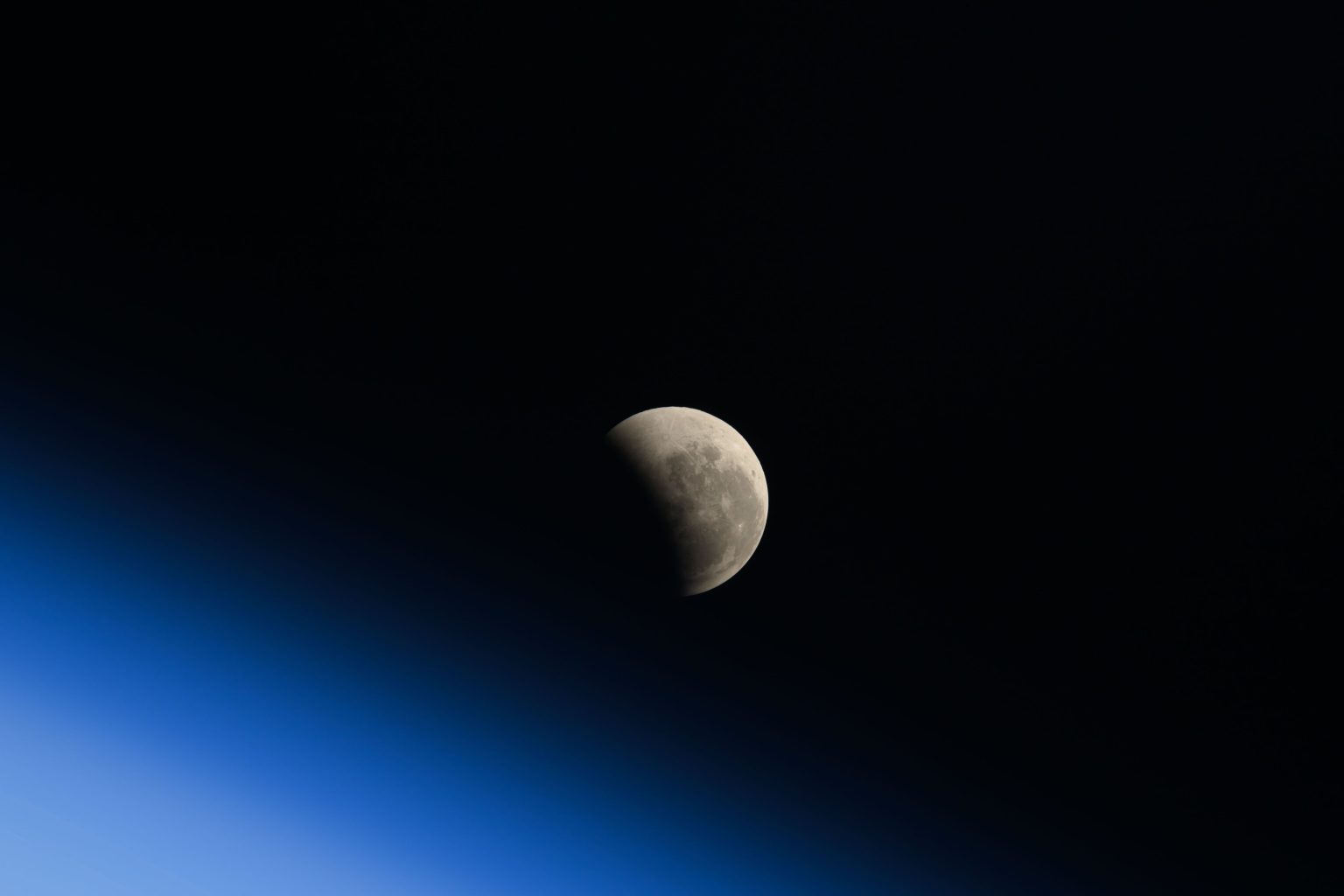
Strong reflections added to the difficulty: light reflected at a low angle from the multi-panel glass of the Cupola module. Despite this, Cardman and his colleagues Jonny Kim (NASA) and Kimiya Yui (JAXA) accomplished the task. In just a few minutes, they obtained unique photographs, which they subsequently shared on social media.
Here are some shots of yesterday’s lunar eclipse. We only had short windows of time to catch a glimpse of the moon before it was obstructed by parts of the @Space_Station. My crewmates, @zenanaut and @Astro_Kimiya were able to get some great shots as well. pic.twitter.com/XmJKHFqqxG
— Jonny Kim (@JonnyKimUSA) September 8, 2025
In one of the photographs taken by the Japanese astronaut, the “Blood Moon” effect is clearly visible. During the total phase of the eclipse, Earth’s natural satellite takes on a characteristic coppery or reddish hue. There is a scientific explanation for this amazing phenomenon. The Earth’s atmosphere acts as a giant light filter: it scatters and absorbs blue and violet rays with short wavelengths, while allowing red and orange rays to pass through. It is this red light that refracts and illuminates the surface of the moon, creating an unforgettable sight.
Despite all the technical difficulties, the ISS crew managed not only to witness this rare spectacle, but also to share it with all of humanity, giving it a truly cosmic perspective. Their photographs are not only impressive visualizations, but also important documents that assist scientists in their further research.
Earlier, we showed you the best photos of the total lunar eclipse of 2025.
According to Space

