

Mars is not only the best studied planet in the Solar System, but also the most thoroughly photographed (excluding Earth, of course). Over the past 60 years, spacecraft have taken hundreds of thousands of images of its surface. We present a selection of images that have altered humanity’s perception of the Red Planet and illustrate the process of its exploration and conquest.
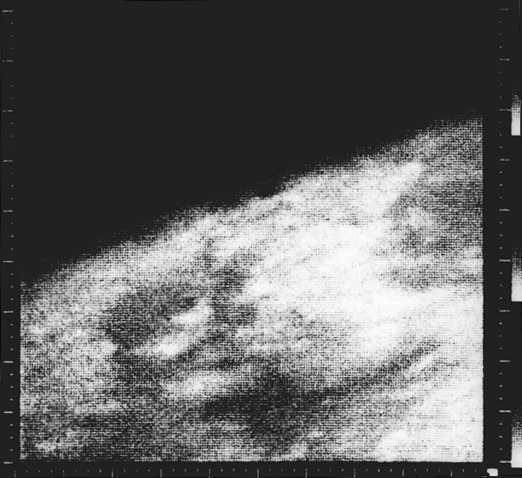
The first photo of Mars from space
Of course, this photograph is neither particularly beautiful nor high-resolution. It is difficult to make out any details at all. But, just as the advent of cinema was marked by “The Arrival of a Train”, this photo marked the beginning of the history of Mars exploration. It is the first image of the Red Planet taken by a spacecraft. It was obtained on July 15, 1965, by the American probe Mariner 4.
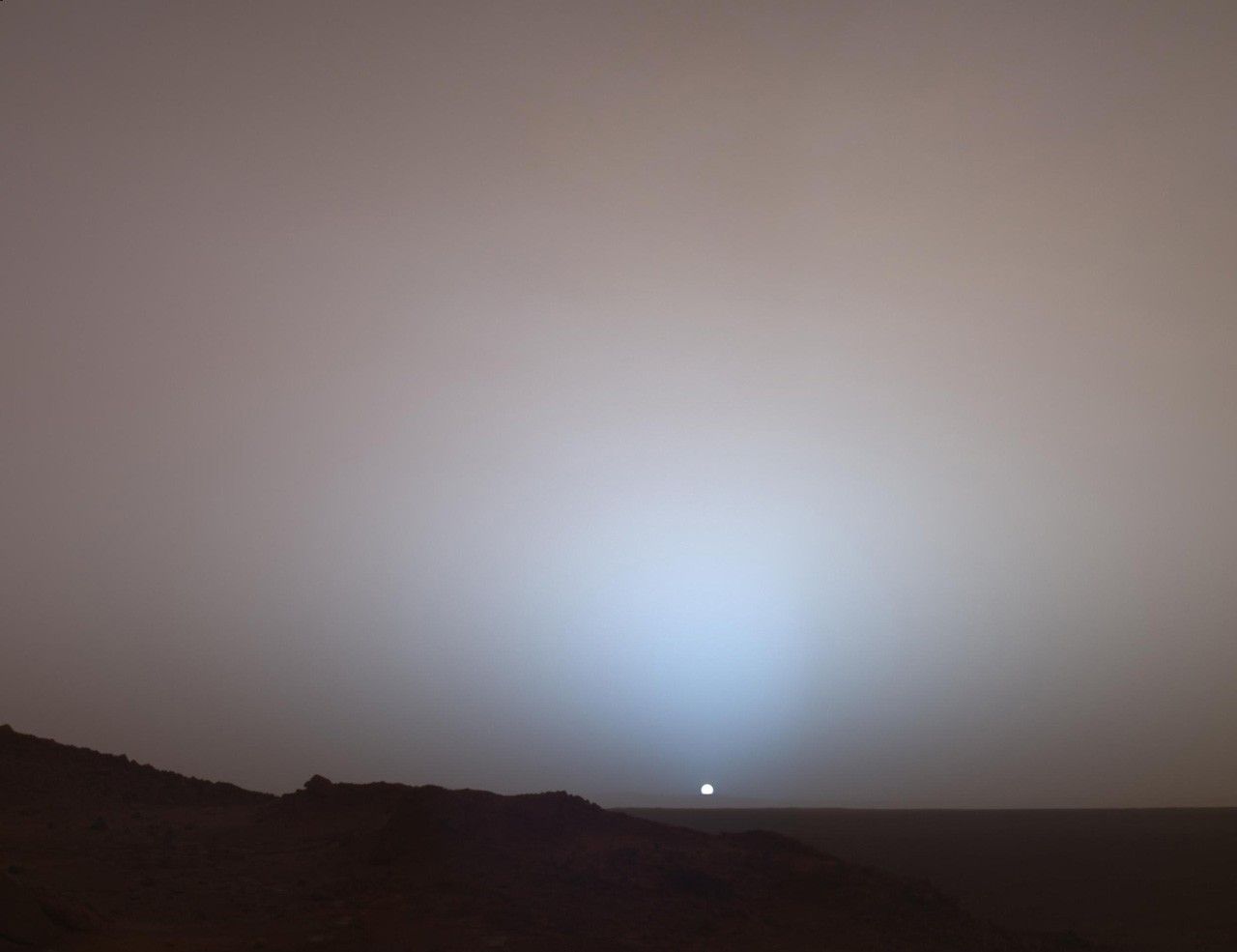
Sunset over Gusev Crater
Unlike our planet, the blue sky on Mars can only be seen at sunrise or sunset. The iconic photograph taken by the Spirit rover on May 19, 2005, shows the Martian evening star.
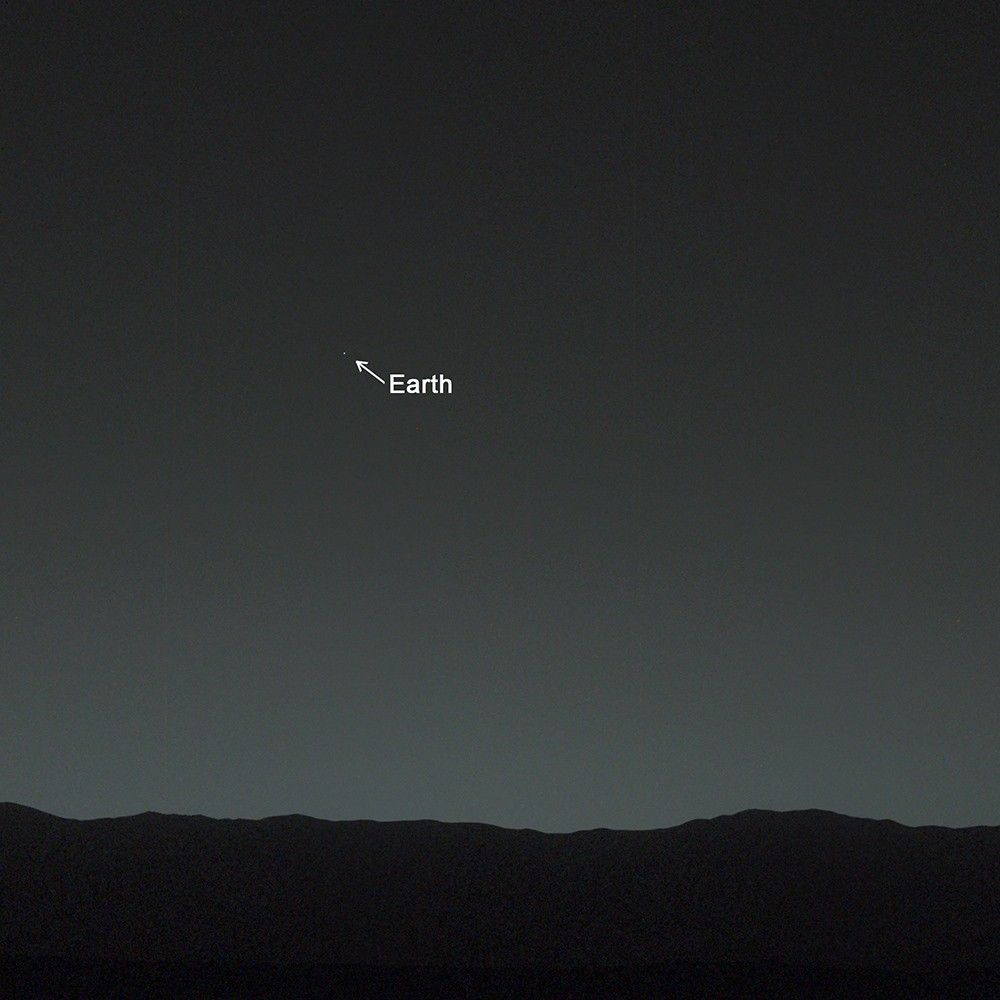
Earth: view from Mars
Earth is one of the brightest objects in the night sky of the Red Planet, as confirmed by a photo taken by the Curiosity rover on January 31, 2014. Moreover, not only Earth but also its faithful companion, the Moon, can be seen from the surface of Mars.
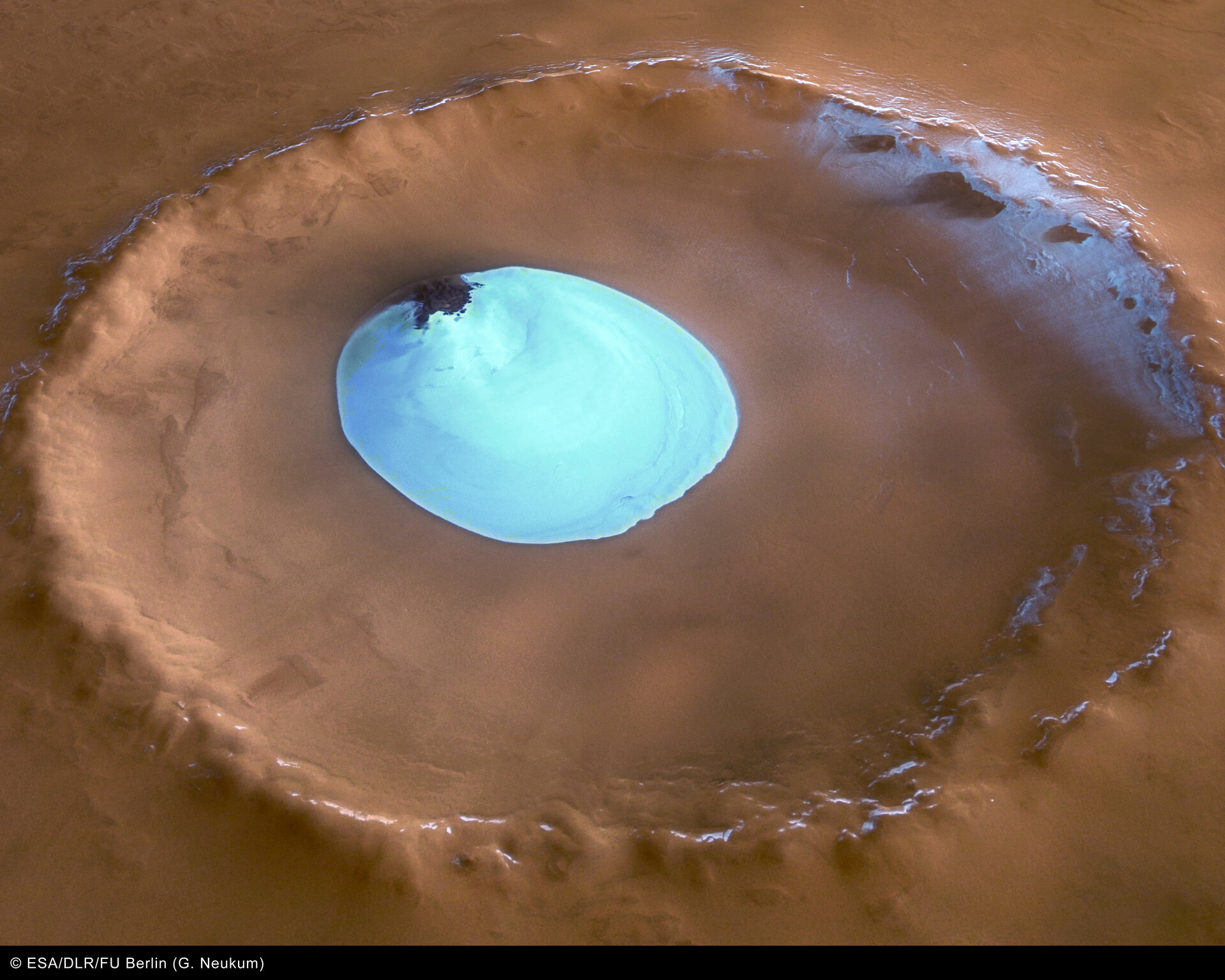
Water on Mars
On February 2, 2005, the Mars Express spacecraft photographed deposits of water ice in one of the unnamed craters near the north pole of Mars.
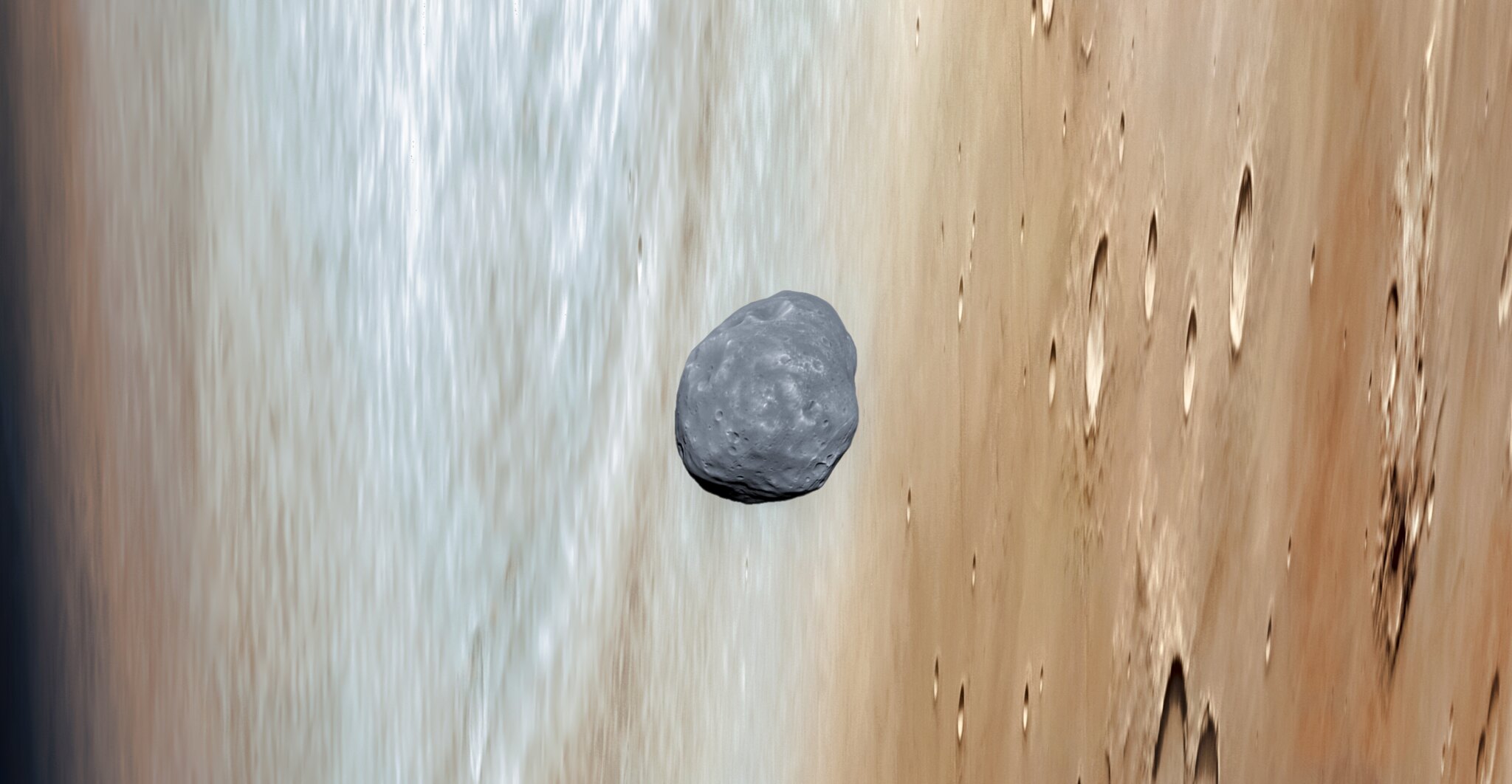
Doomed Phobos
Unlike Earth, which has one natural satellite, Mars is accompanied in space by two small companions –Phobos and Deimos, which were photographed by the Mars Express spacecraft. It is known that in a few tens of millions of years, Phobos will be torn apart by Martian gravity, and its fragments will form a ring around the planet.
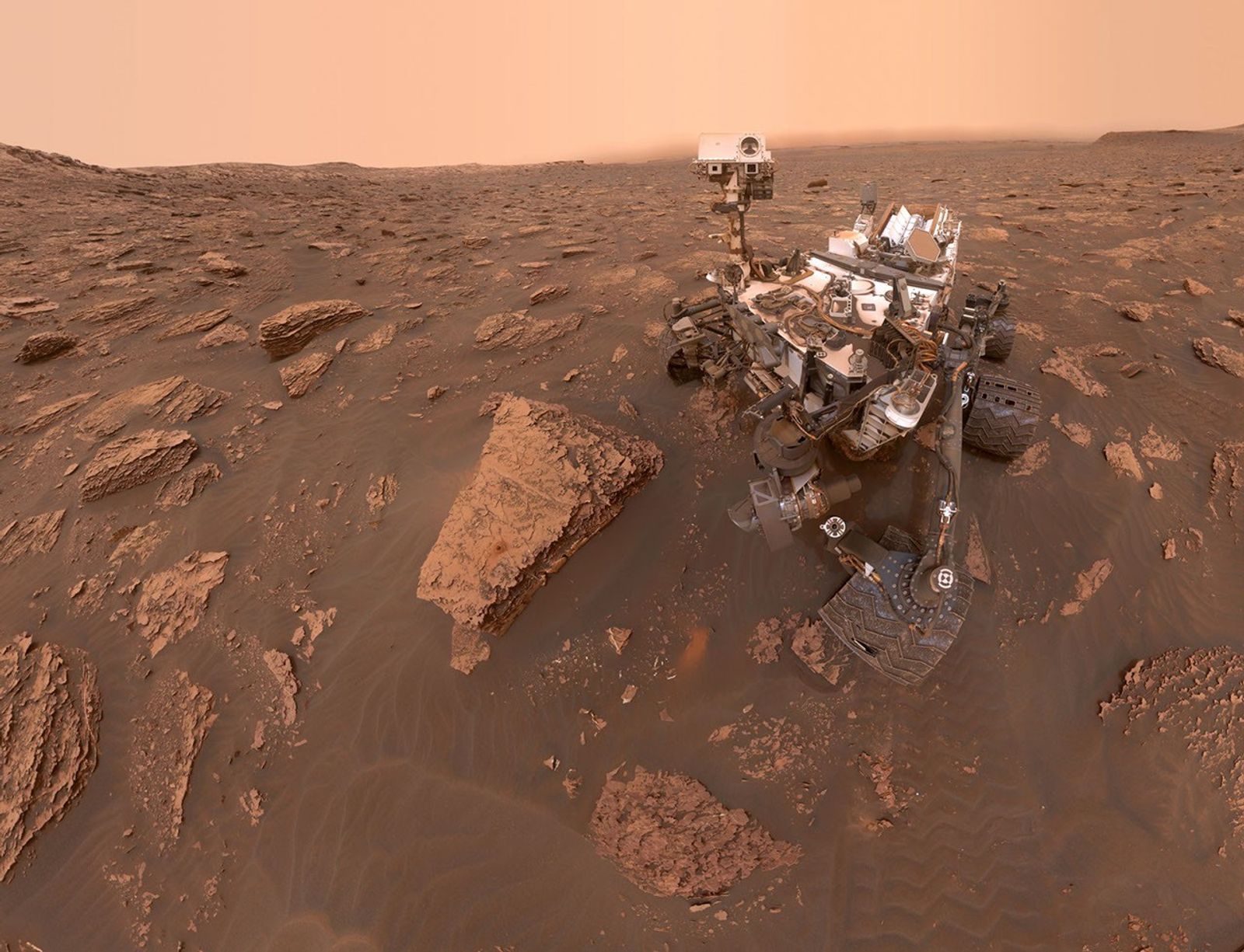
Curiosity dust selfie
From time to time, global dust storms begin on Mars, lasting many weeks and even months. This selfie was taken by the Curiosity rover on June 15, 2018, during one such storm.
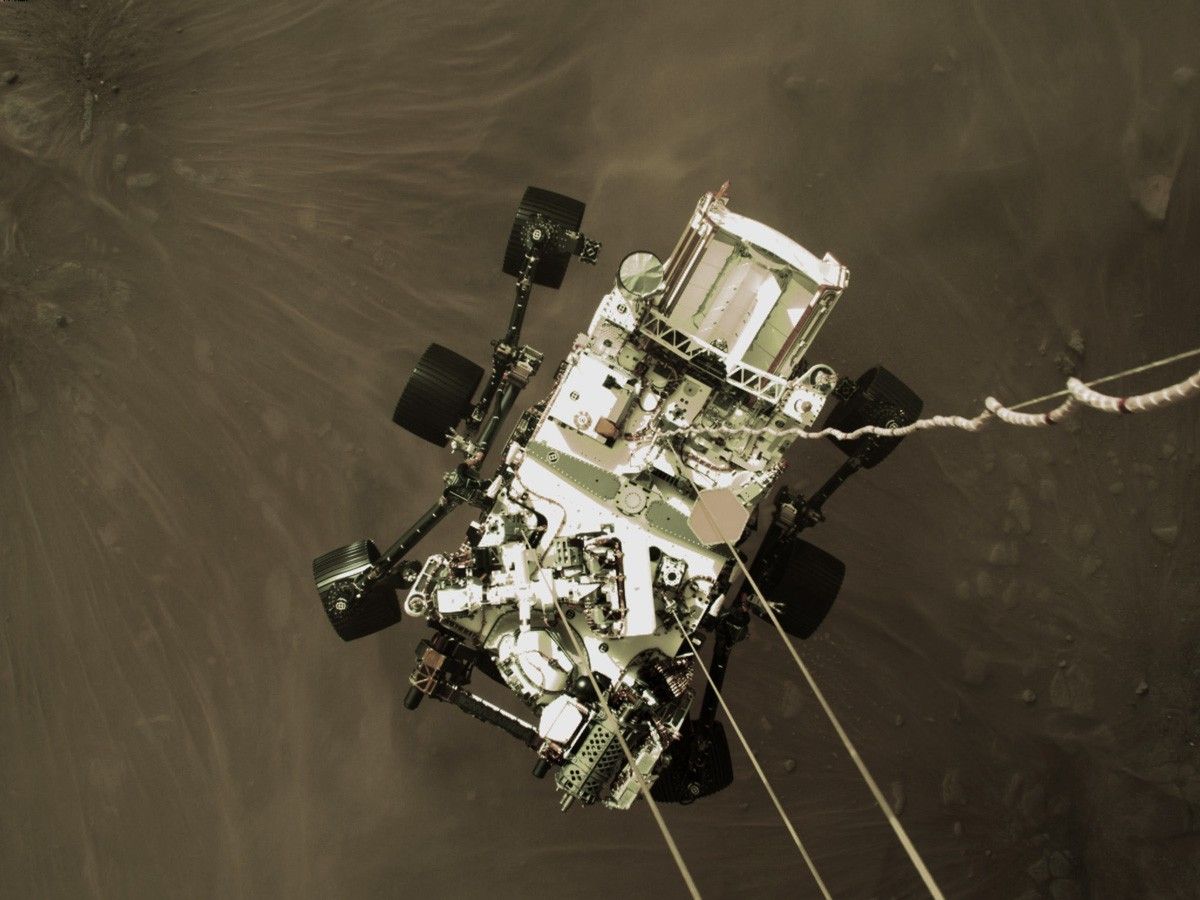
Perseverance landing
Perhaps the most difficult problem associated with exploring the Red Planet is landing on its surface. Engineers have to use various ingenious schemes, such as a “sky crane”. A photo taken on February 18, 2021, captured the moment when such a system gently lowered the Perseverance rover onto Mars.
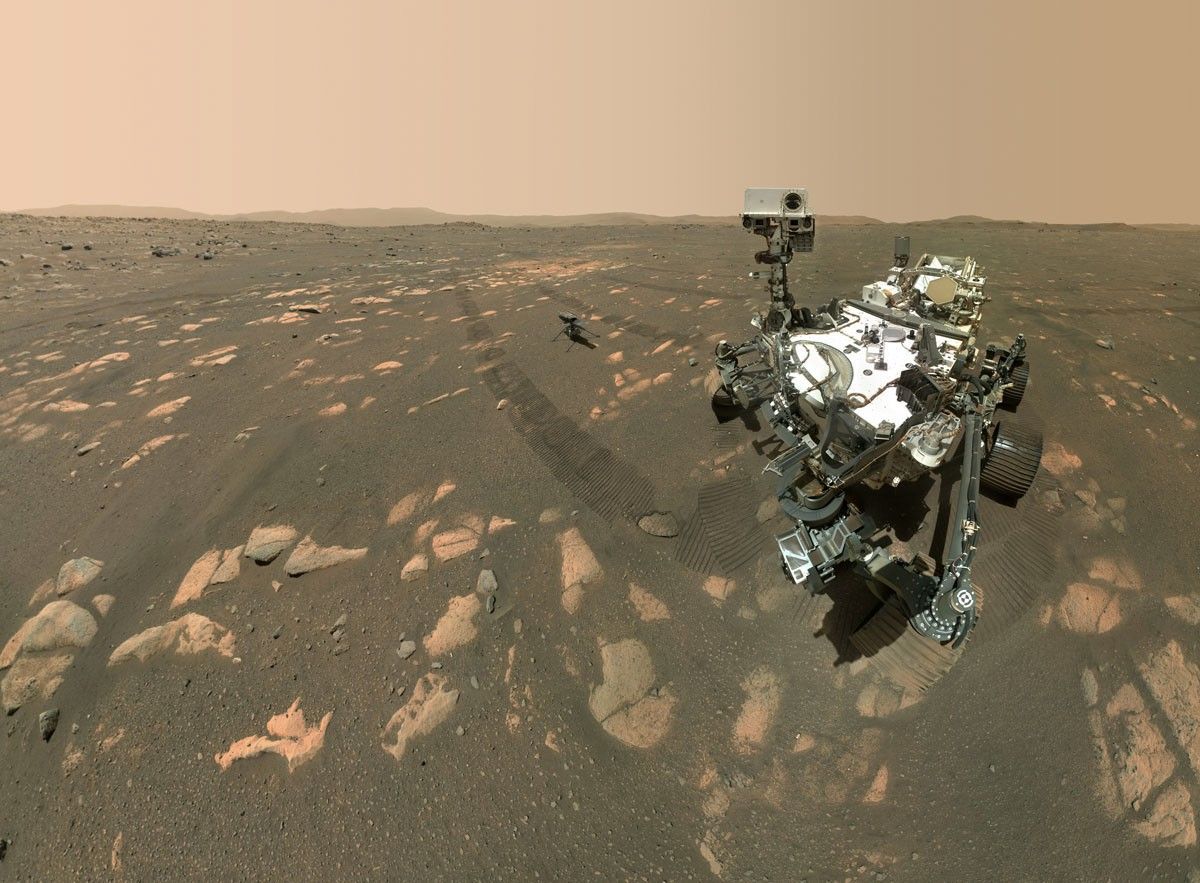
Two generations of Martian explorers
In a photo taken on April 6, 2021, you can see two generations of Mars explorers at once: the Perseverance rover and the Ingenuity drone, which flew in the Martian sky for more than 2.5 years in a row.
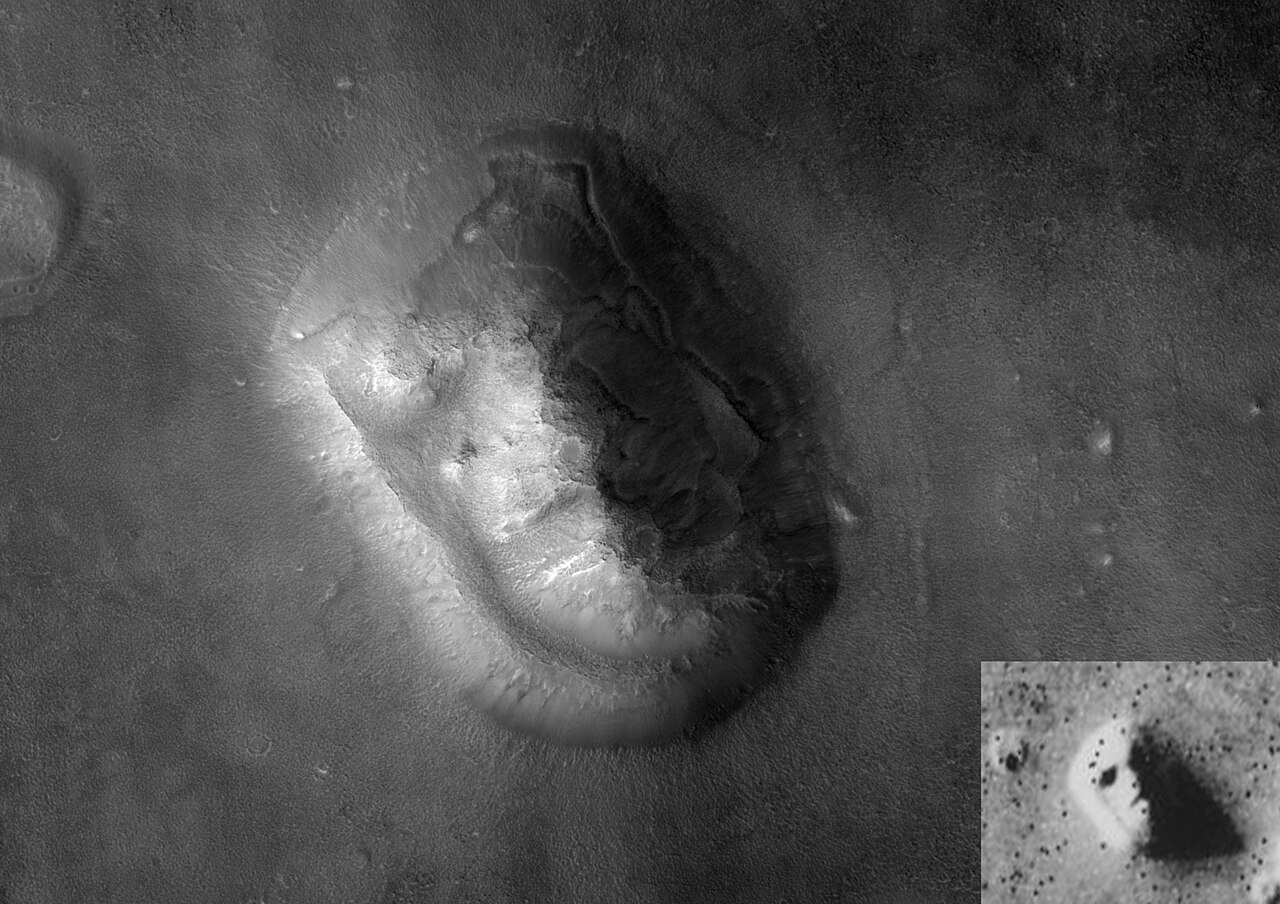
Face on Mars
In 1976, the Viking orbiter took a legendary photograph called “Face on Mars”. This gave new impetus to theories about the existence of Martian civilization. However, 30 years later, the MRO probe, equipped with better optics, re-photographed the area. It turned out that the mysterious face was nothing more than a play of light and shadow.
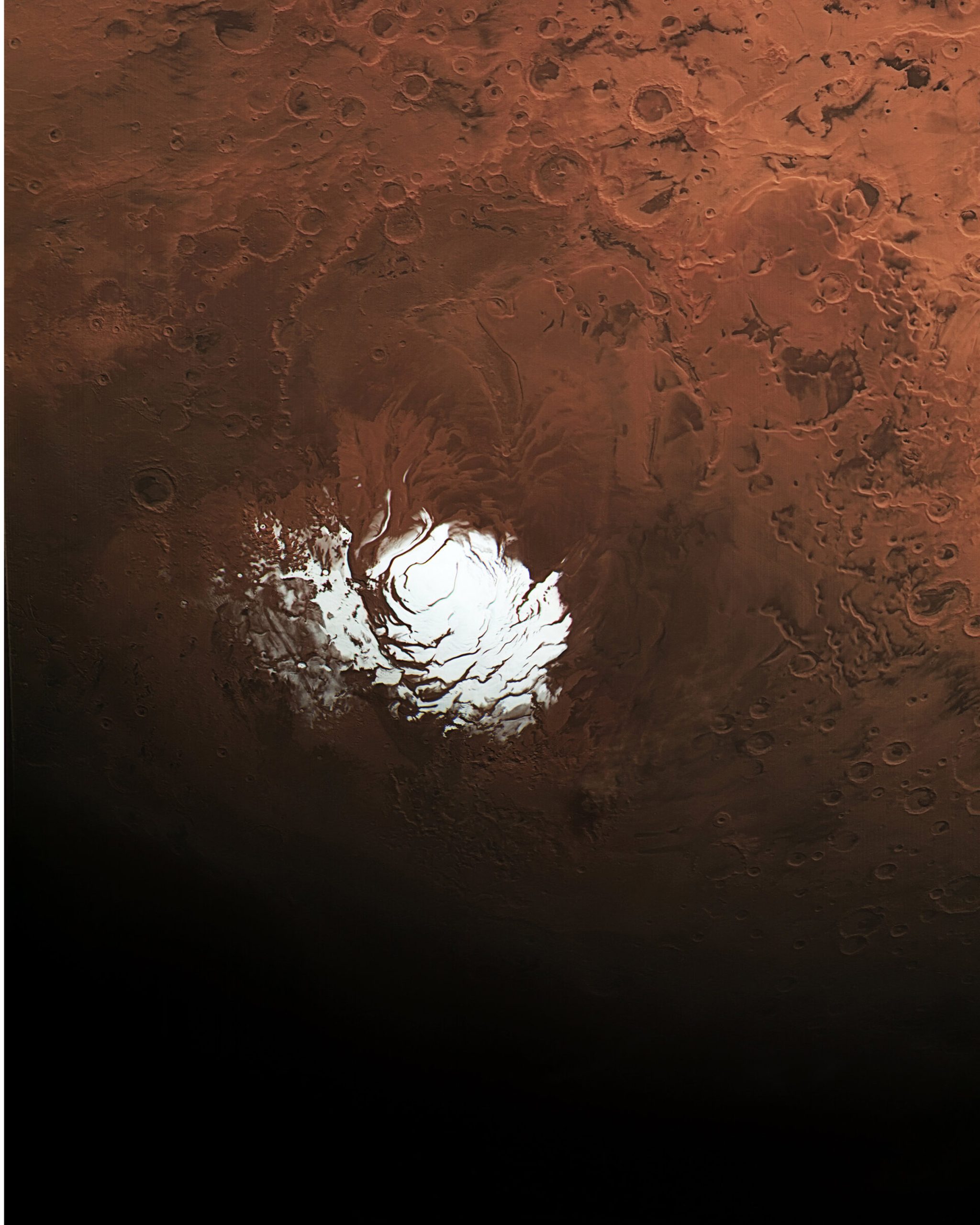
Polar cap of Mars
One of Mars’ main attractions is its famous polar caps. This photo, taken by Mars Express on February 25, 2015, shows what the southern polar cap of the Red Planet looks like.
This article was published in issue No. 1 (190) of Universe Space Tech magazine in 2024. You can purchase this issue in electronic format from our store.

