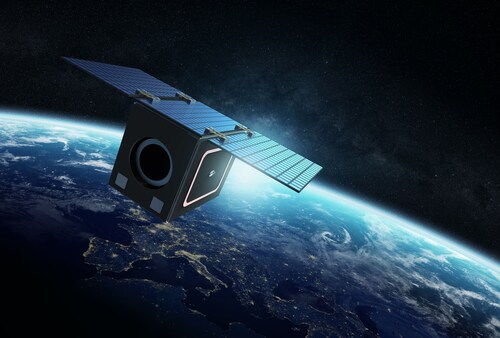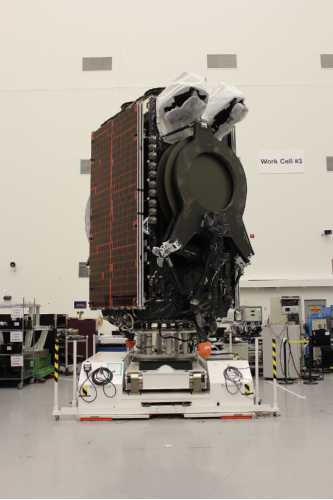
Boeing’s defense and space division has unveiled 3D-printed solar panel bases for satellites that reduce the production cycle to six months – effectively 50% faster than typical schedules. Flight models have already passed engineering tests and are undergoing standard qualification programs ahead of customer missions. The company aims to bring the technology to market in 2026.
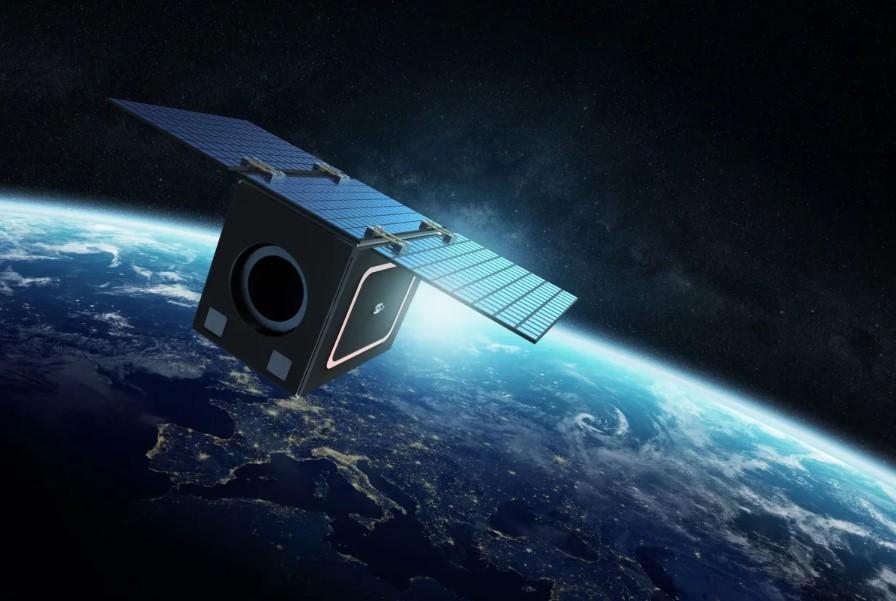
The key to saving time is printing elements directly on the panel: harness routes, mounting points, and other details. This allows dozens of individual components and lengthy gluing operations to be replaced with a single rigid, precise product, and the structure to be assembled in parallel with the manufacture of the solar cells themselves. The first 3D-printed arrays will fly with Spectrolab solar cells on Millennium Space Systems’ small satellites; the approach is being scaled from small satellites to Boeing 702-class platforms.
Faster production of power systems directly means faster deployment of devices and restoration of satellite constellations. For scientific missions, this means more flexible launch windows, fewer scheduling risks, and potentially larger power budgets for instruments: from detectors and spectrometers to high-speed radio links, which are critical for observatories, interplanetary probes, and weather observation groups. Fewer parts and automated quality control can also improve reliability – another plus for long-term scientific projects.
The rapid production of panels for satellites is just the tip of the iceberg. Want to understand how 3D printing works in zero gravity, why bricks can be made from lunar regolith, and how this paves the way for bases on the Moon and Mars? For a brief overview with illustrative examples of missions and real prototypes, read our article “How 3D printing works in space and how it will help colonize the Moon and Mars”.
Provided by investors.boeing, interestingengineering