

Borate is not only a well-known comedy character, but also the name of a rock type that consists of orthoboric acid salts. New research suggests that they may have played a decisive role in the emergence of life on Earth.
Prebiotic chemistry on early Earth
The transition from simple chemistry to the complex biology of molecules that gave rise to life is a puzzle that scientists have been trying to solve for ages.
A new study suggests that conditions on Earth around 4.3 billion years ago (Ga) were well-suited for the natural formation of RNA, the first informational molecule to support biology and evolution. At that time, Earth’s atmosphere was dominated by carbon dioxide, nitrogen, water vapor, and sulfur dioxide that were chemically reduced by large asteroid impacts on the planet, temporarily creating conditions that may have helped RNA form.
One surprising discovery made by the researchers was that the mineral borate, which was expected to interfere with essential prebiotic processes by latching onto key ingredients and preventing further reactions, actually had the opposite effect. Instead, borate helped with the chemical reactions by sweeping away unwanted byproducts and maintaining the pH levels required for RNA synthesis.
Revisiting the RNA-first hypothesis
There are several hypotheses in prebiotic chemistry that seek to understand what came first and what processes triggered the formation of biomolecules, eventually giving rise to life. One such theory is the RNA-first or RNA world hypothesis, which proposes that RNA came before DNA or proteins, acting as both chemical catalyst and genetic blueprint. It also suggests that the earliest life forms relied on RNA’s ability to self-replicate.
For this study, the researchers investigated the Discontinuous Synthesis Model (DSM), which explains how RNA could have formed under realistic conditions on early Earth or early Mars, when life was just beginning to take shape.
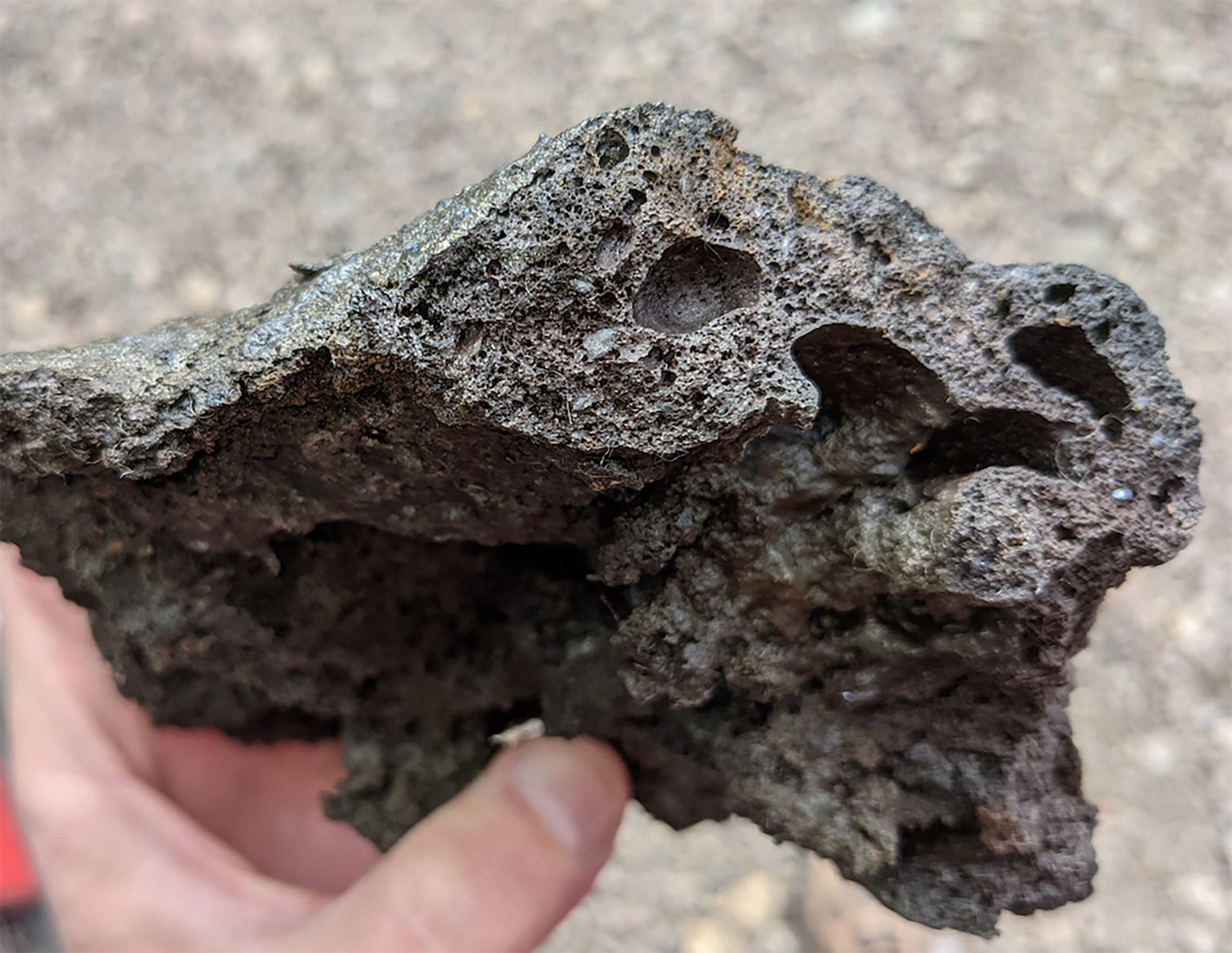
The model proposes six interconnected steps, beginning with gases in early Earth’s atmosphere being converted into pentose sugars such as ribose, and ending with nucleotide precursors of RNA being linked into RNA chains through catalysis on volcanic basalt glass.
Previous studies have validated each of these steps in a laboratory setting. What remained unclear was whether all of them could occur together in real, natural environments without human intervention.
Simulation of the early planet and the role of borate in chemical reactions
The researchers wanted to determine whether all six steps are compatible and can work together in a natural environment without human intervention. Their other focus was borate, which plays a key role in multiple steps of the DSM, from guiding the formation of five-carbon sugars from simple carbohydrates to controlling how phosphate groups bind to other ingredients involved in the reactions.
To address the queries, the team recreated ancient Earth conditions in the laboratory by simulating underground water systems surrounded by actual volcanic basalt that periodically dried and flooded. To test whether RNA could form continuously without intervention, they combined all the ingredients at once in a single container.
The experiments revealed that the six-step DSM pathway could occur without human involvement in underground water systems rich in borate and surrounded by basalt-rich rocks. Under chemically balanced conditions, the reactions would transform very simple molecules into RNA chains that can grow to 100-200 units long.
The team initially feared that borate might inhibit the reactions, but experiments revealed that the mineral actually promotes the reactions and removes unwanted by-products. These discoveries could bring us one step closer to ultimately solving the mystery of the origin of life.
Provided by: phys.org

