

NASA is preparing for a new milestone in preparing humans for a mission to Mars. Four volunteers will be isolated from the world for a full year in a special module that simulates the conditions of a future mission to the Red Planet. Their experience will be key to planning the first manned expedition in history.
On October 19, four brave souls will enter a specially designed living module called Mars Dune Alpha: test pilot Ross Elder, Colonel Ellen Ellis, engineer Matthew Montgomery, and technical director James Spicer. They will be the pioneers in the second annual mission of the CHAPEA program, conducted at the Johnson Space Center in Houston. For 378 days, they will live and work in conditions as close as possible to those on Mars.
Life in isolation

The goal of the experiment is to study how prolonged isolation and extreme conditions affect a person’s physical and mental state. The mission participants will face a whole range of challenges: limited resources, technical malfunctions, artificially created delays in communication with Earth, and the feeling of being in a confined space far from home. All their reactions will be carefully recorded and analyzed by NASA specialists.
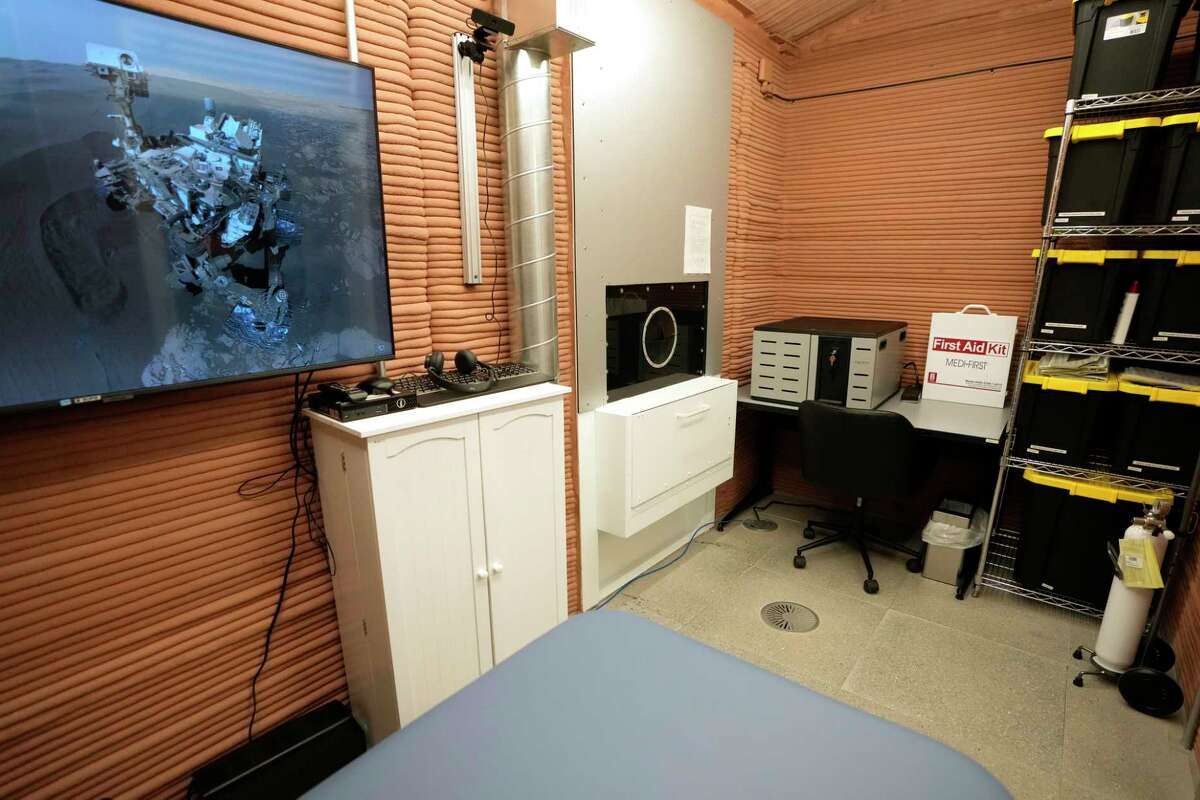
To make the experience as realistic as possible, the complex is equipped not only with living quarters, but also with a separate area that simulates the Martian landscape. It is there that participants will conduct “surface excursions” for scientific research. In addition, they will test the latest technologies, such as water purification systems and medical diagnostic equipment, developed for future missions into deep space.
Science for the future
This mission is part of NASA’s large-scale program to prepare for flights to Mars. As Sarah Whiting, a scientist at the Johnson Space Center, noted, ground-based analogues such as CHAPEA are critical for determining the optimal conditions that will ensure the success of future crews.
NASA Chapea-2
Grace Douglas, the program’s principal investigator, emphasized that the data collected on the participants’ cognitive and physical performance will provide invaluable information about the effects of long-term missions on the human body. This will enable NASA to make informed decisions about the development of spacecraft, equipment, and protocols for a successful mission to Mars.
The exact dates of the first manned expedition to the Red Planet have not yet been announced, but experts do not rule out that it could happen as early as the 2030s. The year-long isolation of four volunteers is another, but extremely important step on this path.
We previously reported that NASA’s first year-long experiment to simulate life on Mars has ended.
Provided by: nasa.gov

