

Scientists have discovered that one of the two bodies orbiting the star HD 28185 is not a brown dwarf at all, as thought. Its mass was much lower than previous estimates. So, it’s pretty clear that this is actually a giant planet.
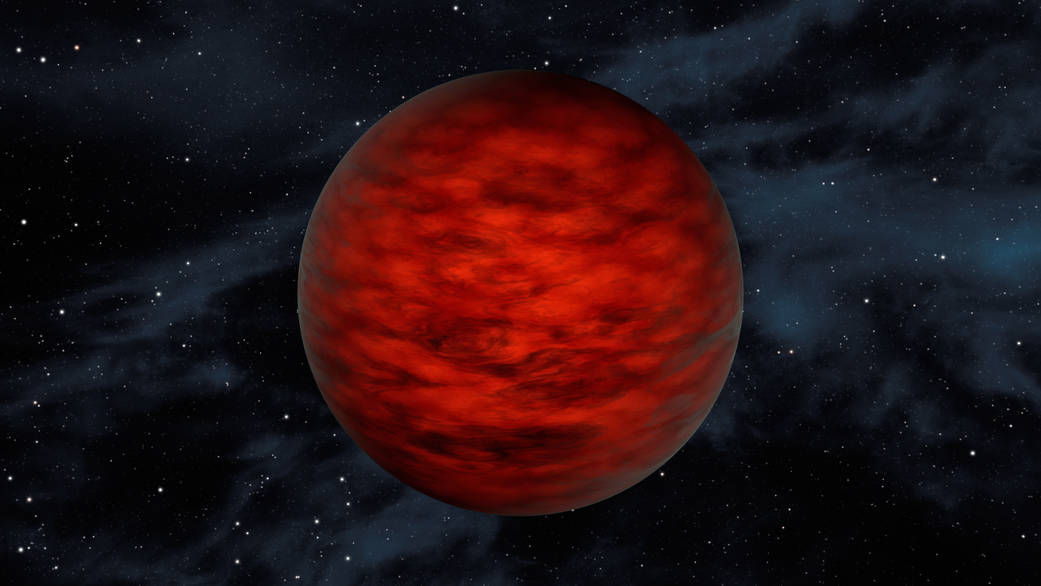
System HD 28185
Astronomers from the University of Southern Queensland in Australia have studied the HD 28185 system and concluded that one of the bodies orbiting the central star is actually not something that has seemed so far. An article about it was published in Monthly Notices of the Royal Astronomical Society on October 10.
HD 28185 is a sun-like star 8.7 billion years old. It is 127.8 light-years away from us. The first planet orbiting around it was discovered back in 2001. It was a gas giant, at least six times heavier than Jupiter, circling in an orbit whose radius was comparable to Earth’s.
Within 20 years, a second companion was found in HD 28185, named HD 28185 c. It makes one orbit around the luminary in 47.7 Earth years, and its mass was then estimated at 19.6 Jupiter masses. This allowed it to be classified not as a planet, but as a brown dwarf.
Brown dwarfs and planetary masses
Brown dwarfs are astronomical objects that occupy an intermediate position between planets and stars. Usually all bodies with masses between 13 and 80 Jupiterian are included in this category. It is believed that these objects are not capable of sustaining thermonuclear reactions for long periods of time, but remain very hot for hundreds of millions, if not billions of years.
This is what the HD 28185 c is expected to look like, according to preliminary research. However, in the new study, everything known about this planet so far has been re-examined. Scientists reviewed data on the orbit of the star over the past 22 years and found that it introduced some uncertainty into the observation.
It turns out that the orbital period of HD 28185 c is only 9,090 days, i.e. 24, 9 years. The distance to the star is 8.5 a.u. and the mass is 6 Jupiters. So it’s still a planet, albeit a giant one. However, scientists are not at all upset by their discovery.
On the contrary, massive gas giants in wide orbits have not been observed very often so far. Therefore, another one will not be superfluous at all.
Provided by phys.org

