

NASA specialists have published an unusual image taken by the LRO spacecraft. It shows a crater with a concentric ring inside it, resembling the center of a dartboard (bull’s eye).
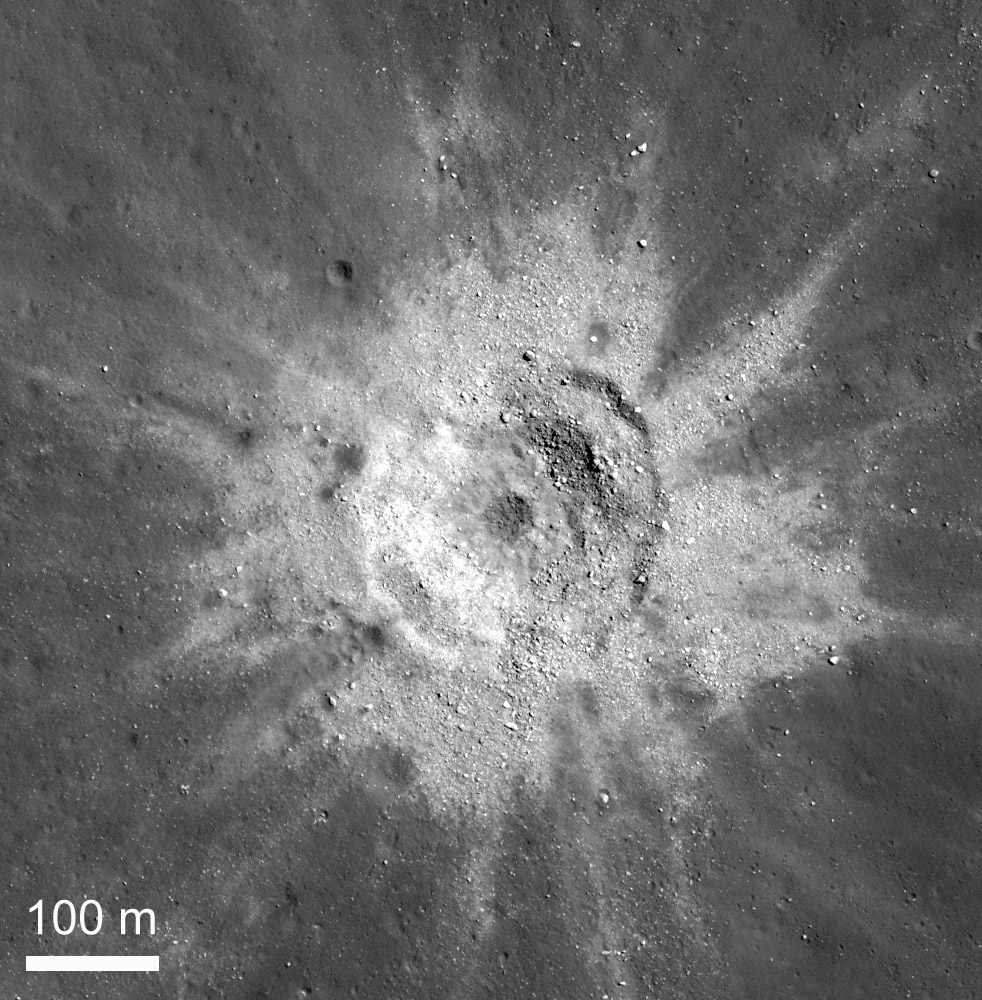
The crater photographed by LRO is located in the northwestern part of Mare Nubium on the visible side of the Moon. Its diameter is 245 meters. It is a young impact formation, which was formed relatively recently (by astronomical standards).
The LRO image clearly shows a concentric ring inside the crater. Its diameter is 167 meters, and its width is approximately 50–70 meters. The ridge rises about 20 meters above the crater floor. The center of the crater is marked by an uneven dark area with a diameter of about 36 meters, surrounded by another indistinct ridge.
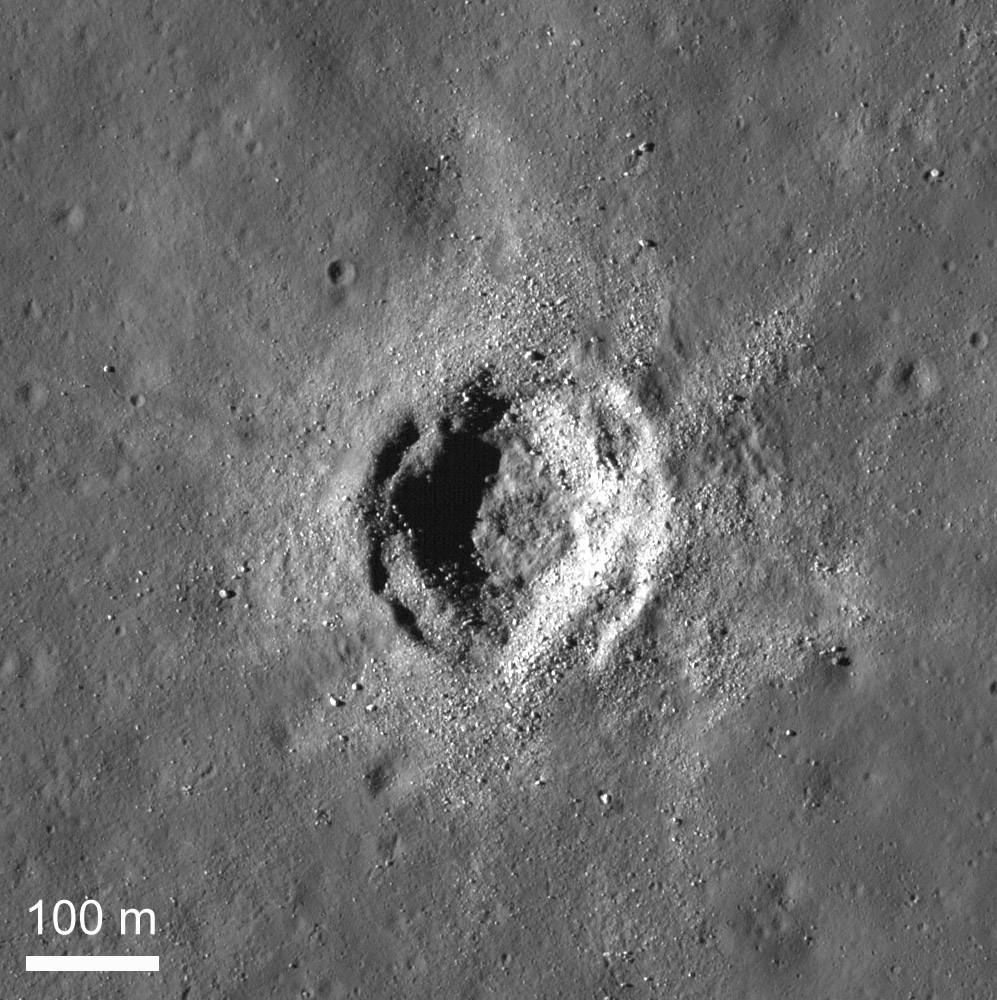
Stone blocks thrown out during the impact are scattered along the crater. They reach sizes of up to 11 meters. Bright thrown material forms a more or less continuous layer around the crater rim, extending 90–150 meters. At greater distances, the thrown material breaks up into a series of rays of finer material extending up to 1 km from the crater rim.
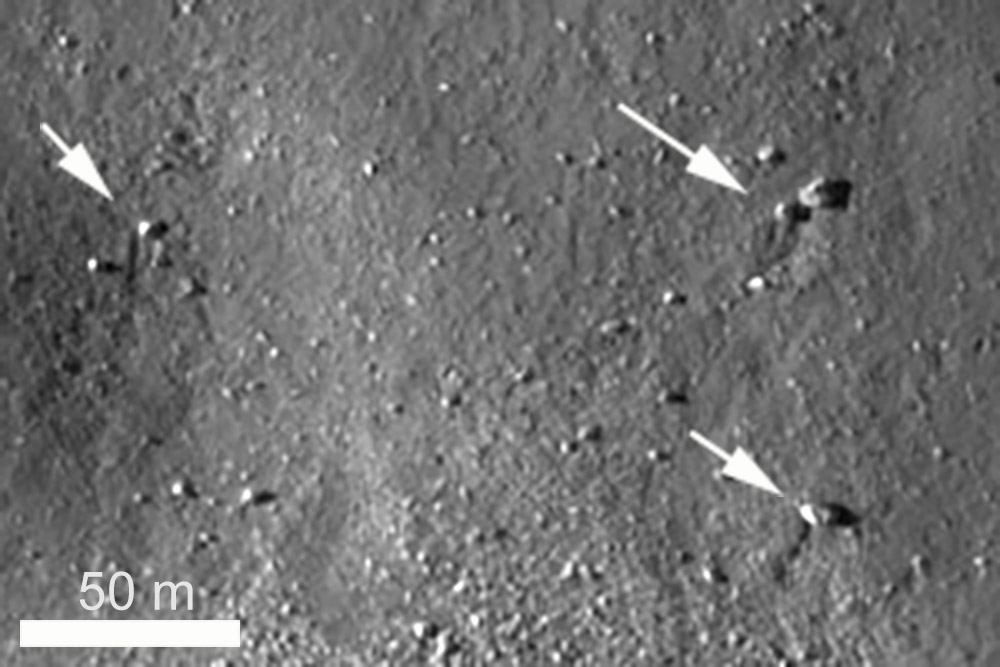
This morphology is the result of the contrast between the strength of the surface layer (uncompacted regolith) and the stronger underlying layer (in this case, basalt deposits). A relatively weak regolith is easier to throw than basalt, which leads to the formation of a clear “inner ring.” With an average regolith thickness of several meters, small craters formed entirely in the regolith are bowl-shaped. As the diameter increases, the depression penetrates below the regolith into more solid basalt flows. As a result, they form a central elevation, a flat bottom, and finally a concentric ring inside the crater rim.
Earlier, we reported on how LRO photographed mysterious “fences” on the Moon.
According to LROC

