

Approximately 65 million years ago, during the Cretaceous period, a giant asteroid (or comet) the size of a small city was rapidly approaching Earth. It collided with our planet and caused an explosion with a force of 72 teratons in TNT equivalent (one and a half million times more powerful than the most powerful man-made bomb), which had devastating consequences for both the dinosaurs that had ruled the Earth for millions of years and all other living organisms.
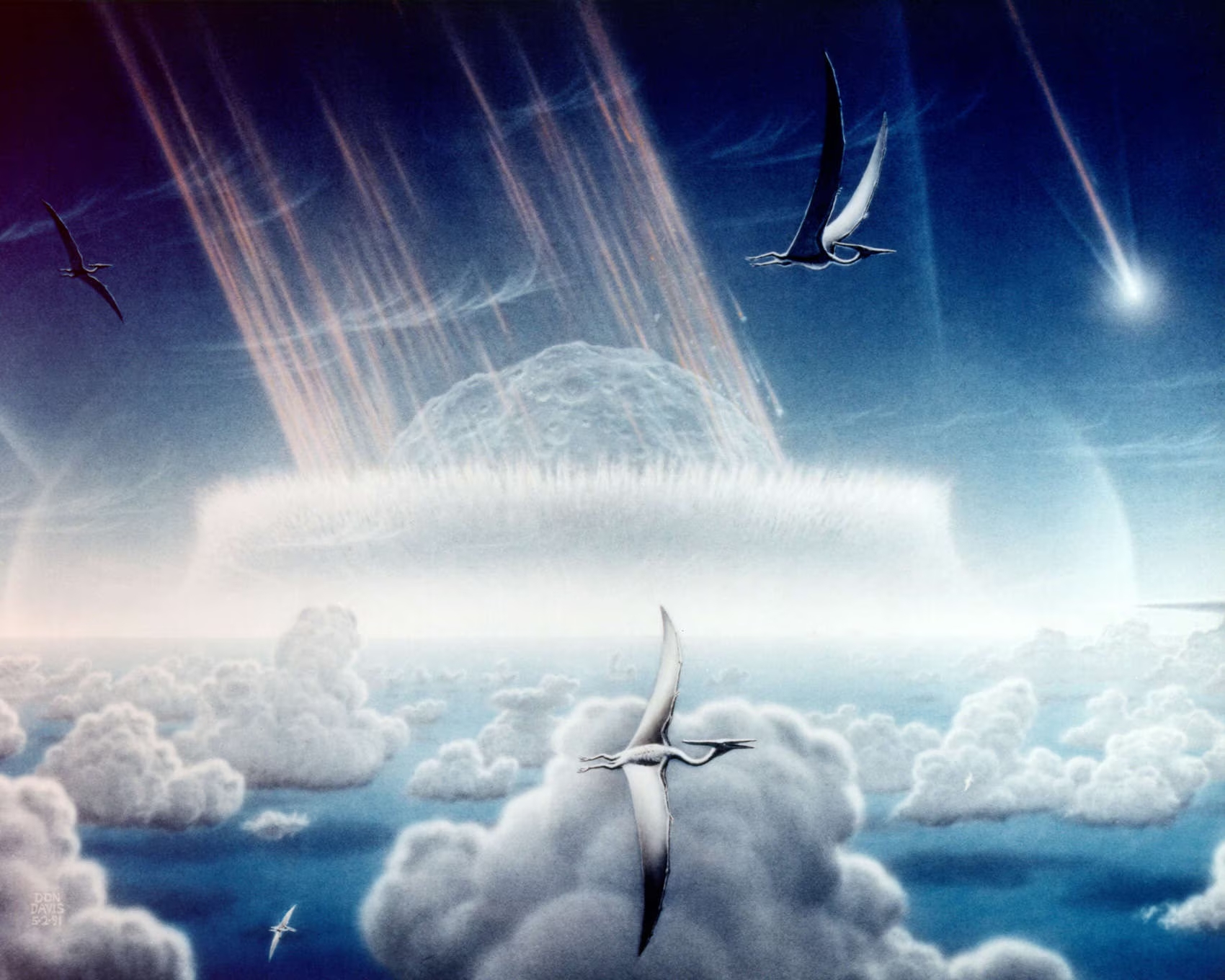
The powerful explosion had a real domino effect. Shock waves spread from the point of impact, causing earthquakes and volcanic eruptions around the world. A megatsunami several thousand meters high arose in the ocean. A huge amount of debris formed when the space object collided with Earth, rose into the atmosphere, and beyond. Some of the rock fragments returned, igniting upon entering the dense atmospheric layers and causing global firestorms. Meanwhile, the sky darkened, and dust from the explosion, as well as a huge amount of smoke from the fires, created conditions of permanent winter. A dense dust cloud enveloped the planet, blocking sunlight and making photosynthesis impossible for many years. As a result of this catastrophic event, approximately three-quarters of all animal and plant species at that time died out.
The third-largest crater in the world, which decided the fate of the dinosaurs
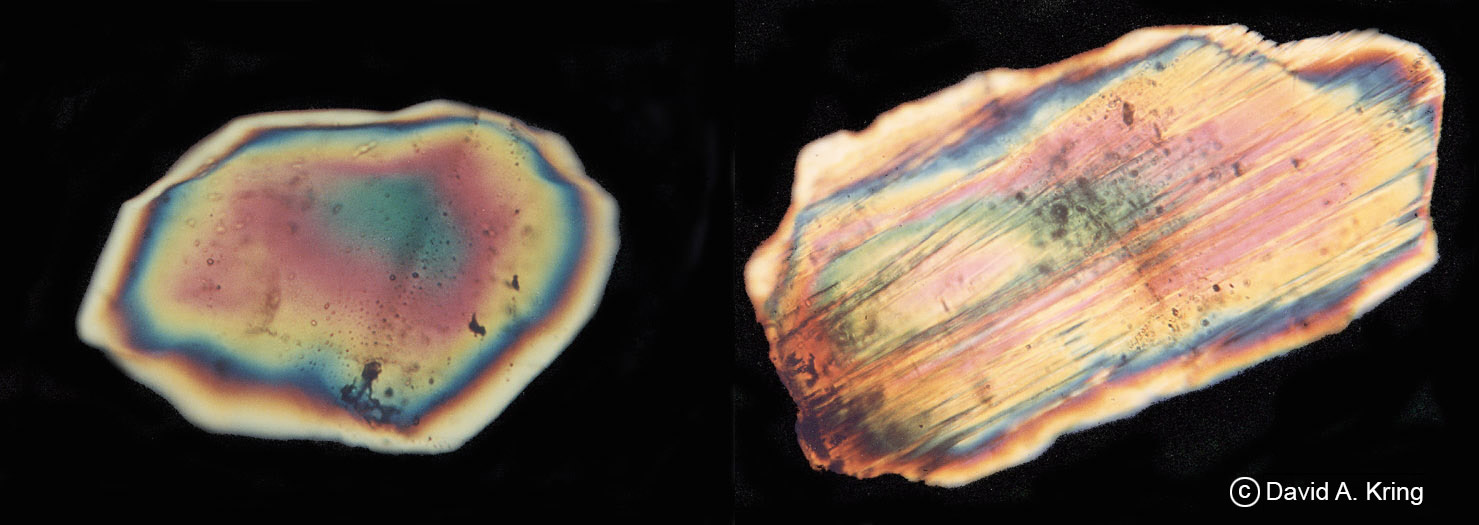
In 1978, American geophysicist Glen Penfield, working for the Mexican oil company Pemex, was studying the geological conditions of the Yucatan Peninsula and noticed some unusual features in the region. On a magnetic survey map of the Gulf of Mexico / Gulf of America, Penfield noticed a semicircular arc that resembled a crater in shape. A few years later, geologists Luis Walter Alvarez and Alan Hildebrand published scientific articles expressing the opinion that the fall of a huge asteroid could have caused mass extinction at the end of the Cretaceous period. As evidence, the scientists relied on a 65-million-year-old layer of iridium-enriched clay called the “K-T boundary” (Cretaceous-Tertiary period). They argued that only a collision with a huge extraterrestrial body could explain such high concentrations of iridium, a rare element that is quite common in meteorite samples. It was later suggested, and subsequently confirmed, that the extremely high pressure and temperature associated with a powerful explosion would have caused the ejection of so-called “shock” or impact quartz, as well as tektites (spherules of natural glass).
Source: Detlev Van Ravenswaay
Quartz is a very common mineral within the Earth’s continental crust. When an asteroid or comet collides with it, an extremely powerful shock pressure is created. This can result in the formation of so-called lamellae, or flat deformations of quartz crystals. Along these planes, the crystal structure is destroyed, and a zone of glass is formed. No other geological processes can cause this type of damage, so it is a diagnostic sign of an impact event.
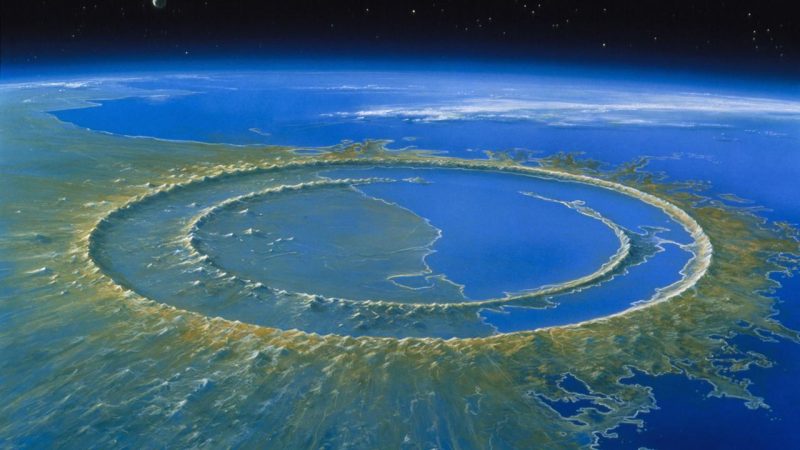
At that time, science was still only beginning to explain the mass extinction of the dinosaurs, so it took ten years before the Chicxulub crater (translated from the Mayan language as “devil’s tail”) was finally recognized as the site of the cosmic impact. Today, it is located off the northern coast of the Yucatan Peninsula. At the time of the explosion, the Gulf of Mexico / Gulf of America covered the northern part of the peninsula, so the impact fell on shallow water. Sediments at the bottom of the bay filled the crater and eventually buried it under a layer of limestone several hundred meters to a kilometer thick. Unlike the famous Arizona meteorite crater, Chicxulub cannot be seen on the surface, but it is currently considered one of the largest confirmed impact craters on Earth. Its diameter is 180 km. In terms of size, it is second only to the Sudbury crater in Canada (diameter 248 km) and Vredefort in South Africa (diameter 300 km).
Cenotes – the mysterious rings of the Yucatan Peninsula
Radar measurements taken by one of NASA’s spacecraft helped reveal a narrow depression in the limestone deposits that fill the crater. The subsurface edge of this structure, visually similar to a buried ring of mountains, has influenced the flow of groundwater. In the recent geological past and up to the present day, groundwater flowing northward on the Yucatan Peninsula collides with this edge and deflects away from the crater. The intensified flow dissolves limestone, forming a series of water-filled sinkholes called cenotes. These unique structures are found exclusively in Mexico, where they form a dense ring-shaped network surrounding the Chicxulub crater, clearly visible on topographic maps.
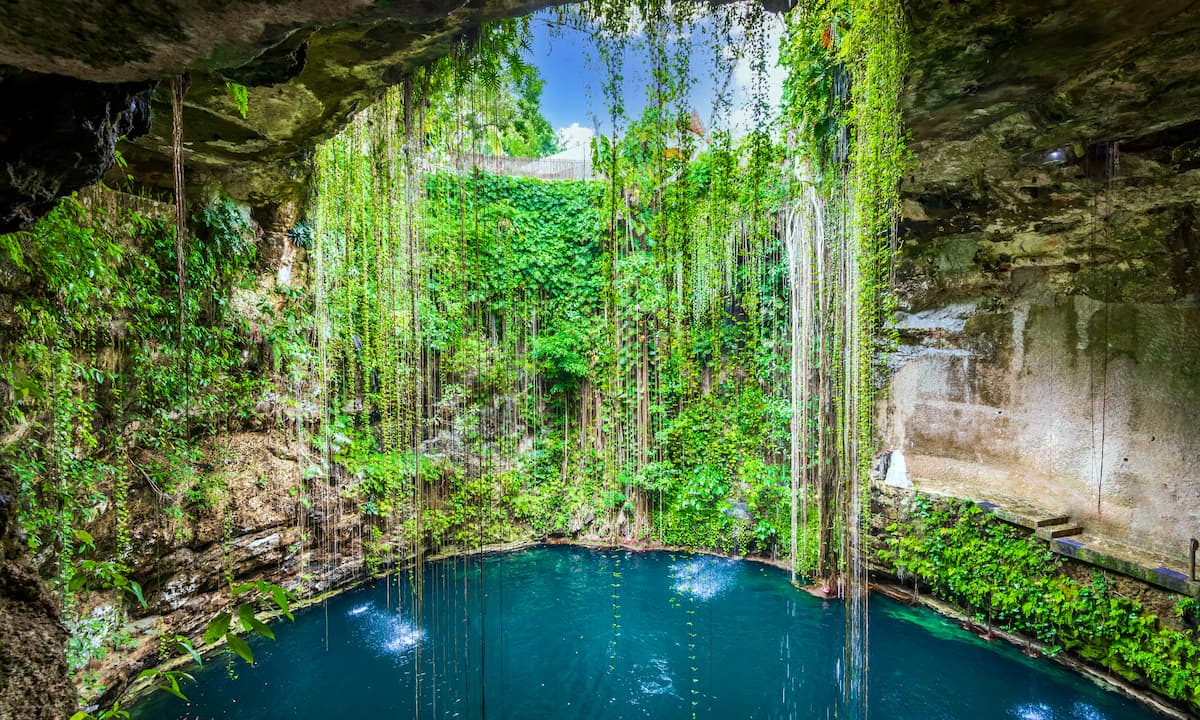
Outwardly, a cenote is a kind of well formed as a result of the collapse of a cave ceiling. It is filled with fresh blue water. It is known that the Maya Indians called cenotes “gates to the realm of the dead” and practiced sacrificial rituals in them. Nowadays, these structures are very popular among tourists who enjoy swimming there.
Since 2018, the Chicxulub Crater Science Museum has been operating in the Mexican city of Merida, where travelers and enthusiasts can learn more about the catastrophe that ended the Mesozoic era, as well as other impressive consequences of the asteroid impact.
Boltysh crater – Ukrainian “sister” of the Chicxulub crater
In total, researchers have discovered seven impact structures within Ukraine: the Boltysh crater, the Zapadnaya crater, and the Zeleny Gai crater, Ilyinets crater, Obolon’ crater, Rotmistrivka crater, and Ternovka crater. All of these structures, except for the Ilyinets crater, are buried under a thick layer of sedimentary rock, so they are studied using drilling, which allows cores – cylindrical columns of rock – to be obtained.
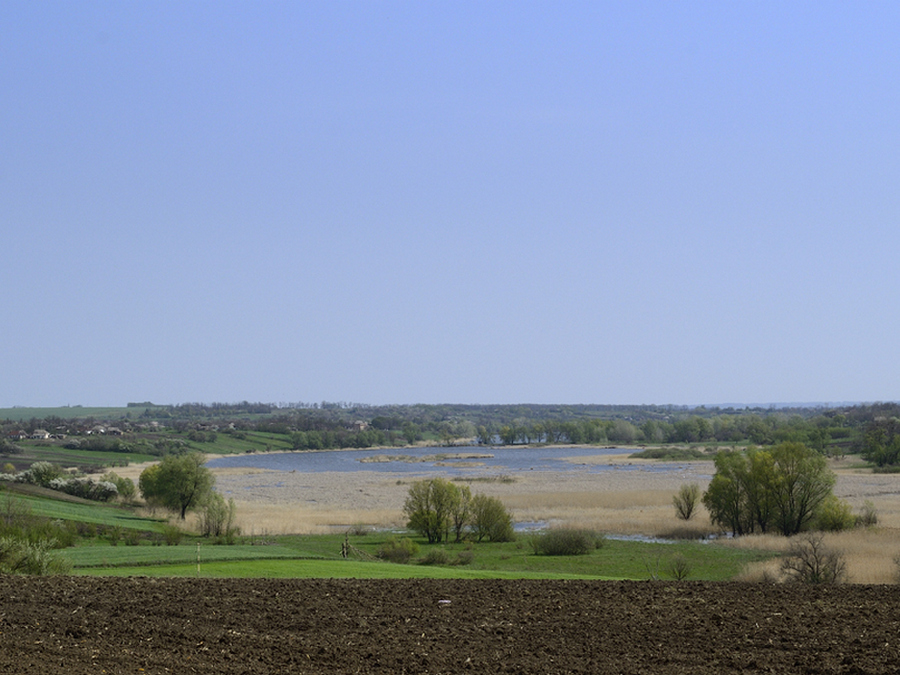
The Boltysh crater, located near the village of Bovtyshka in the Oleksandrivka district of the Kirovohrad region, has been the subject of thorough research not only by domestic but also by foreign scientists, since the time of its formation coincides with that of the Chicxulub crater. However, it should be noted that the domestic astrobleme is significantly smaller: 25 km in diameter and up to 600 m deep.
Geologists from the University of Aberdeen (Scotland) have published the results of their research, according to which the sedimentary deposits of the Boltysh crater are key to understanding the conditions in which early life forms developed in the hot crater lakes of Earth and Mars. They studied palynomorphs – microscopic (5-500 μm in size) structures of plant and animal origin found in the core of the Ukrainian basin.
Researchers found that immediately after the formation of the bottom of the impact structure, it was filled with incandescent melt, which cooled to 100°C and below, forming a crater lake. At the first stage, hot water reacted with the rocks of the crater walls, changing their chemical composition. The high temperature prevented the development of life, so the lower 120 m of the Bovtyska structure deposits are completely devoid of organic remains. Only at the next stage, when sediments accumulated in a freshwater basin with normal water temperature, did living organisms appear, traces of which can be seen under a microscope.
Ukrainian scientists, reconstructing the conditions of the early Bovtyshka reservoir, proposed a model of interaction with the sea during this period as a “lake on the ocean shore.” It is believed that the migration of marine organisms from the ancient Tethys Ocean to Lake Bovtyshche took place through a small strait, with water exchange between the lake and the ocean being periodic, varying in intensity and duration.
The results of research conducted by paleontologists from the University of Glasgow, recently published in the scientific journal Science Advances, are interesting. Based on their study of the Boltysh crater, Scottish researchers have put forward a theory that the mass extinction of Mesozoic flora and fauna was the cumulative result of several events. Scientists have found that the appearance of the Boltysh crater coincided with a period of warming in Earth’s history. It has been suggested that the fall of several large asteroids could have caused intense volcanic activity in what is now India.
Thus, modern studies of buried impact structures of the same age located in different regions of the globe lead scientists to conclude that dinosaurs and other living creatures disappeared as a result of a series of cosmic events, one of which was the fall of an asteroid on the territory of modern Ukraine.
Author: Tetiana Koshliakova, Senior Researcher at the M.P. Semenenko Institute of Geochemistry, Mineralogy, and Ore Formation of the National Academy of Sciences of Ukraine, Candidate of Geological Sciences
This article was published in issue No. 1 (189) of Universe Space Tech magazine in 2023. You can purchase this issue in electronic or paper format from our store.

