

A new study has been published in which scientists have attempted to outline what the terraforming of Mars should look like. This term refers to the process by which a planet transforms into something similar to Earth. Researchers say this will occur in three stages.
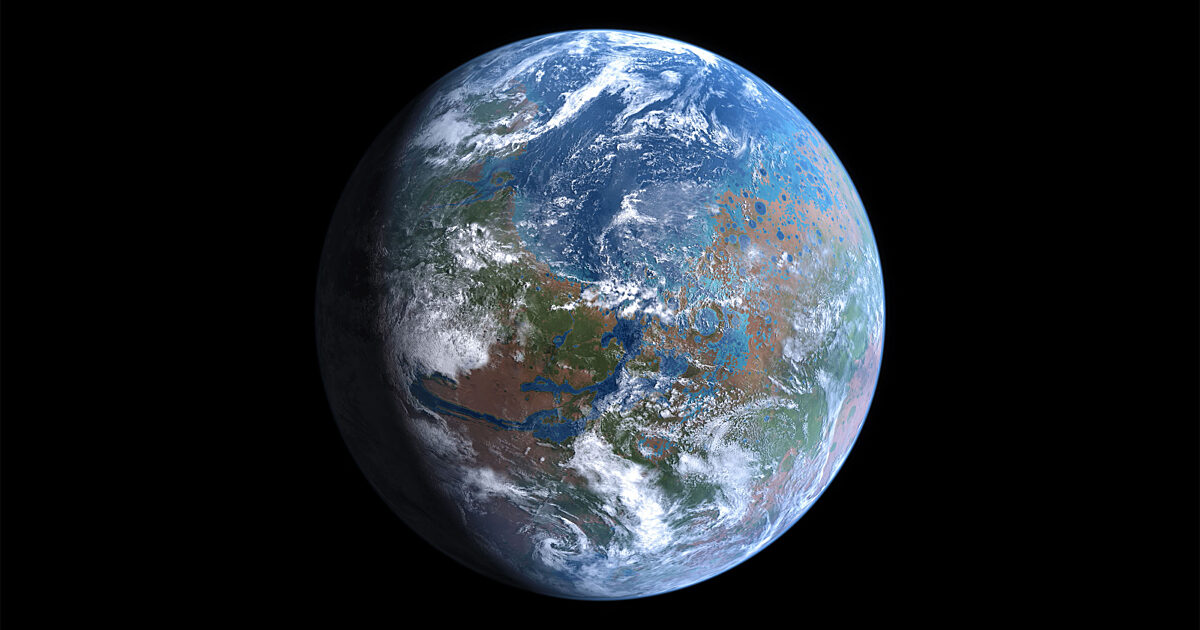
Terraforming Mars
Terraforming is the process of altering a planet’s conditions to make it more like Earth. It has been described many times in science fiction, but scientists remain extremely cautious when discussing this possibility. A new study on this topic was recently posted on the arXiv preprint server.
The authors propose terraforming Mars in three stages. In the first stage, they suggest simply building as many greenhouses as possible on the surface. They must be specially designed: windows that let in ordinary light but block ultraviolet rays. In addition, the greenhouses must be constructed using the most advanced insulation materials.
However, these greenhouses should not be completely isolated from the outside environment. The heat generated inside must be transferred to the Martian soil beneath them. There are plans to build a large number of such greenhouses, which will form a kind of “heat island,” similar to those found in cities on Earth. They will provide the initial heating for the planet.
Stages two and three
In the second phase, the researchers propose collecting light using giant mirrors based on solar sails and directing it toward specific regions of Mars. The plan is to melt the glaciers and release large amounts of carbon dioxide, which will cause a global greenhouse effect.
However, even at this stage, scientists are facing a serious problem. Existing solar sails are extremely inefficient at reflecting light. To provide sufficient heat, they would have to be truly enormous, which means their density would have to be at least three times lower than it is now.
Finally, the third stage involves the use of special aerosols, specifically aluminum nanoparticles. They are intended to help retain heat in the Martian atmosphere. However, an enormous quantity will be required, so production will have to be set up directly on Mars.
According to phys.org

