

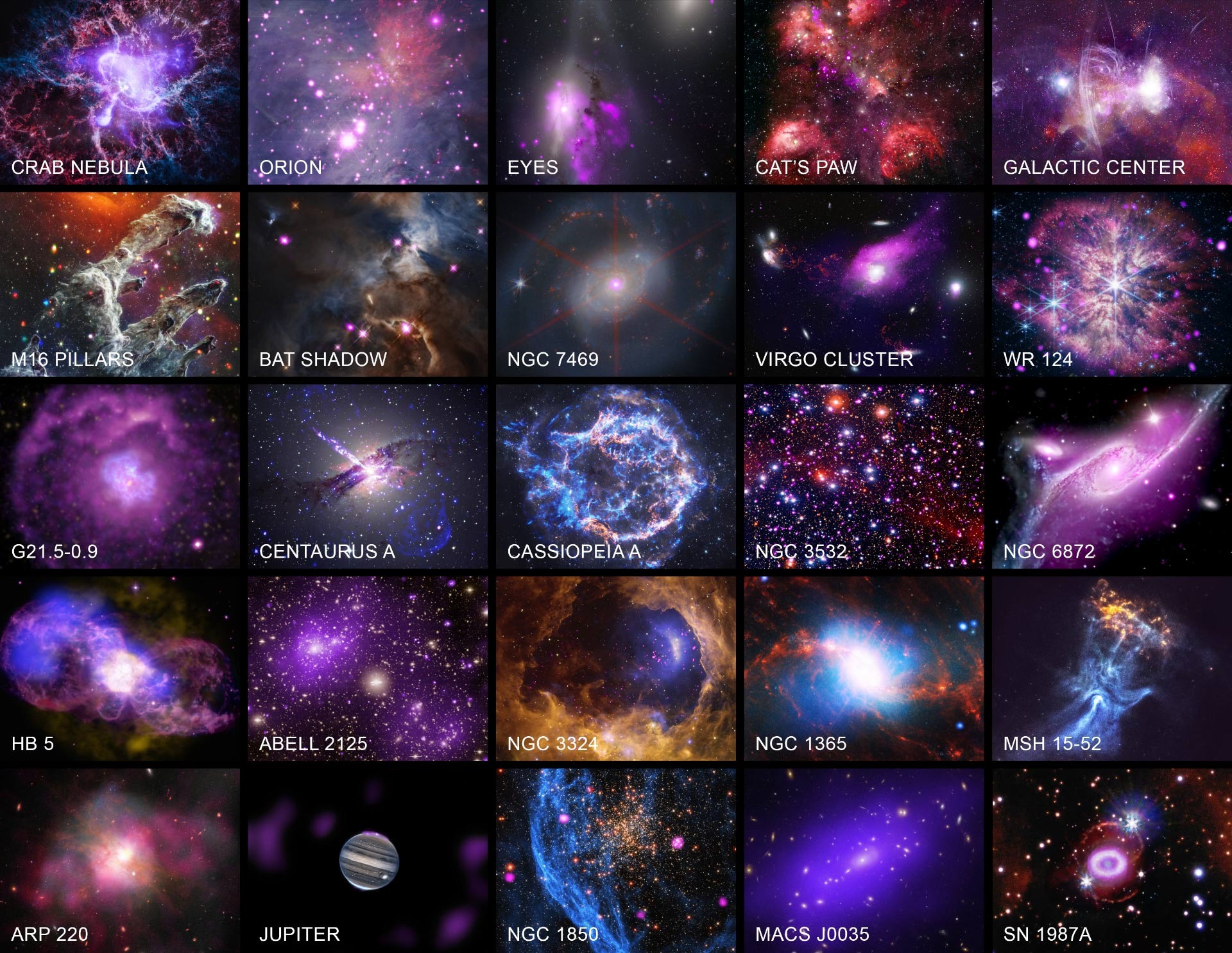
July 23 marked exactly 25 years since the launch of NASA’s Chandra X-ray observatory. It was launched on July 23, 1999, and has produced hundreds of amazing images of space since then, including 25 new ones published to mark the occasion. The new image set is a sampling of the nearly 25,000 photos the telescope has taken during its quarter century in space.
Unlike Hubble, which observes in the optical range, and James Webb, which operates in the infrared, Chandra operates in the X-ray part of the spectrum. This allows it to see high-energy events such as kilonovae and to study supermassive black holes. It also provides a unique perspective on supernovae and their remnants.
The space telescope’s ability to detect X-rays is important for scientific discovery. According to Pat Slane, director of the Chandra X-ray Center, for a quarter century the telescope has helped astronomers explore mysteries they never knew they had, including exoplanets and dark energy.
The new images include nebulae, galaxies and even Jupiter in our Solar System. Many of them combine Chandra data with data from other telescopes such as Hubble, James Webb or Spitzer. These telescopes provide general views of stars, and Chandra shows the X-rays in these photos, which are usually reflected in shades of purple and magenta.
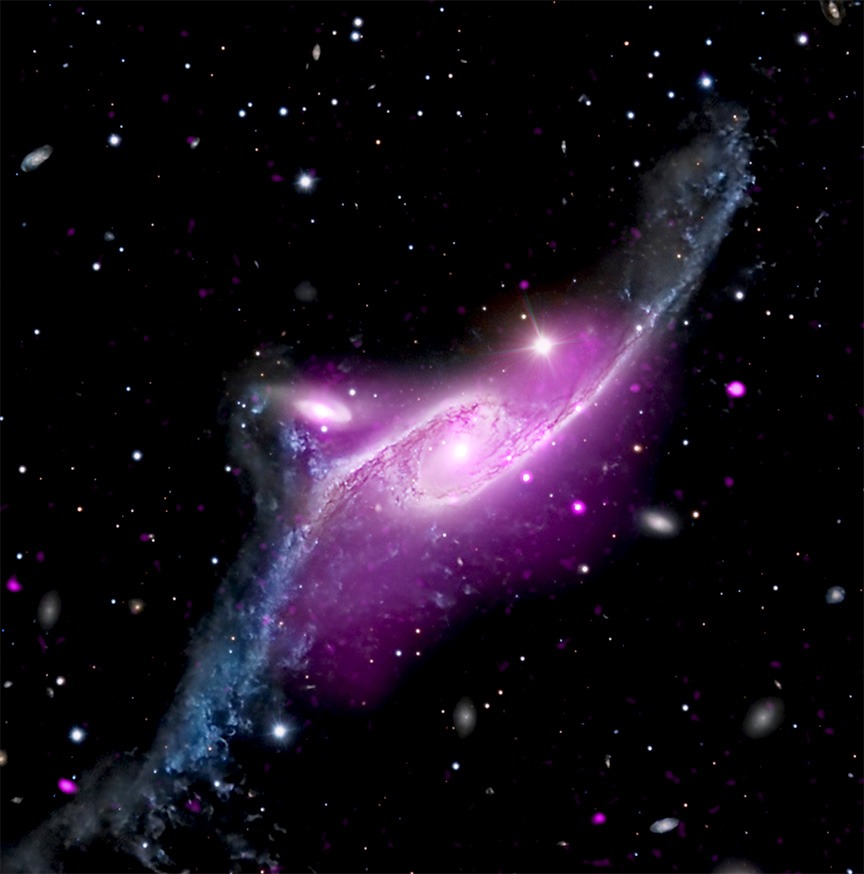
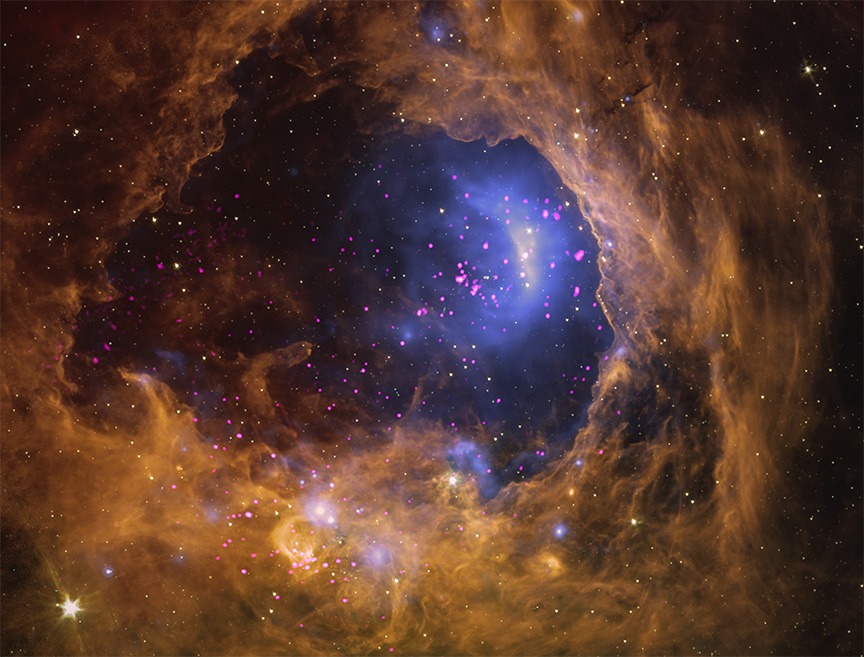
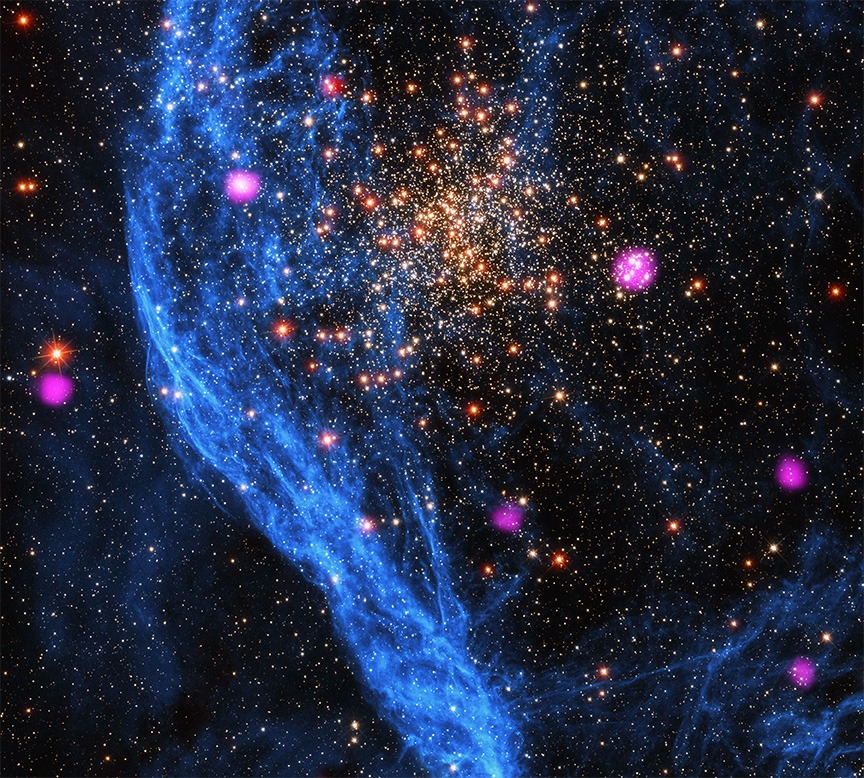
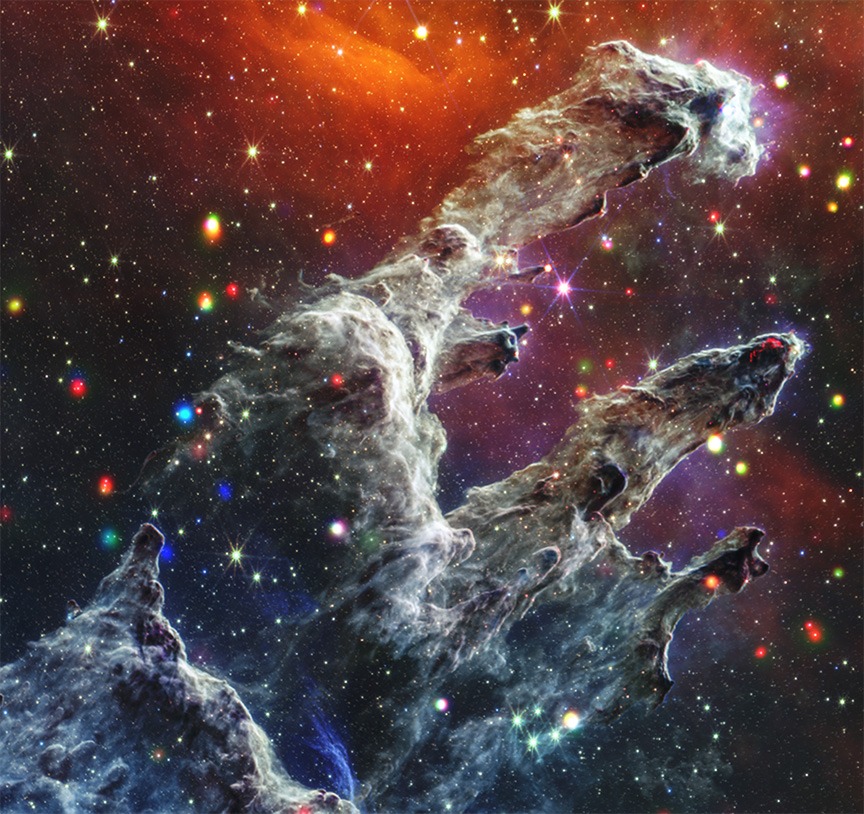
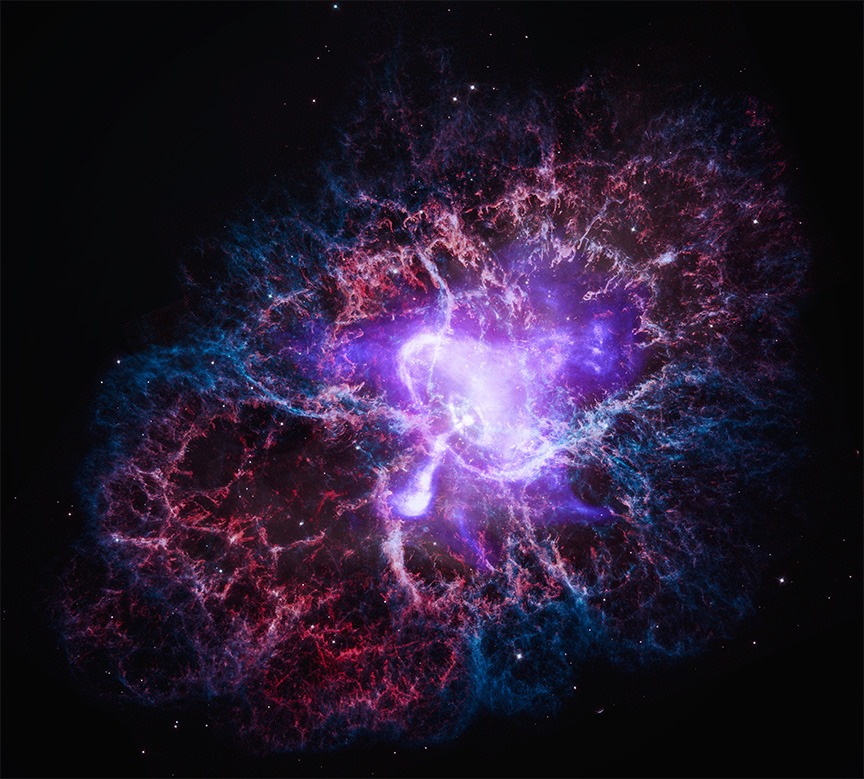
According to Andrew Schnell, Acting Project Manager for the X-ray Observatory, the success of this telescope was made possible by the hard work and dedication of the team.
Chandra’s creation story
In 1976, Riccardo Giacconi and Garvey Tananbaum first proposed to NASA the mission that would one day become Chandra. The mission was eventually launched in 1999 and named one of NASA’s Great Observatories, along with the Hubble Space Telescope and the now-decommissioned CGRO (Compton Gamma Ray Observatory) and Spitzer Space Telescope, each studying observations of the Universe in different spectra of light.
In 2002, Giaconi received the Nobel Prize in Physics for his pioneering contributions to astrophysics that led to the discovery of cosmic X-ray sources, laying the groundwork for the development and launch of the X-ray Space Telescope.
Today, astronomers continue to use Chandra data in conjunction with other powerful telescopes, notably the NASA/ESA/CSA James Webb Space Telescope, NASA Imaging X-ray Polarimetry Explorer (IXPE), and many others.
Earlier we reported on how NASA would stop funding the Chandra space telescope.
According to popsci.com

