

Photos taken by the Indian spacecraft Chandrayaan-2 were published on social media platform X. They show the crash site of the Japanese probe Resilience.
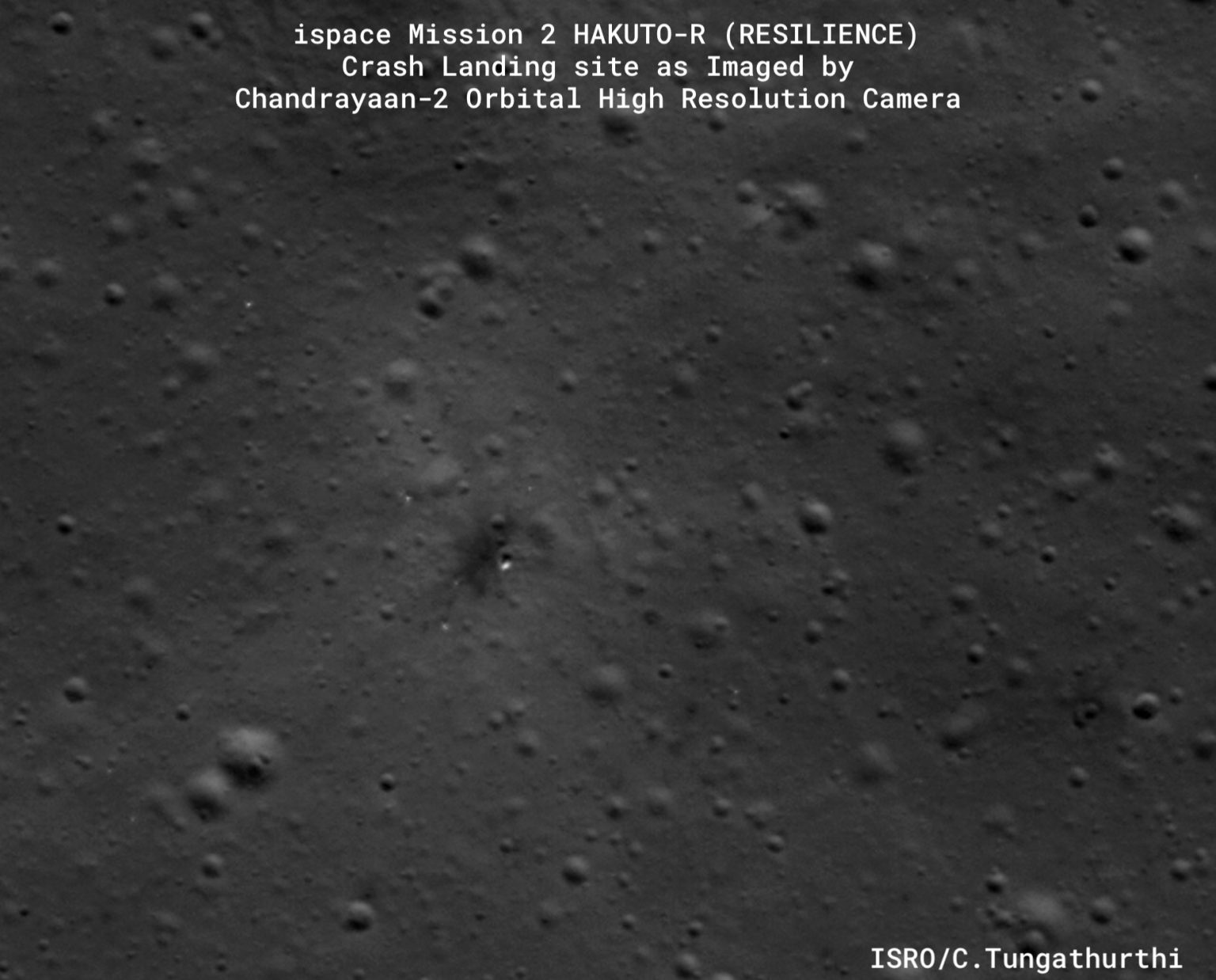
Resilience was built by the Japanese company ispace, for whom this was already the second attempt to conquer the Moon. Unfortunately, the vehicle crashed during landing on June 5, 2025. During the subsequent investigation, ispace specialists determined that the most likely cause of the failure was a malfunction in the laser rangefinder used to determine the exact distance to the lunar surface.
A few weeks after the accident, NASA published an image of the Resilience crash site taken by the LRO spacecraft. However, LRO is not the only spacecraft orbiting the Moon that has a powerful camera. India’s Chandrayaan-2 also photographed the crash site of the Japanese probe.
The images of the Resilience landing site were taken on June 12, 2025, when Chandrayaan-2 was at an altitude of 109 km. Their resolution is 28 cm per pixel. Thus, in terms of quality, they significantly surpass the LRO image.
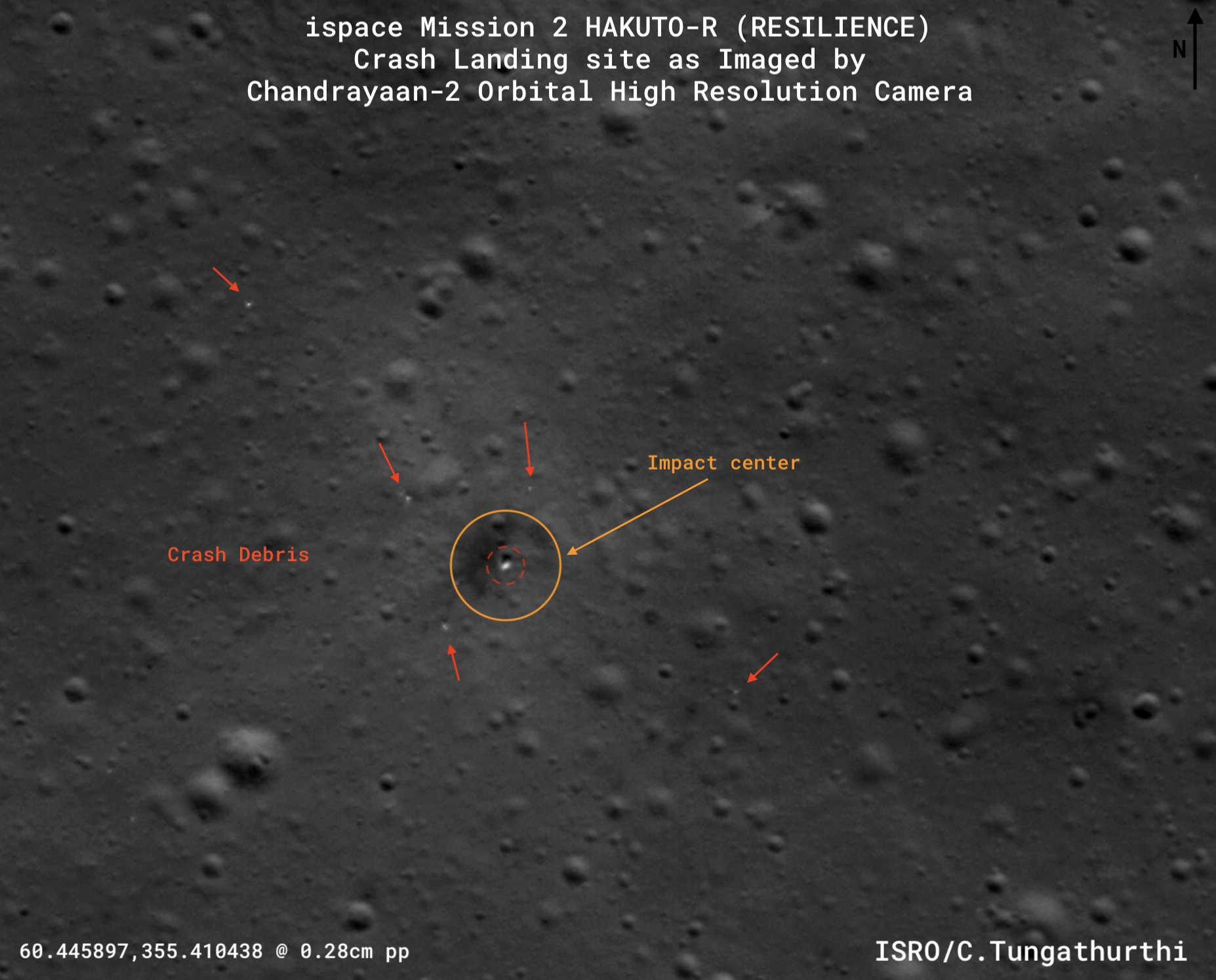
Images from Chandrayaan-2 provide important visual data on the aftermath of Resilience’s impact. They clearly show the point of impact, as well as the debris scattered around it.
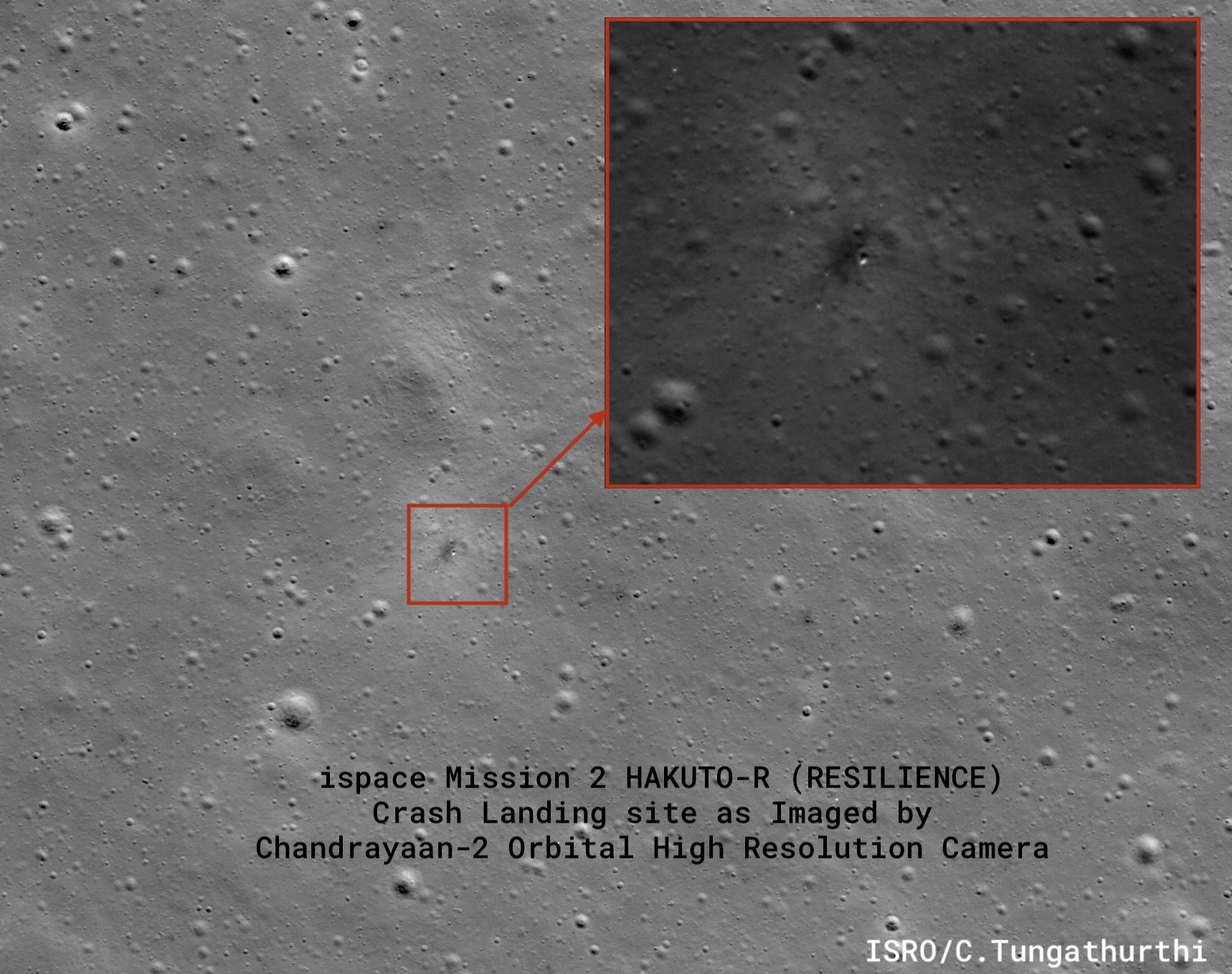
A distinct bright halo around the impact site indicates that lunar regolith was ejected during the impact. The debris scattered noticeably from the point of contact, indicating the significant kinetic force of the impact. These images provide important information about the consequences of failed lunar landings.

