

The carbon dioxide content in the Earth’s atmosphere is increasing. This could have a rather unusual consequence. Magnetic storms may now affect the upper layers of our planet’s atmosphere in a completely different way than they do now.
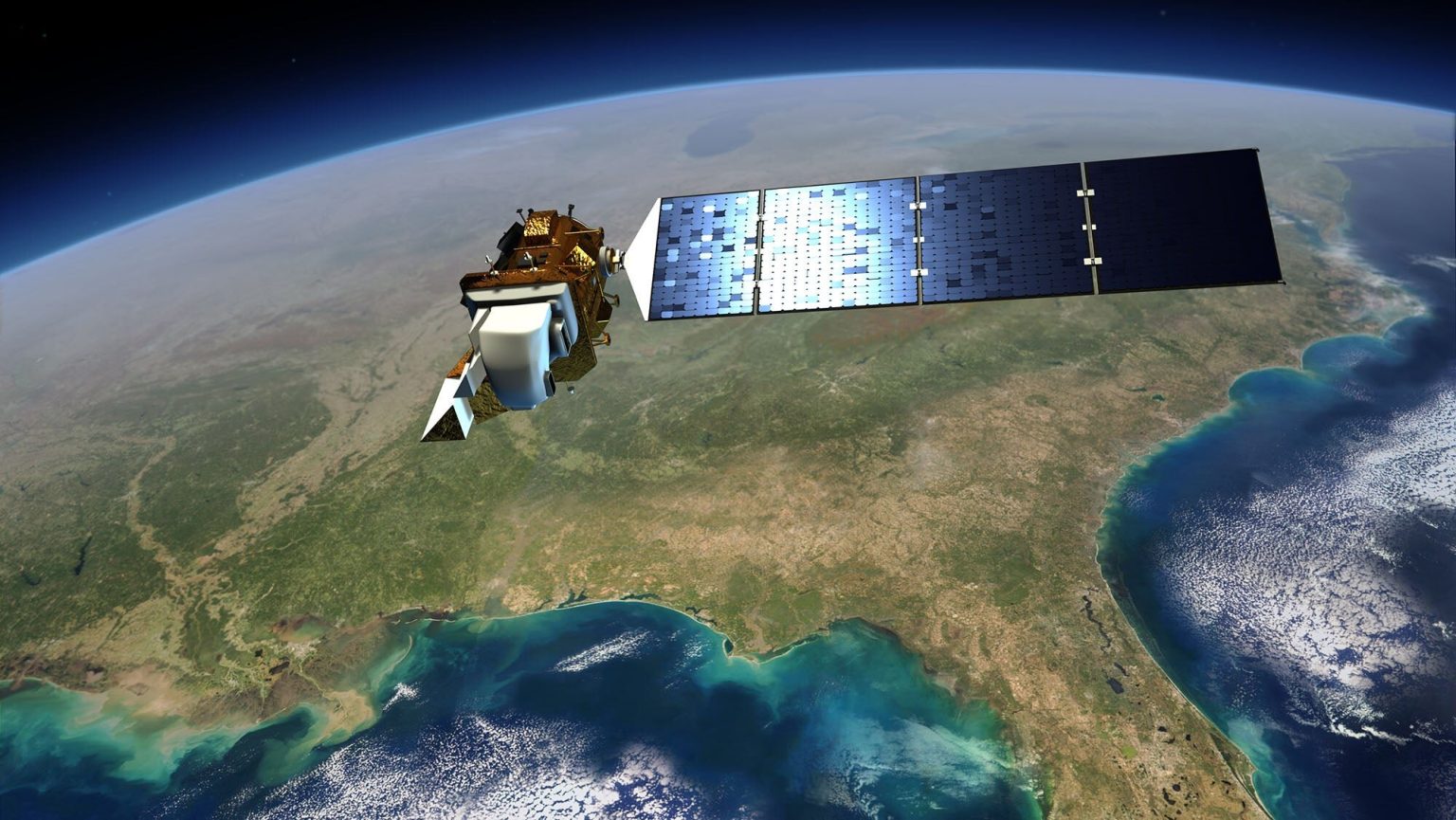
Magnetic storms and satellites
The accumulation of carbon dioxide in the Earth’s atmosphere and the problems caused by magnetic storms triggered by solar flares are two problems that, at first glance, affect both of our planet’s gas envelopes, but are in fact almost completely unrelated. However, researchers from the US National Center for Atmospheric Research have recently shown that this is not the case.
Extremely powerful explosions occur on the sun from time to time. They capture high-energy particles that reach our planet and disturb its magnetic field. One consequence of this phenomenon that is not often mentioned is a temporary increase in the density of the upper layers of the Earth’s atmosphere.
It is worth mentioning here that our planet’s gas envelope extends much further than most people think. In fact, molecules are even found where satellites fly in low orbits. There are few particles, but enough to cause a small but noticeable friction that slows down the satellites.
And when a flare occurs, these layers become denser and the deceleration of spacecraft intensifies. Several satellites have already fallen out of orbit because of this, and now operators are forced to take all of this into account in their work. But it is quite possible that all this will change soon.
Atmospheric composition and density
Scientists have already proven that the initial density of the upper layers of the atmosphere plays a major role in their compression during magnetic storms. And it is highly dependent on temperature and carbon dioxide content. And before that, no one analyzed what would happen if it increased.
The increase in carbon dioxide content heats the lower layers of the Earth’s atmosphere. The upper layers, on the other hand, are becoming colder. And because of this, their sensitivity to the effects of magnetic storms is reduced.
Researchers have found that by the end of this century, various areas of the upper atmosphere will be 20–50% less dense at the peak of a storm comparable to the one that occurred last year, assuming significantly higher levels of carbon dioxide. However, compared to the density of the atmosphere immediately before and after the storm, the relative change in density will be greater. Although such a storm currently more than doubles the density at its peak, in the future it could almost triple it. This is because the same storm will have a proportionally greater impact on a less dense atmosphere.
According to https://phys.org

