

On December 25, a Long March 3B rocket was launched from the Xichang Space Center in China. It put a new 5,300 kg meteorological satellite into orbit. However, this launch is interesting because it was the 90th for China in 2025.
Two launches within 48 hours
On December 25-26, China launched two rockets from two different spaceports. Both launches were successful. This brings the number of successful missions carried out by the Chinese space agency in 2025 to 90.
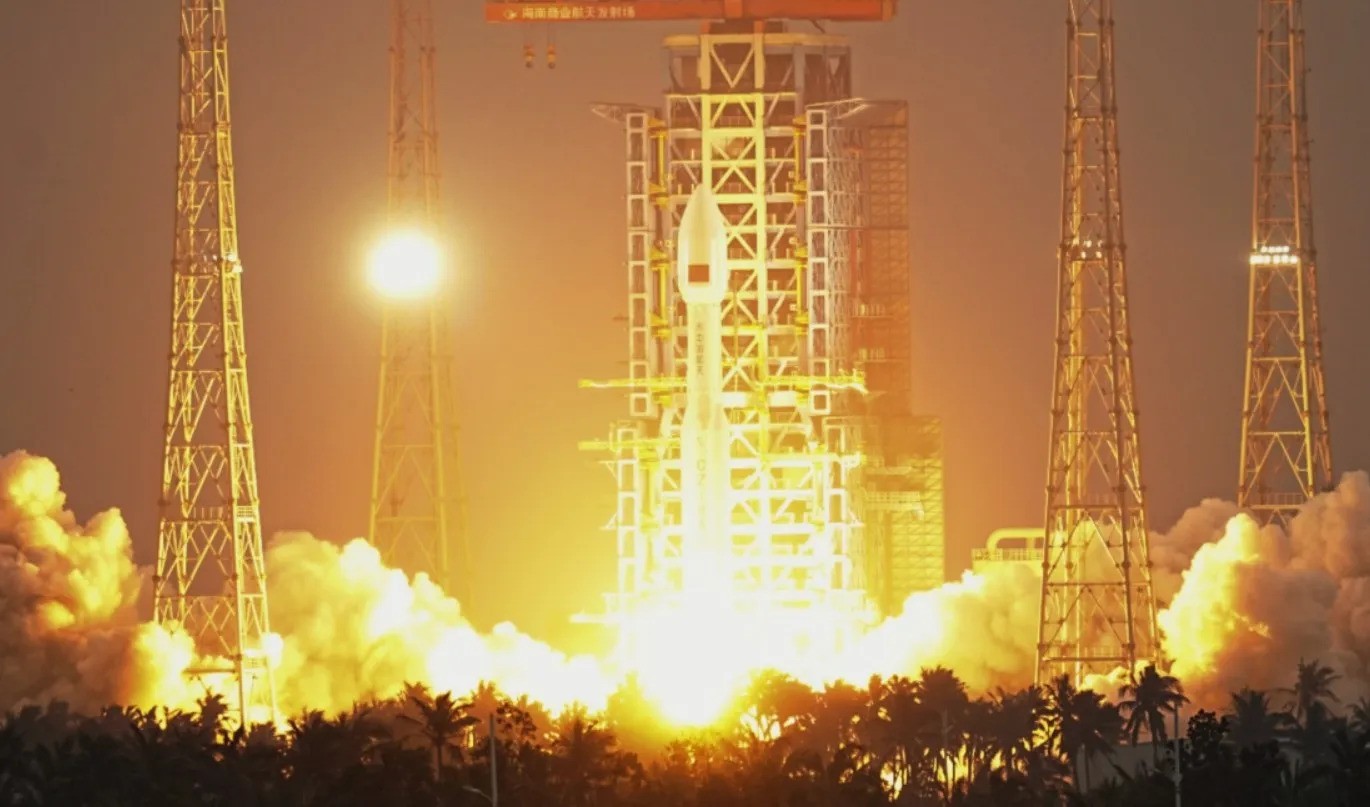
On the evening of December 25, the Long March rocket was launched from the spaceport on Hainan Island. It put nine satellites for the Govan program into orbit at an altitude of 900 km and an inclination of 50°. This is the future mega-constellation that will provide users on Earth with broadband Internet access.
The first satellites of the Govan system were launched into space over a year ago. Now, with 17 launches completed, the number of satellites in orbit has grown to 136. However, this is not the limit. It is expected that by 2027, their number will increase to 400. In total, after the system is fully deployed, there should be 18,000 satellites.
The Long March 8A rocket is also noteworthy. It is a new version of the Long March 8 carrier rocket, which can deliver payloads weighing up to 7,000 kg into sun-synchronous orbit. China is ramping up engine production in an effort to increase the number of launches.
Meteorological satellite
Less than a day after Long March 8A, Long March 3B was launched from the Xichang Space Center in Sichuan Province. It carried only one satellite into geosynchronous transfer orbit, but its weight reached 5,300 kg. This is the new-generation Fengyun-4c meteorological satellite.
Two of its twins are already operating in orbit, so we can expect them to provide China with high-quality weather forecasts. These devices are also interesting in that they have an engine mounted on a long pole. In theory, this should help them maneuver.
However, the main thing is that these two launches were China’s 89th and 90th this year. The PRC continues to build up its space capabilities in an attempt to catch up with the US.
Provided by spacenews.com

