

One of the most interesting astronomical objects to observe this fall is comet C/2025 A6 (Lemmon). It is already visible through small telescopes, and in October, when it will be closest to Earth, it should be visible to the naked eye. So what can we expect from it?

An unexpectedly bright comet
On January 3, 2025, the Mount Lemmon Observatory in the United States discovered an object with a magnitude of 21. In the first images, it resembled an asteroid. However, in early February, a short tail was found, leading astronomers to conclude that it was a comet with a nucleus diameter of 2.2 km.
The event could not be considered epoch-making, as the comet’s trajectory, named C/2025 A6 (Lemmon), did not lead to a collision with Earth, and dozens of such objects are discovered every year. Even for the Mount Lemmon Observatory itself, this is far from the first comet to be discovered.
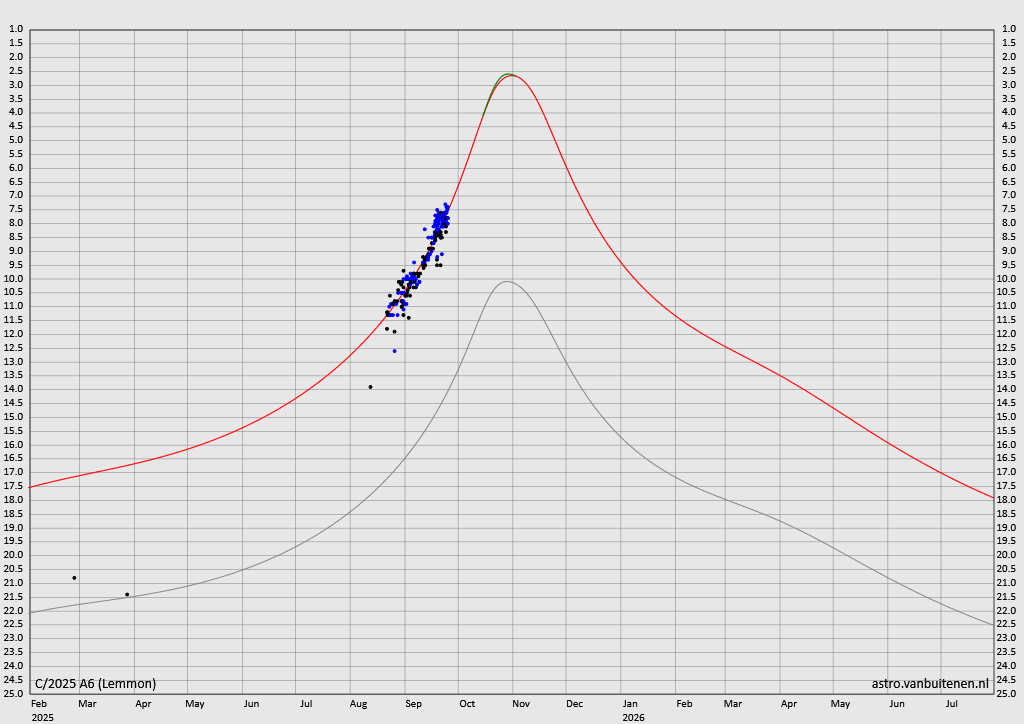
In January – February 2025, comet C/2025 A6 was still far beyond Jupiter’s orbit, and scientists expected it to be barely visible. However, from early July to mid-August, its brightness unexpectedly increased from 16 to 9 magnitude, and forecasts had to be revised.
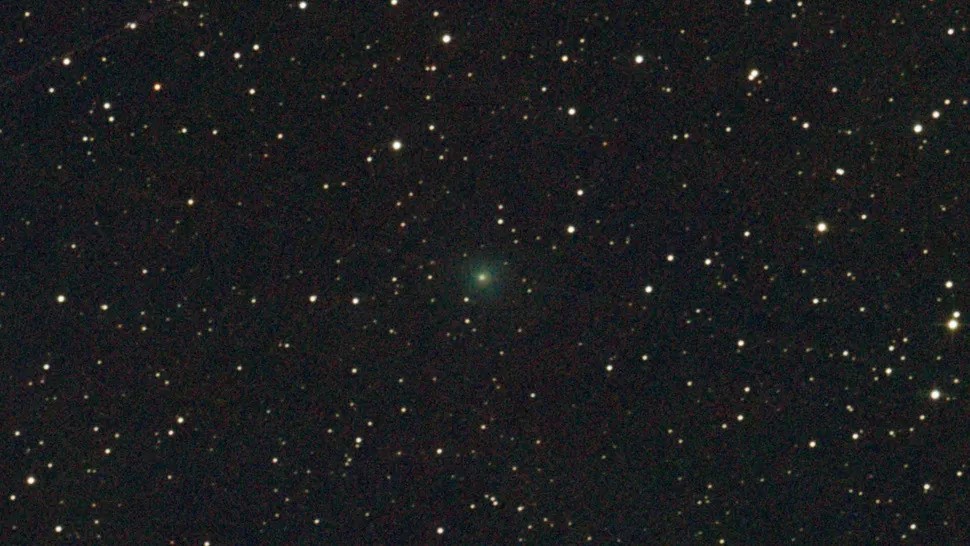
In fact, there is nothing unusual about this event. Comets consist of a mixture of dust and frozen substances, the ratio of which varies from one body to another. Therefore, it is practically impossible to predict in advance when they will begin to evaporate.
Features of the comet’s orbit
Comet C/2025 A6 has an orbit inclined to the plane of the ecliptic at an angle of 144°. This means that it does not actually lie in the plane of the ecliptic and is retrograde. The latter term means that the comet moves in the opposite direction to the rotation of the planets.
The comet’s orbital period at the time of its discovery was 1,350 years. It last approached the Sun in the 7th century AD, but even if someone observed it, no information about this has survived.
When and how to observe the Lemmon comet?
Comet C/2025 A6 (Lemmon) is currently located in the constellation Lynx and has a magnitude of 7.5-8.0. This means that it can be seen with at least a small telescope. Even powerful binoculars may suffice.
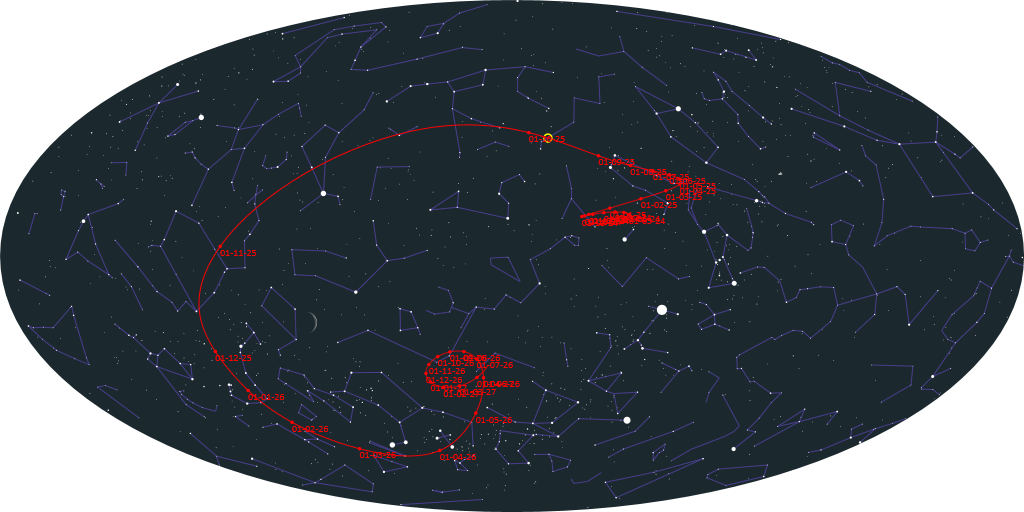
In general, residents of the Northern Hemisphere, including Ukraine, are fortunate with this comet. Throughout its entire stay in the inner Solar System, C/2025 A6 will remain in constellations close enough to the North Pole. In the next few days, it will move into the constellation Leo Minor, and then to Ursa Major.
On October 8, it will enter the constellation Canes Venatici, and on October 16, it will pass close to the star Cor Caroli. On October 21, already in Boötes, it will pass at a minimum distance of 0.6 AU from Earth. How bright it will be at that point remains to be seen.
The most conservative estimates suggest that it will not exceed magnitude 7. In this case, it will not be visible to the naked eye. More daring and reasonable predictions suggest a magnitude of 4. In this case, the comet will be visible to the naked eye, especially if you go outside the city.
And the most optimistic forecasts predict a magnitude of 2. Then C/2025 A6 (Lemmon) will not only be visible to the naked eye, but will also rival Polaris in brightness. In any case, it will be possible to observe it throughout October, first closer to dawn and then in the evening.
On November 8, the comet will pass its perihelion at a distance of 0.53 AU. This is not much, but such proximity is not enough to expect its destruction. At this time, it will already be in the constellation Ophiuchus and will gradually become visible for observation in the Southern Hemisphere. The comet will continue to fade, and by the end of November, it will only be visible through a telescope.

