

In a recently published paper, scientists have found that different tree species accumulate atmospheric carbon in different ways. This discovery is unexpectedly linked to magnetic storms caused by solar flares.
Carbon in tree rings
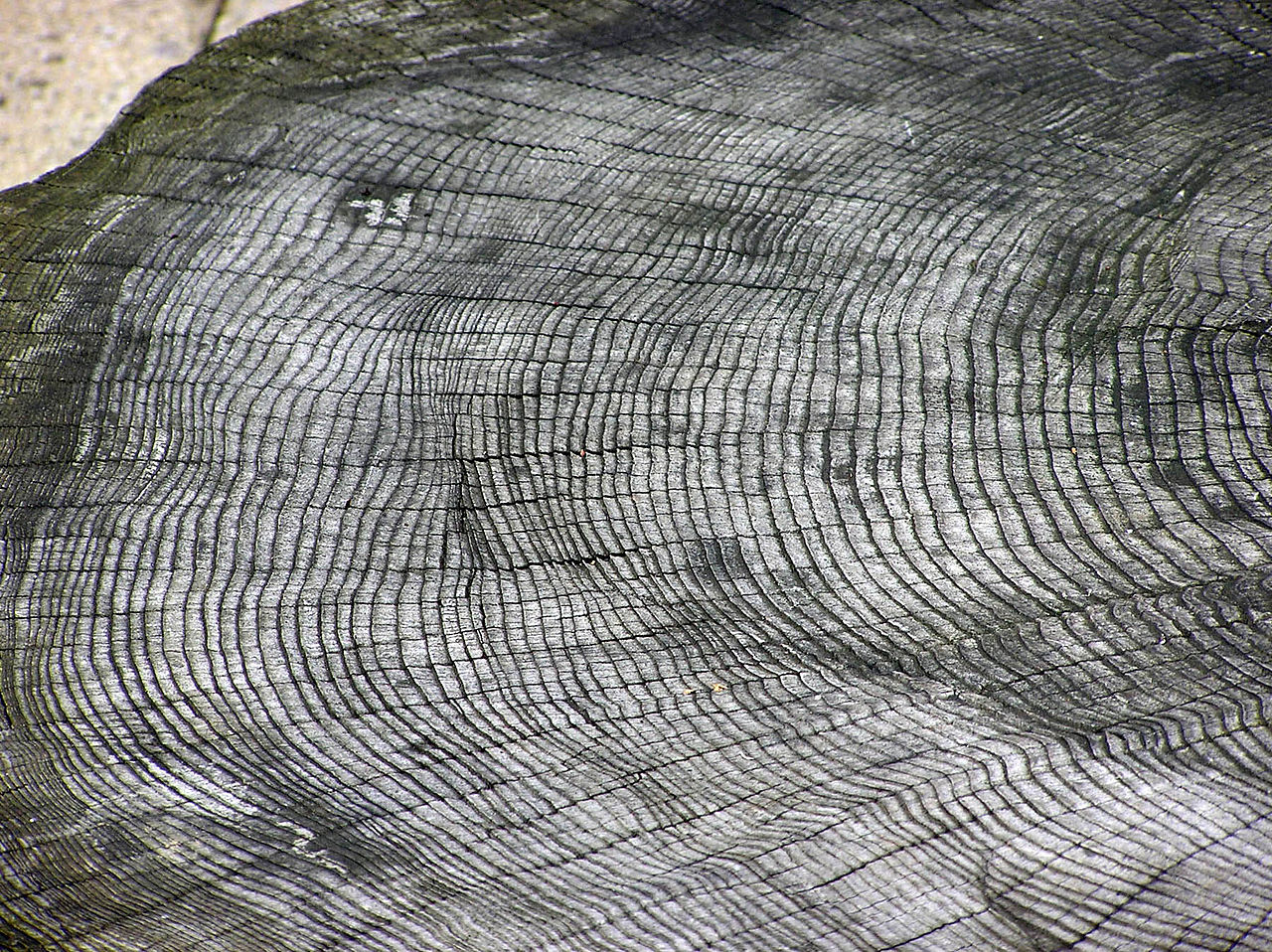
Everyone knows that a new ring appears in tree trunks every year. External factors influence its formation. So, by studying old wood, you can not only learn about past events, but also date them quite accurately.
New Phytologist recently published a study by scientists at Northern Arizona University on how different trees build new carbon rings. However, it is also extremely important for astronomy because it could have a serious impact on research into solar flares.
The sun has existed for billions of years, but we have only been observing it for a few centuries. That is why we can say that flares are related to the functioning of the star’s magnetic field, but we can only guess at the modes in which it operates.
However, humanity is well aware of what happens when a particularly strong flare occurs. A powerful magnetic storm arises on Earth, causing not only beautiful auroras, but also problems with electronics and radio communications. But how powerful can such events really be?
Rings and carbon
The answer to the last question is provided by tree rings. During powerful geomagnetic events, charged particles create radioactive carbon isotopes in the Earth’s atmosphere. These isotopes then end up in tree rings through photosynthesis, and scientists can use them to tell us that all the storms we have seen over the past few decades are far from the worst that the Sun can produce.
So, in the latest study, scientists discovered that the process of carbon extraction from the atmosphere and its incorporation into tree rings occurs at different rates for different species. This means that determining the time when a particular event occurred is much more difficult than scientists previously thought. The new data may even lead to a reassessment of the timing of certain events.
But at the same time, this opens up new opportunities. If we can accurately determine the patterns of carbon absorption by different tree species, then by comparing how the same event is reflected in their annual rings, we can obtain much more information about it than before.
It is quite possible that the processes involved in the formation of super-powerful magnetic storms are more complex than we think. And a seemingly purely botanical discovery will help scientists understand this.
According to phys.org

