

Five years ago, on December 5, 2020, the Hayabusa2 spacecraft dropped a capsule containing samples of material collected on the asteroid Ryugu into Earth’s atmosphere. Scientists are still studying them and finding substances that can tell us a lot about the past of the Solar System.
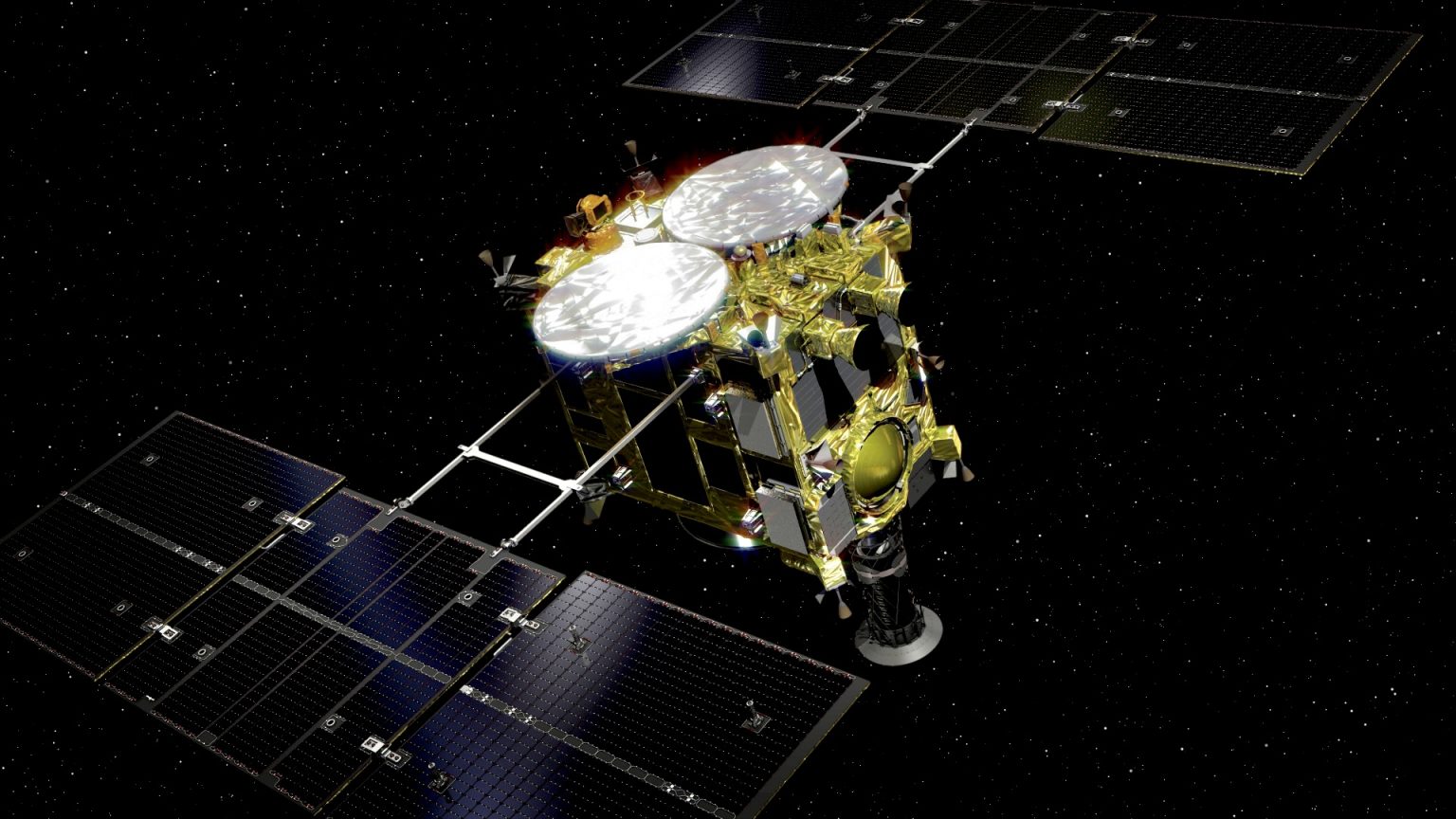
Hayabusa spacecrafts
The Japanese space program is usually talked about as something that’s way behind the American, Russian, and Chinese ones. But there’s one thing that’s way ahead of all of them. That’s using innovative ways to speed up in space.
And while solar sails remain an experiment, the use of ion engines has already yielded very important results. We are talking about two spacecraft from the Hayabusa series, which delivered samples from asteroids to Earth. December 5 marks the fifth anniversary of the second spacecraft dropping a capsule with samples from the asteroid Ryugu onto our planet.
And while solar sails remain an experiment, the use of ion engines has already yielded very important results. We are talking about two spacecraft from the Hayabusa series, which delivered samples from asteroids to Earth. December 5 marks the fifth anniversary of the second spacecraft dropping a capsule with samples from the asteroid Ryugu onto our planet.
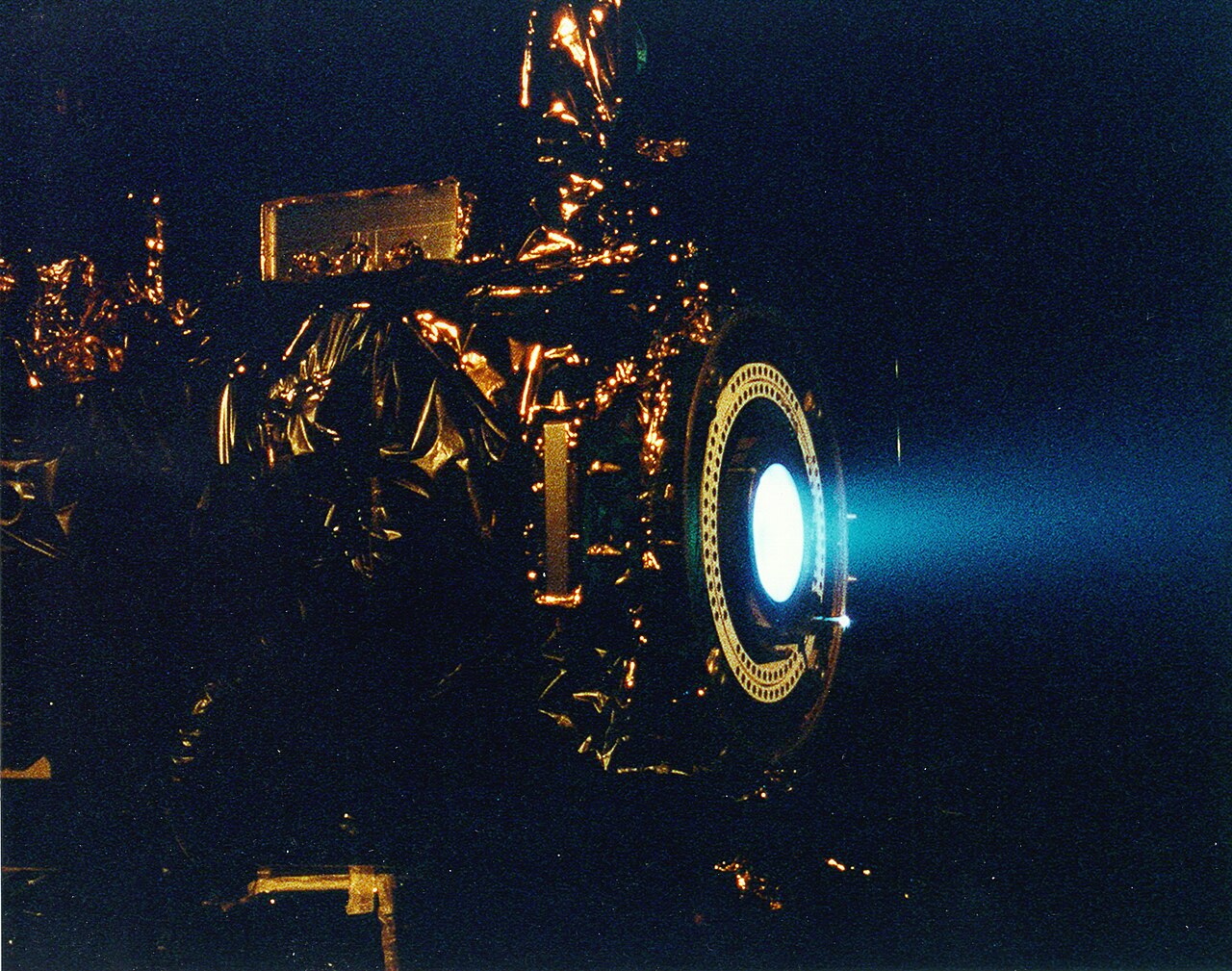
Its small size and therefore gravitational pull make this task easier. However, for spacecraft with conventional chemical engines, it remains unattainable. Ion engines, in which charged particles are accelerated by a magnetic field, are another matter. Their thrust is small, but the speed of the jet is several times higher than that provided by rockets that launch spacecraft into orbit.
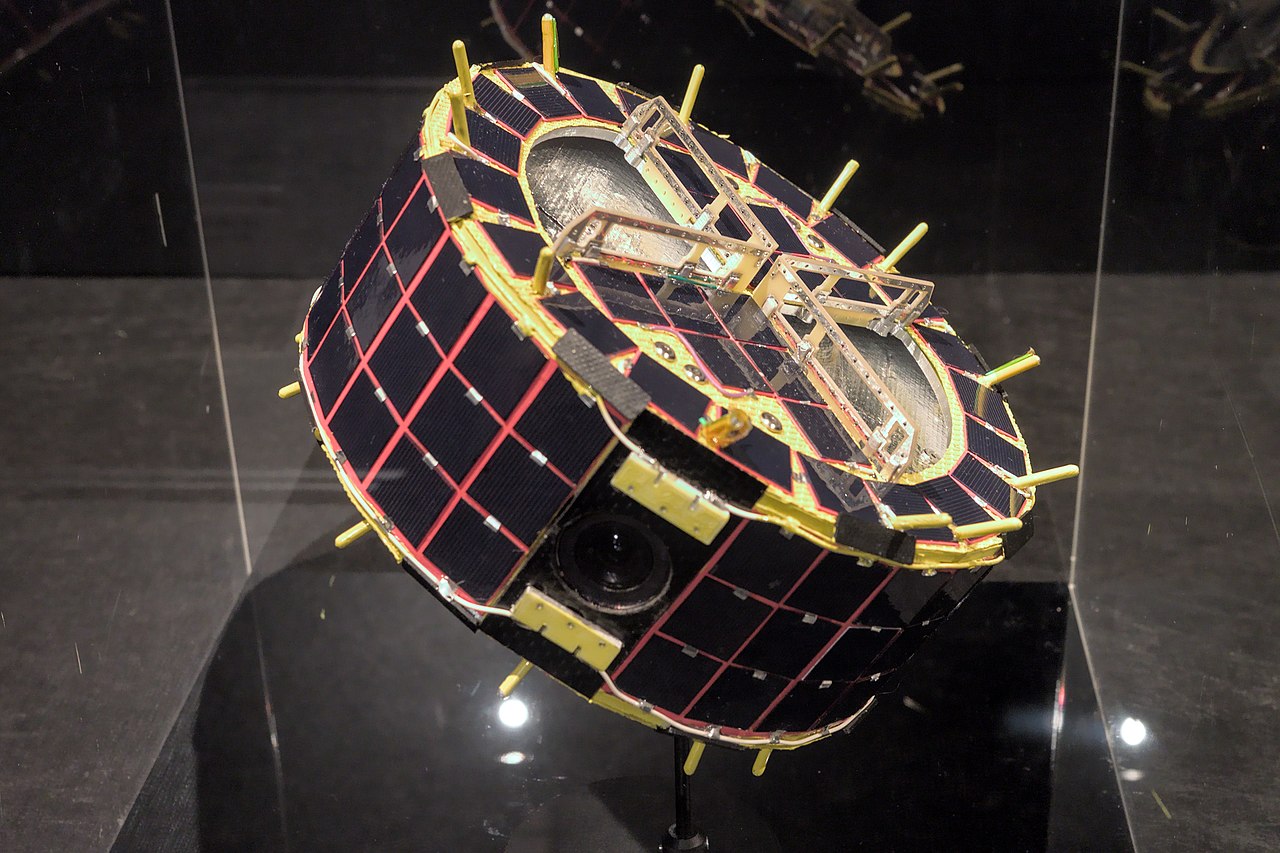
This allows fuel to be used much more economically and acceleration to be maintained for much longer. And this was perfectly suited to the tasks of flying to an asteroid. The Hayabusa spacecraft, whose name refers to the peregrine falcon, had four engines. They were powered by solar panels, used xenon as a working fluid, and provided acceleration for the 510 kg spacecraft.
The spacecraft also carried containers for samples and a device for collecting them, communication systems, and equipment necessary for landing on the asteroid. The first spacecraft also carried a small robot, while the second carried two robots, plus a stationary MASCOT module.
Hayabusa2 flight
The flight of Hayabusa2 was entirely determined by the results of the first spacecraft’s journey, which was extremely problematic. From its launch in 2003, it was expected that by 2007, it would have collected samples from the near-Earth asteroid Itokawa and returned to Earth. But something kept happening during the flight.
First, during the initial landing, Hayabusa lost the miniature robot MINERVA, which simply could not stay on the surface and flew off into space. Then the spacecraft itself touched down rather unsuccessfully on the surface of the space rock, so it was unclear until the very end whether it had managed to collect any material. And finally, on its way back to Earth, its propulsion system failed, so it was even considered lost for some time.
In the end, specialists managed to start some of the ion engines, and Hayabusa was able to reach Earth in 2010 and drop a capsule with samples onto the surface. Incidentally, it turned out to be not empty at all and gave scientists the first sample of material delivered from an asteroid. But it was clear that a second attempt was needed to get everything right this time.
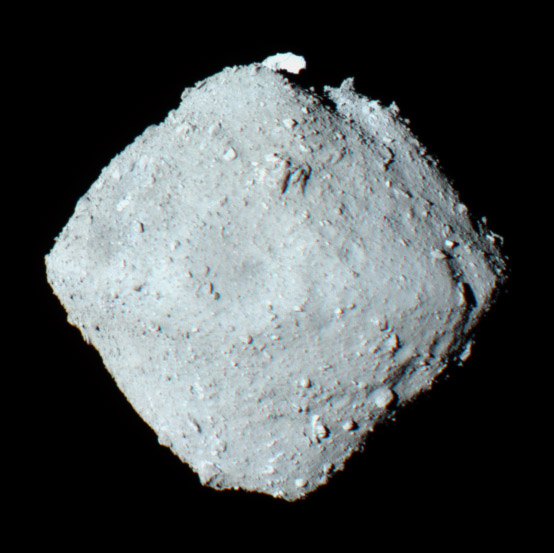
This was the mission of Hayabusa2, which began on December 3, 2014. The target was the carbonaceous asteroid 162173, a member of the Apollo group of near-Earth asteroids. During the probe’s 2015 flight, it was named Ryugu after the palace of the dragon lord of the seas in the Japanese fairy tale about Urashima Tarō.
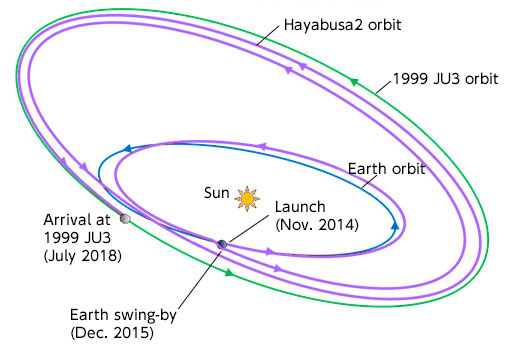
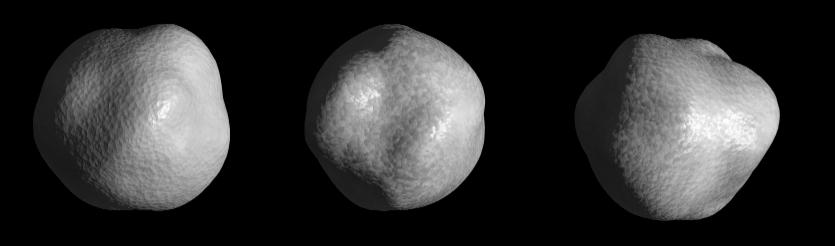
On July 7, 2018, Hayabusa2 entered orbit around Ryugu, which had a diameter of 920 m and resembled a nut in shape. On September 21 of the same year, two small robots were lowered to the surface. This time, they were able to stay on the surface long enough to transmit images back to Earth. Then, on October 3, the MASCOT module landed on the surface and was able to conduct research on Ryugu’s chemical composition on site.
But researchers on Earth still wanted to obtain something for their laboratories. So, on February 22, 2019, the probe itself descended to the surface of Ryugu and took samples of material from its surface. But that was not all. Japanese researchers also wanted to obtain materials from its depths. Therefore, the probe took off from the asteroid and fired a copper projectile at it on April 5 of the same year.
As a result, a crater was formed, and some rock samples from the depths of the asteroid settled on the surface near it. These were needed by Hayabusa2, which landed on the asteroid’s surface for the second time on July 11, 2019, filled another container, and took off. The probe remained in Ryugu’s orbit until November 13, 2019. One of its ion engines failed on the way, but this did not prevent the mission from being completed.
What scientists learned from Ryugu samples
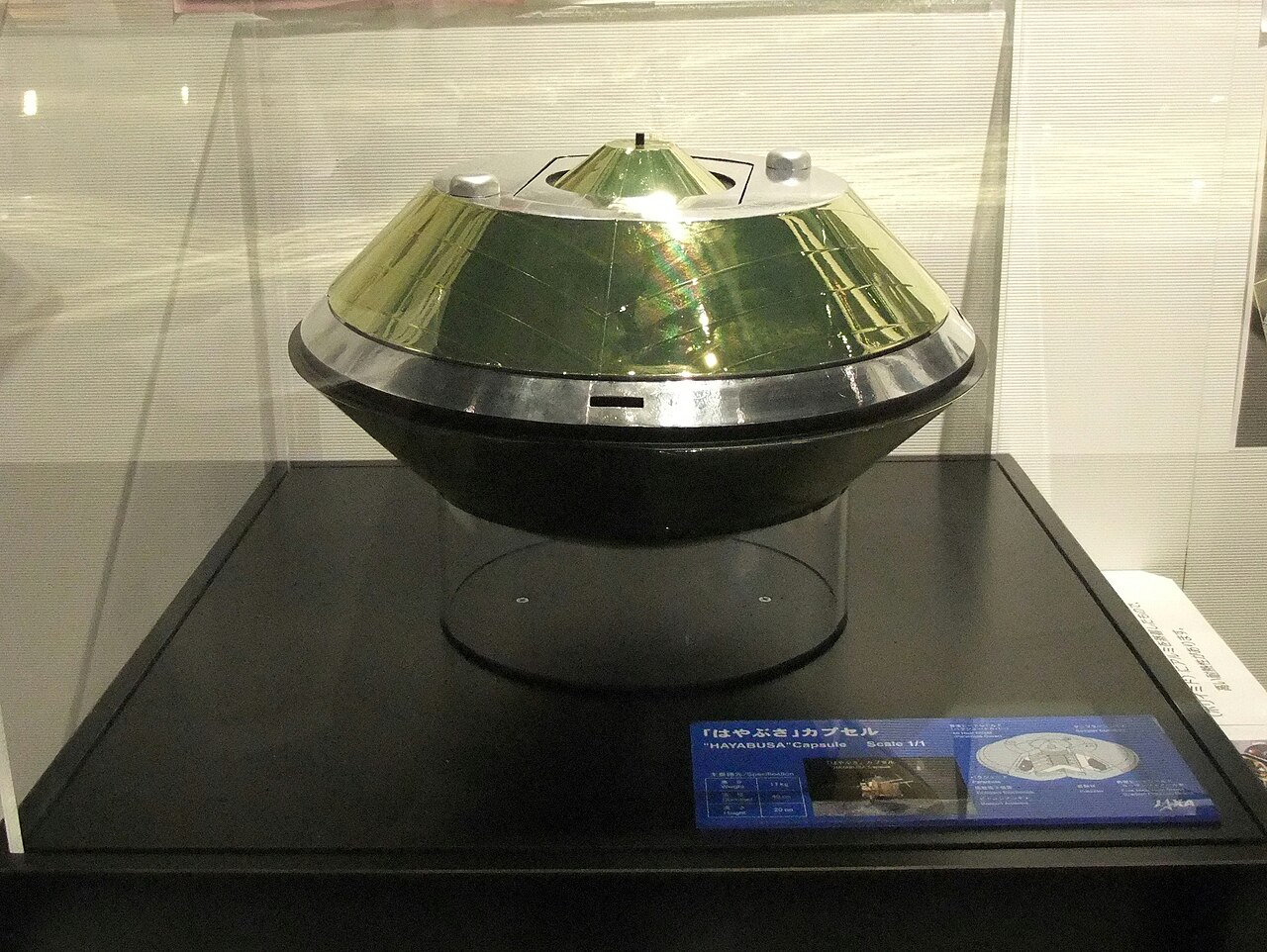
On December 5, 2020, Hayabusa2 dropped a capsule containing samples collected on Ryugu into Earth’s atmosphere. It landed at the Woomera Range Complex in Australia. A team of specialists quickly retrieved it and took it to a laboratory, where they opened it and began studying the samples.
The first thing that scientists noticed when studying the samples was that they resembled black sand. The soil delivered by Hayabusa2 turned out to be the darkest of all samples extracted in space. This, along with chemical analysis, allowed scientists to establish a connection between Ryugu and carbonaceous meteorites found on Earth.
Determination of the physical characteristics of these samples showed that they are quite fragile and porous. This allowed us to solve an old mystery: why are there so many carbonaceous asteroids in space, but very few meteorites of similar composition have been found on Earth? It turns out that they do not survive collisions with our planet’s atmosphere, being destroyed in it.
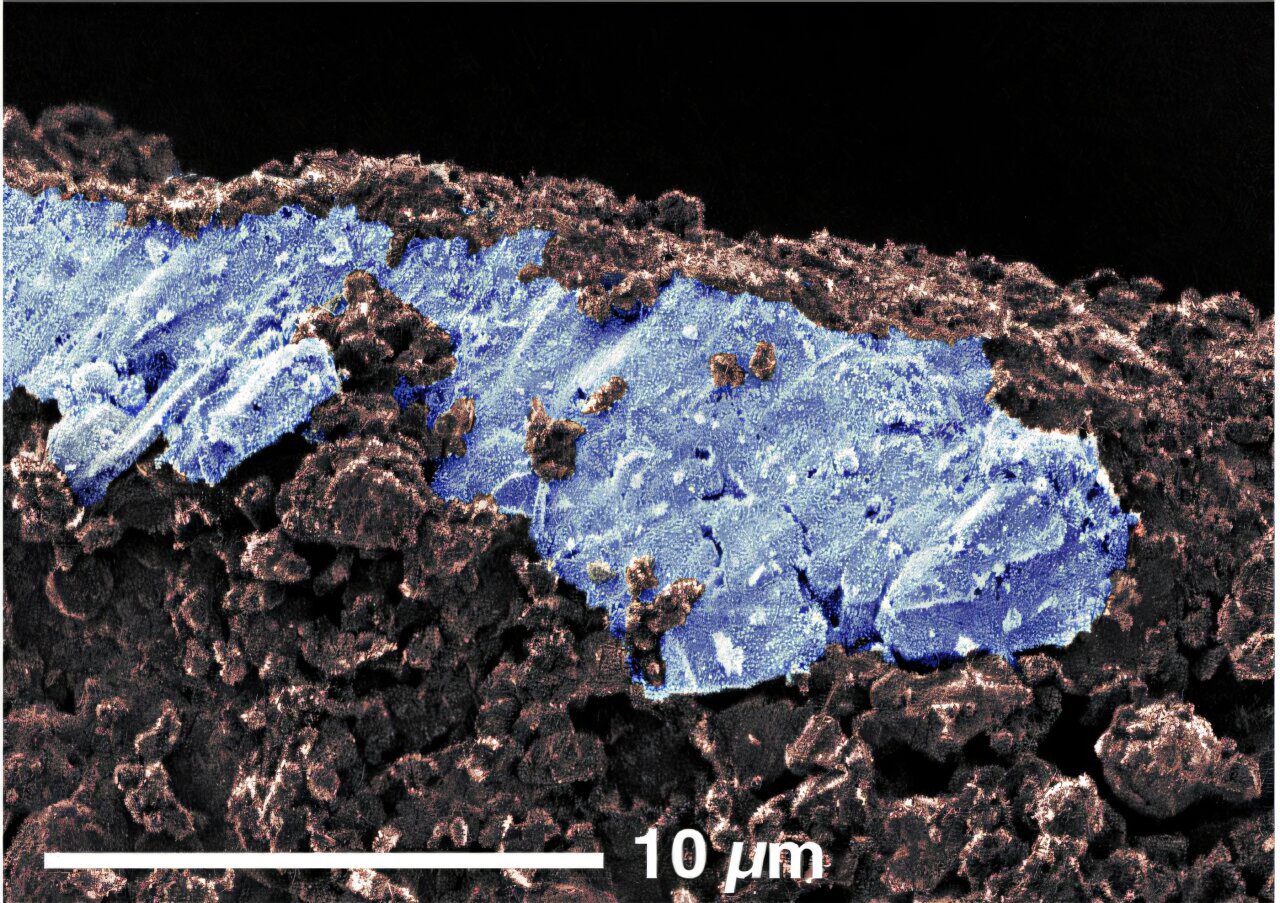
The second important discovery was published in January 2025. Carbonate and sodium sulfate, as well as chlorides, were found in samples from Ryugu. These could only have formed in hot water conditions.
This means that the asteroid was previously part of a much larger body that was closer to the Sun. It may belong to the Eulalia or Polana group. According to scientists’ estimates, Ryugu is only 8.9 million years old.
The third important discovery made during the study of samples from the Hayabusa2 capsule is that a bunch of organic substances were found in Ryugu. These include all twenty essential amino acids, aliphatic amines, carboxylic acids, aromatic hydrocarbons, and nitrogen-containing heterocyclic compounds.
Perhaps this news is the most important of all. Because, despite the fact that Ryugu broke away from its parent body relatively recently, the material it is made of has remained unchanged since the formation of the Solar System. This means that even back then, in interplanetary space, all the components necessary for biological evolution were already present.
The question of where it began has long been a source of concern for scientists. It is quite possible that the first biochemical reactions did not even take place in the protoplanetary disk, but in the gas and dust cloud from which the Solar System was formed. Samples from Ryugu support this theory.
It is not over yet
But that’s not all. After dropping the capsule with the samples, Hayabusa2 did not burn up in Earth’s atmosphere, as its predecessor did. It flew on, and so the mission continues even 11 years after its launch. The spacecraft still has three engines and fuel for them, as well as equipment for photographing and remotely studying asteroids.
And now the Japanese probe is continuing its mission. In July 2026, it is scheduled to fly past asteroid (98943) Torifune, which belongs to the silicate class and has a diameter of about 500 m. Hayabusa2 is expected to fly at a distance of 10 km from it.
After that, the probe will continue to orbit the Sun and will approach 1998 KY26 in 2031. Like other objects studied by Hayabusa2, it belongs to the Apollo group of near-Earth asteroids. However, observations of this space rock, which is only 11 m in diameter, have shown that it may be extremely interesting.
In 2023, after the Hayabusa2 flight program was approved, 1998 KY26 was classified as a dark comet. This asteroid does not form a tail or coma, but it experiences acceleration similar to that of a comet. It is expected to contain a significant amount of water, so it will be interesting to see during the flyby whether anything evaporates from its surface, creating jet streams.
However, it is possible that the Hayabusa2 mission will not end there. If its equipment remains functional and there is enough xenon in the tanks for new maneuvers, its mission may be extended again.

